Separate people from vehicles
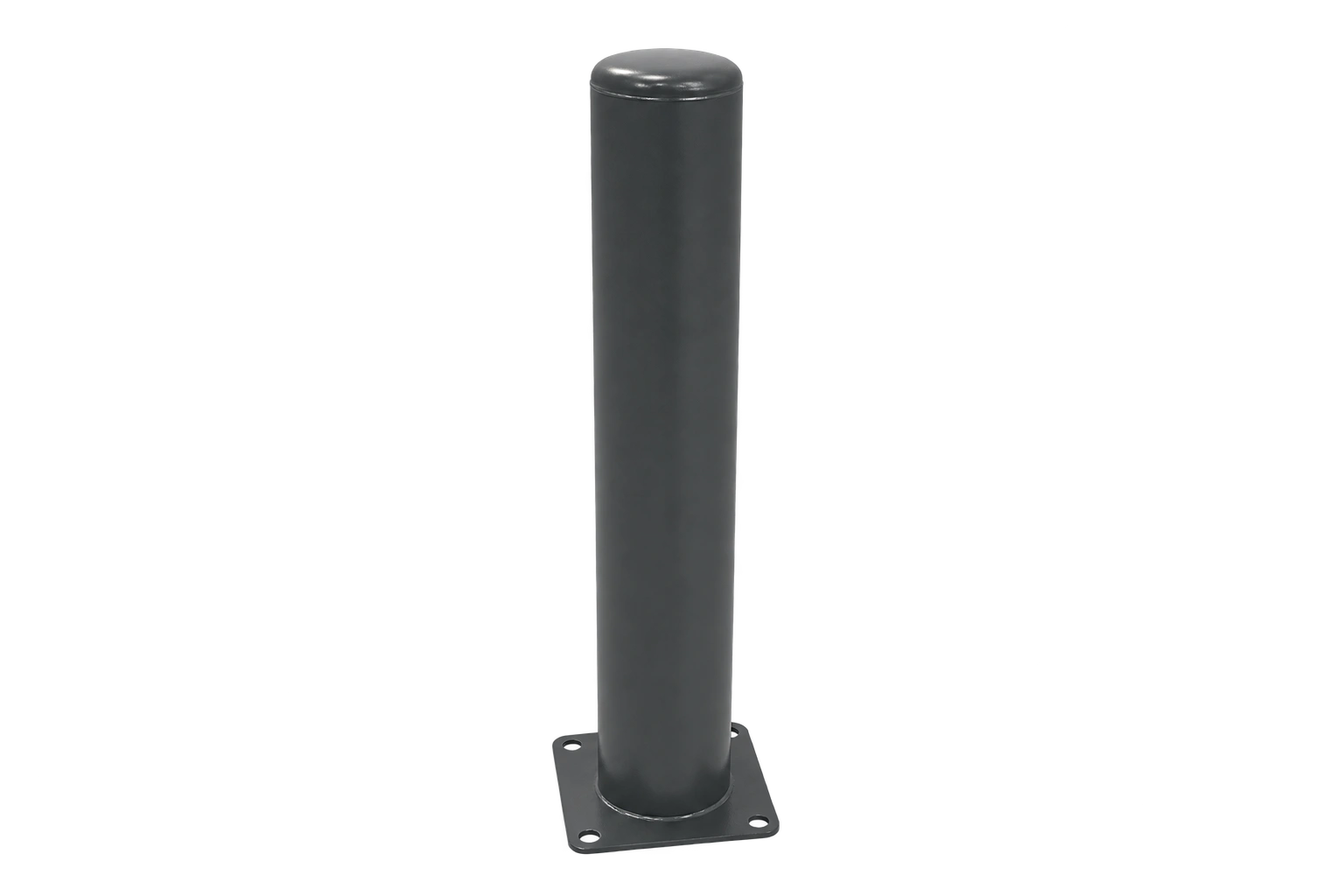
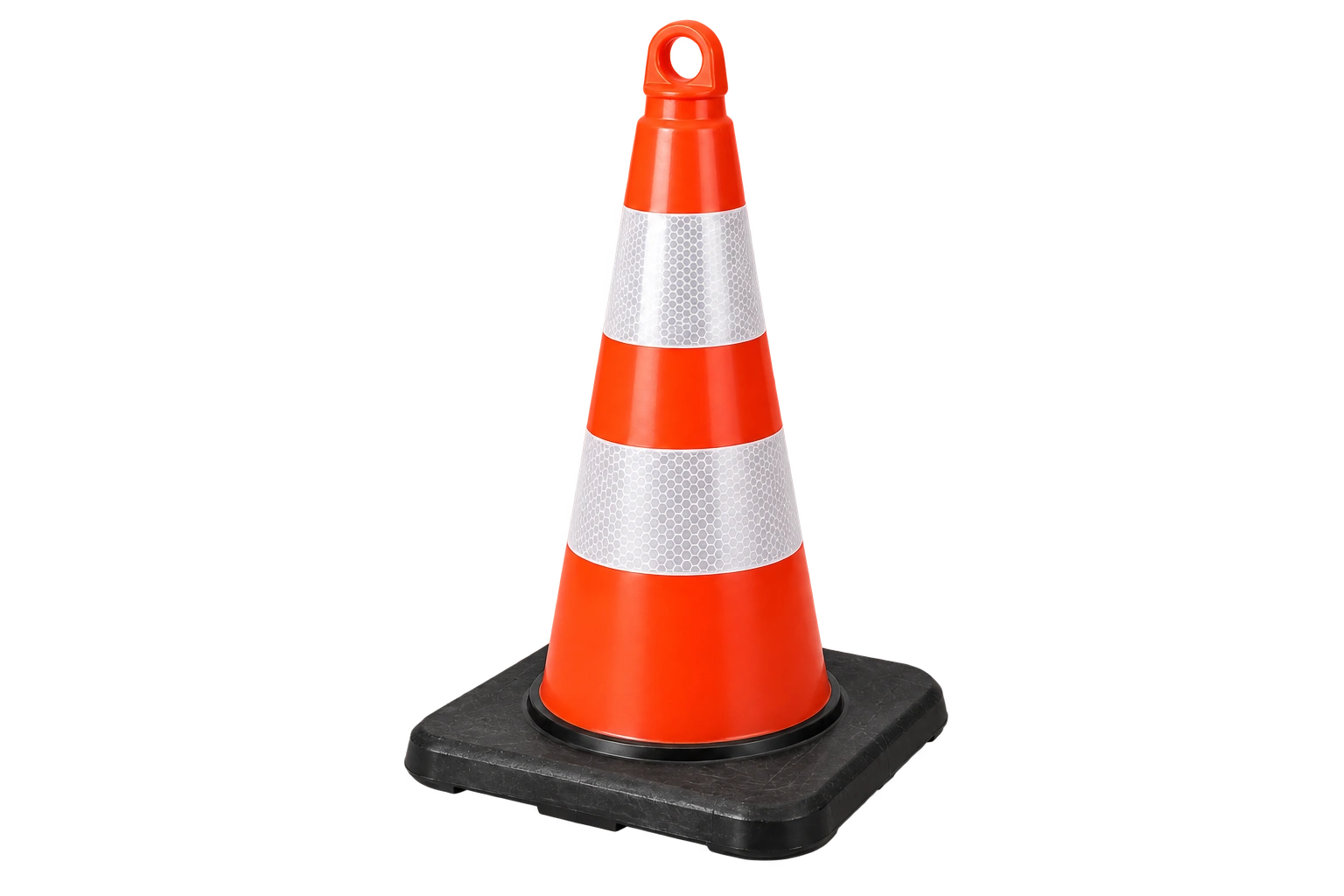
The pedestrian route should be physically separated. Bollards and rails give a permanent split; for a short-term arrangement a run of cones will do.
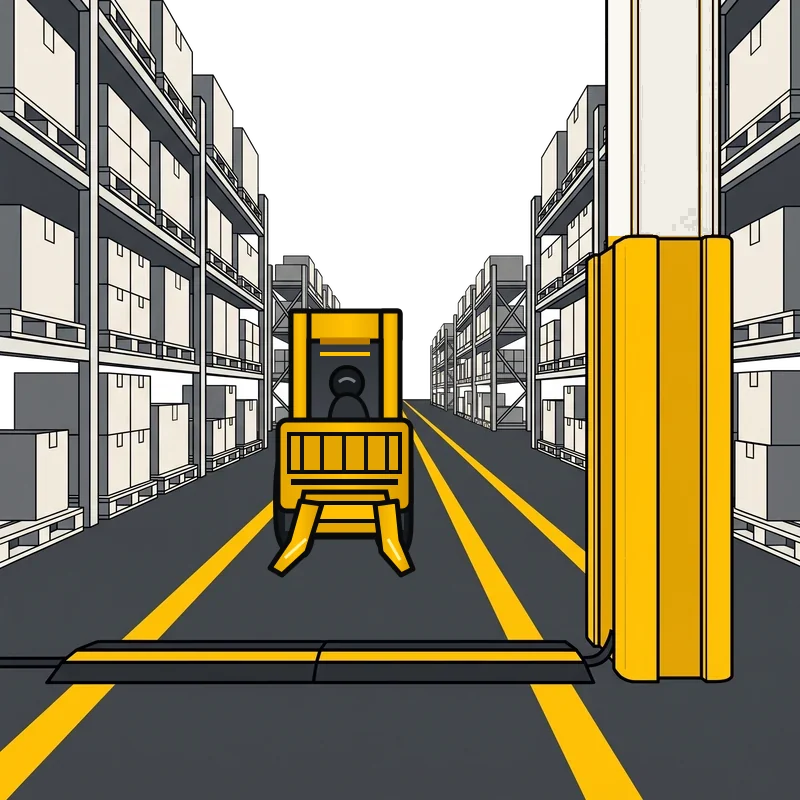
Indoors the hazard is not speed but forklifts and people sharing one floor. The answer is to separate them, open the sight lines and stop impacts reaching the structure.
The pedestrian route should be physically separated. Bollards and rails give a permanent split; for a short-term arrangement a run of cones will do.
Aisle ends and doorways are blind spots.
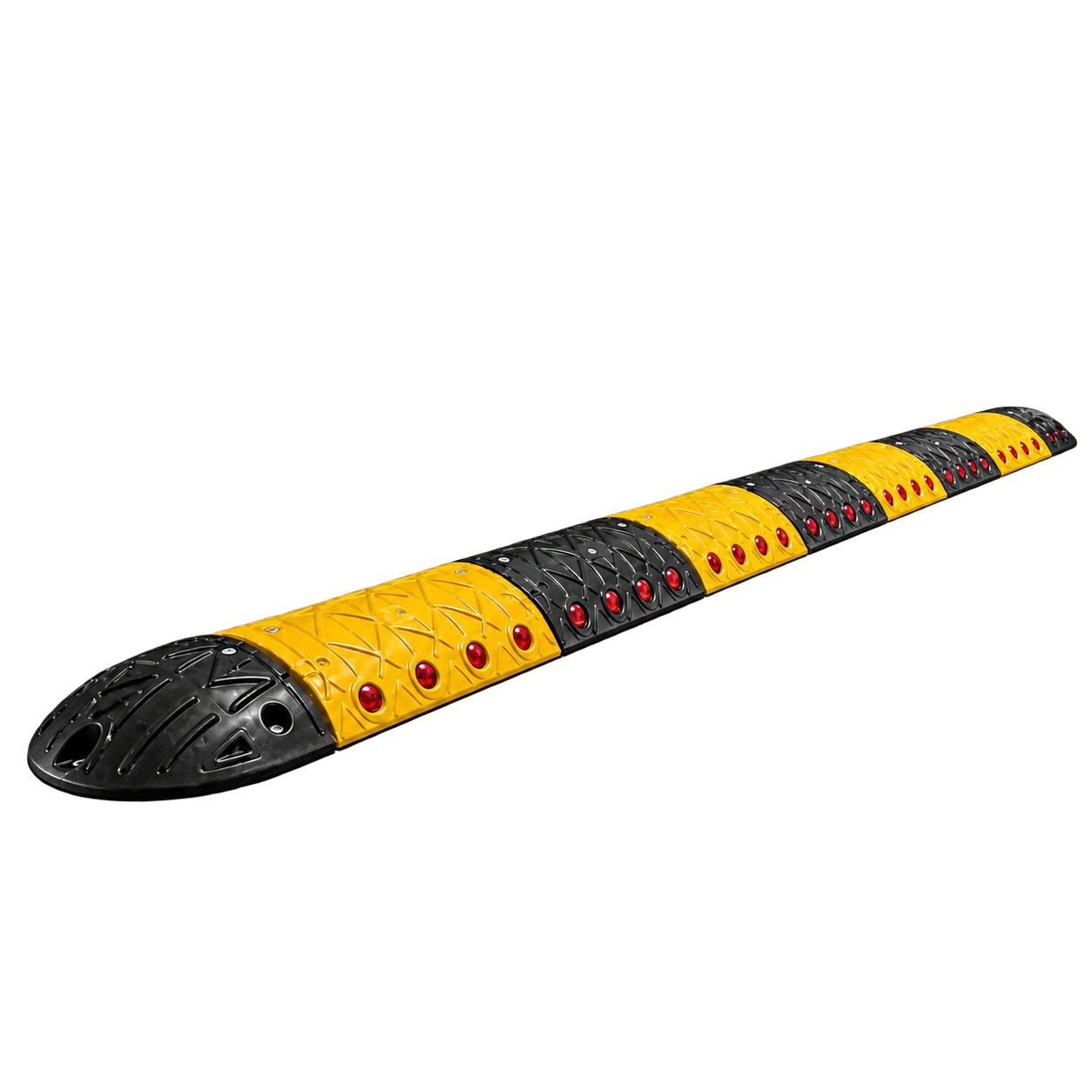
A blind spot is opened by layout first: a marked stopping area before the door, a set-back stacking line at the aisle end and, where needed, a bump that cuts crossing speed.
In a dim aisle, equipment with reflective faces extends the noticing distance.
A row of bollards in front of the column and the rack leg meets the impact before it reaches the structure.
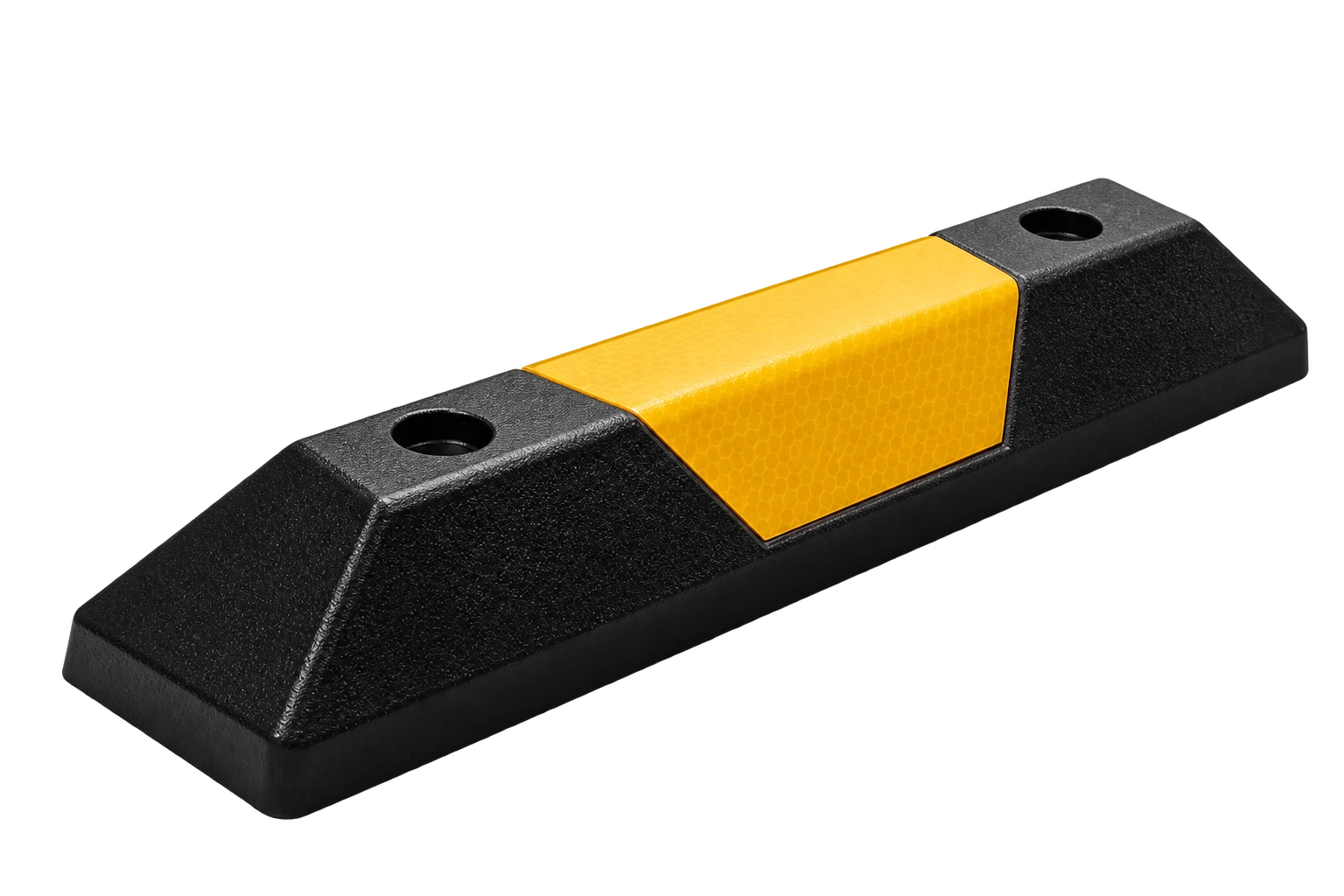
A wheel stop in front of the loading door sets the approach limit, and a railing separates the pedestrian door from the vehicle area.
The most common mistake is installing the physical separation after the damage. Repairing one column costs many times the bollards that would have protected that line for years.
The second common mistake is not checking a struck bollard. The body may look sound while the floor anchor has loosened, and a loose bollard is thrown clear at the next contact.
The third is using a product without a reflective face in a dim aisle.
With these three, the price and loading plan come in the first reply; without them we have to ask first.
Quantity, destination country and your specification if you have one. A technical answer comes back the same day; pricing is prepared by a person, never auto-generated.