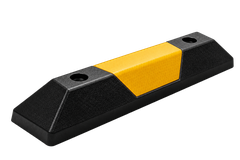

Get a quote for this product
Quantity, destination country and your specification if you have one. A technical answer comes back the same day; pricing is prepared by a person, never auto-generated.
Request a QuoteTell us quantity, country and mounting type — a technical answer comes back the same day.

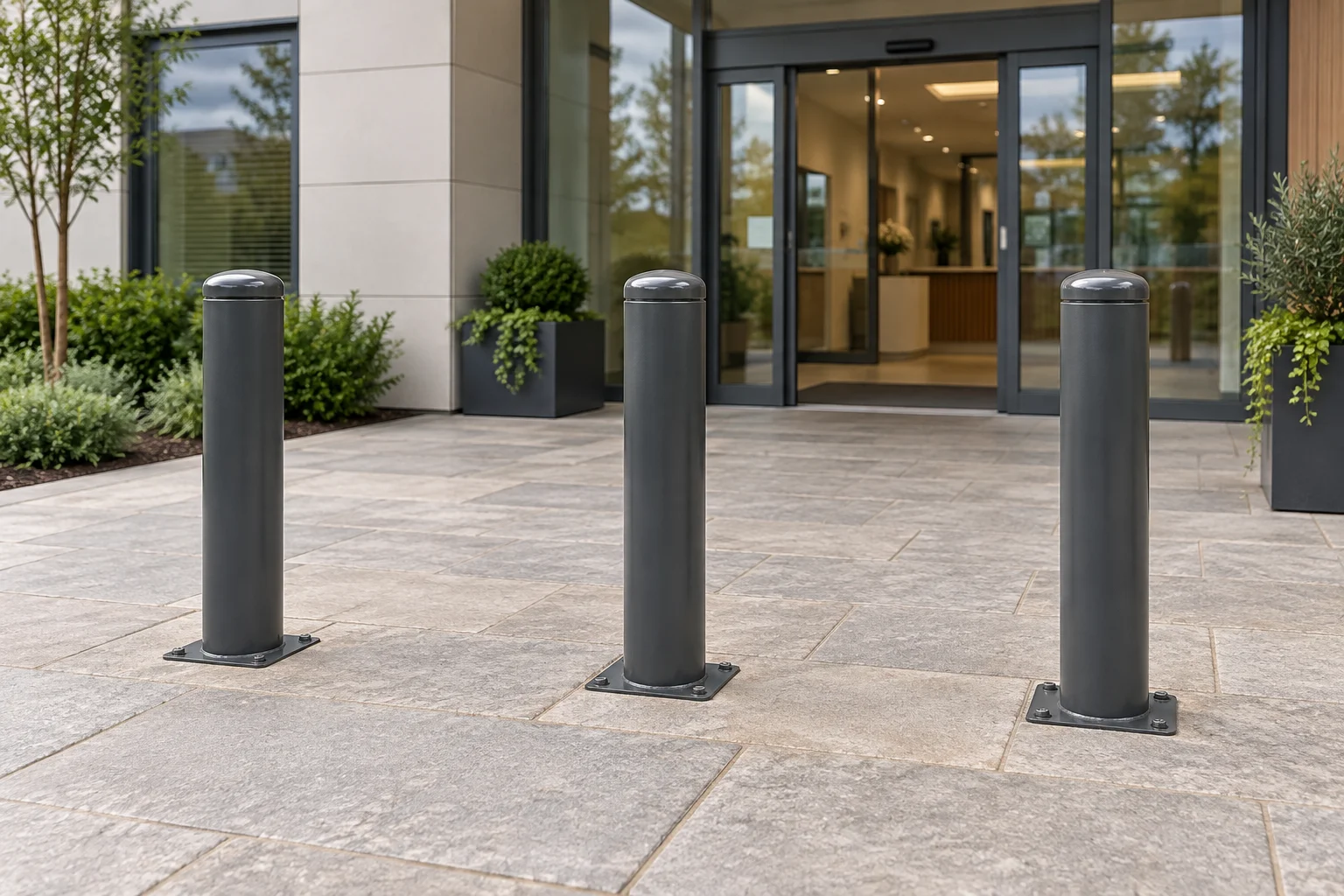
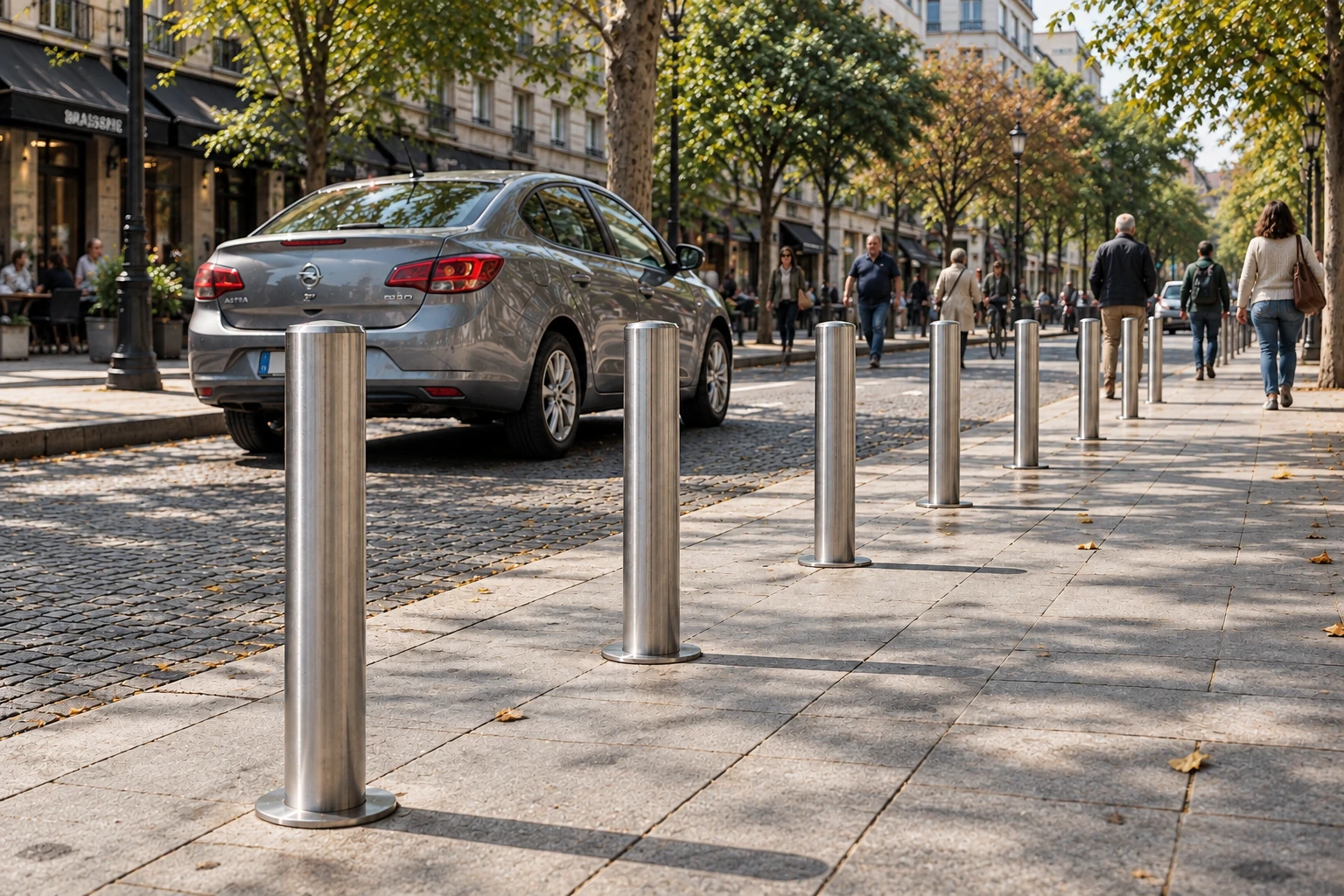
Digital application scenes illustrate how the product may be used; they are not records of completed customer projects.
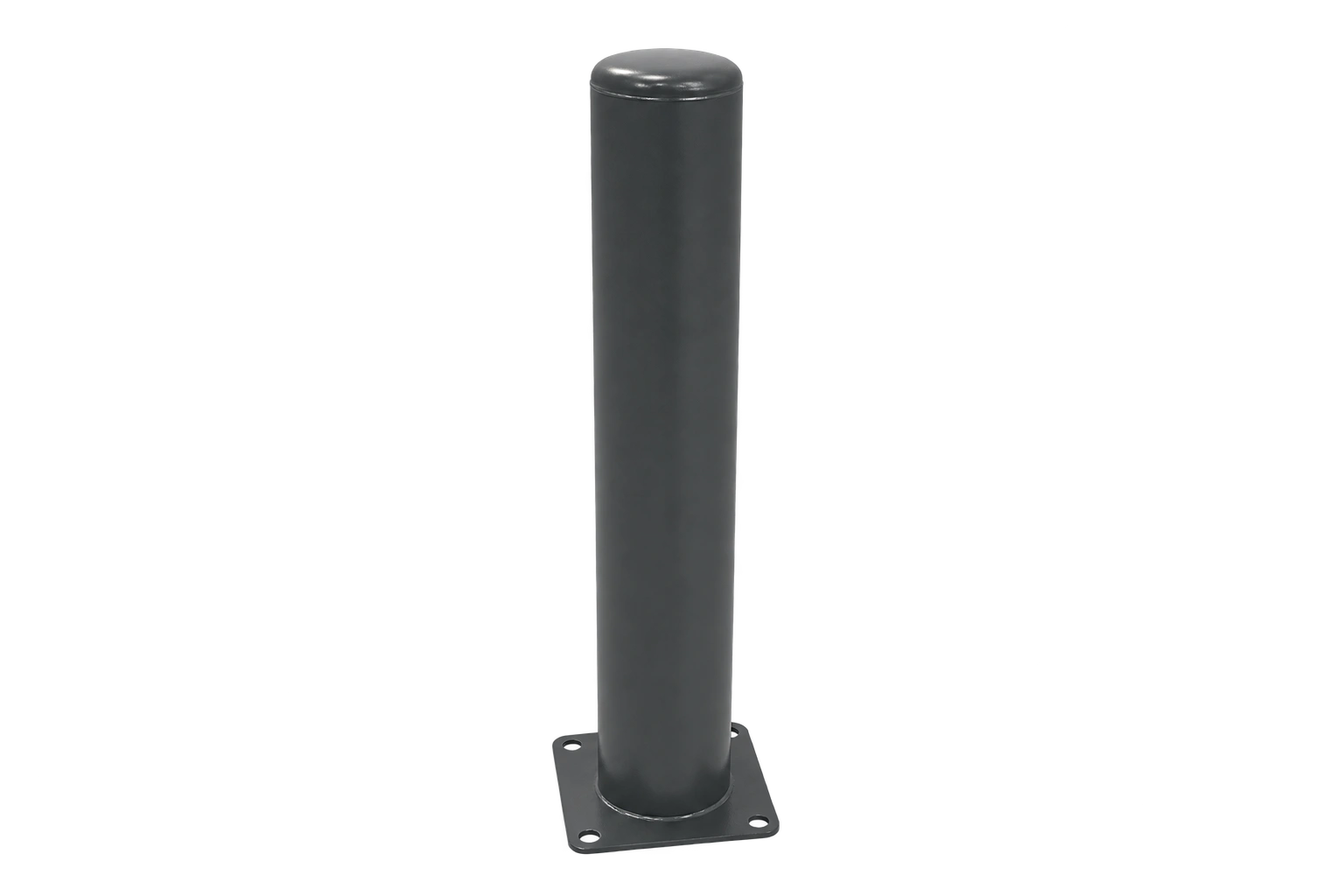
A bollard is a vertical element used to demarcate vehicle routes and manage access at pedestrian areas and facility entrances. Select a fixed or removable type for access needs, the surface and the fixing plan. Match the body, foundation, socket and any lock details to the selected product’s installation drawing. Assess reflective surfaces and positioning together with night-time visibility conditions.
| Model reference | TI-E5-BF102-P01 • nominal envelope 200 × 200 × 900 mm |
|---|---|
| Tube and flange reference | Tube: 102 mm OD / 96 mm ID, 880 mm long; flange: 200 × 200 × 8 mm. |
| Scope of dimensions | Dimensions refer to the identified downloadable design model; order dimensions and fixings are confirmed on the project drawing. |
| Use and access | Pedestrian area, car park or service entrance; fixed or removable mounting requirements. |
|---|---|
| Size and quantity requirements | Required above-ground height, body size and quantity; product dimensions are confirmed against the selected datasheet. |
| Material and appearance | Required body material, surface protection, colour and any reflective band. |
| Ground and foundation | Surface and ground conditions, existing foundation information, underground services and the fixing system to be selected. |
|---|---|
| Pedestrian and vehicle openings | Clear pedestrian passage, service and emergency-vehicle access, country of use and authority specification. |
| Socket and supply scope | For a removable type, lock, keys, socket cap and drainage requirements; included parts are listed separately in the quotation. |
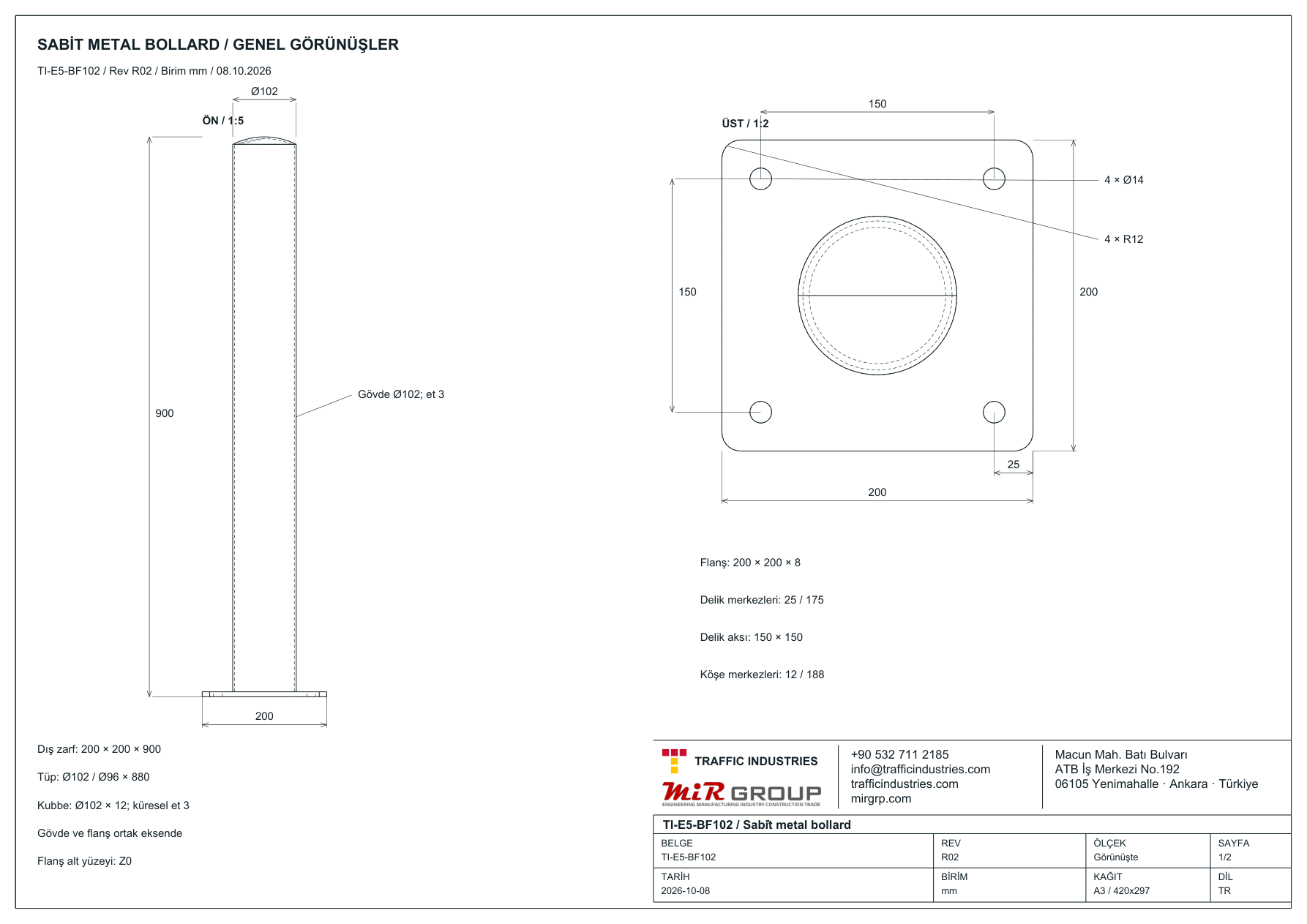
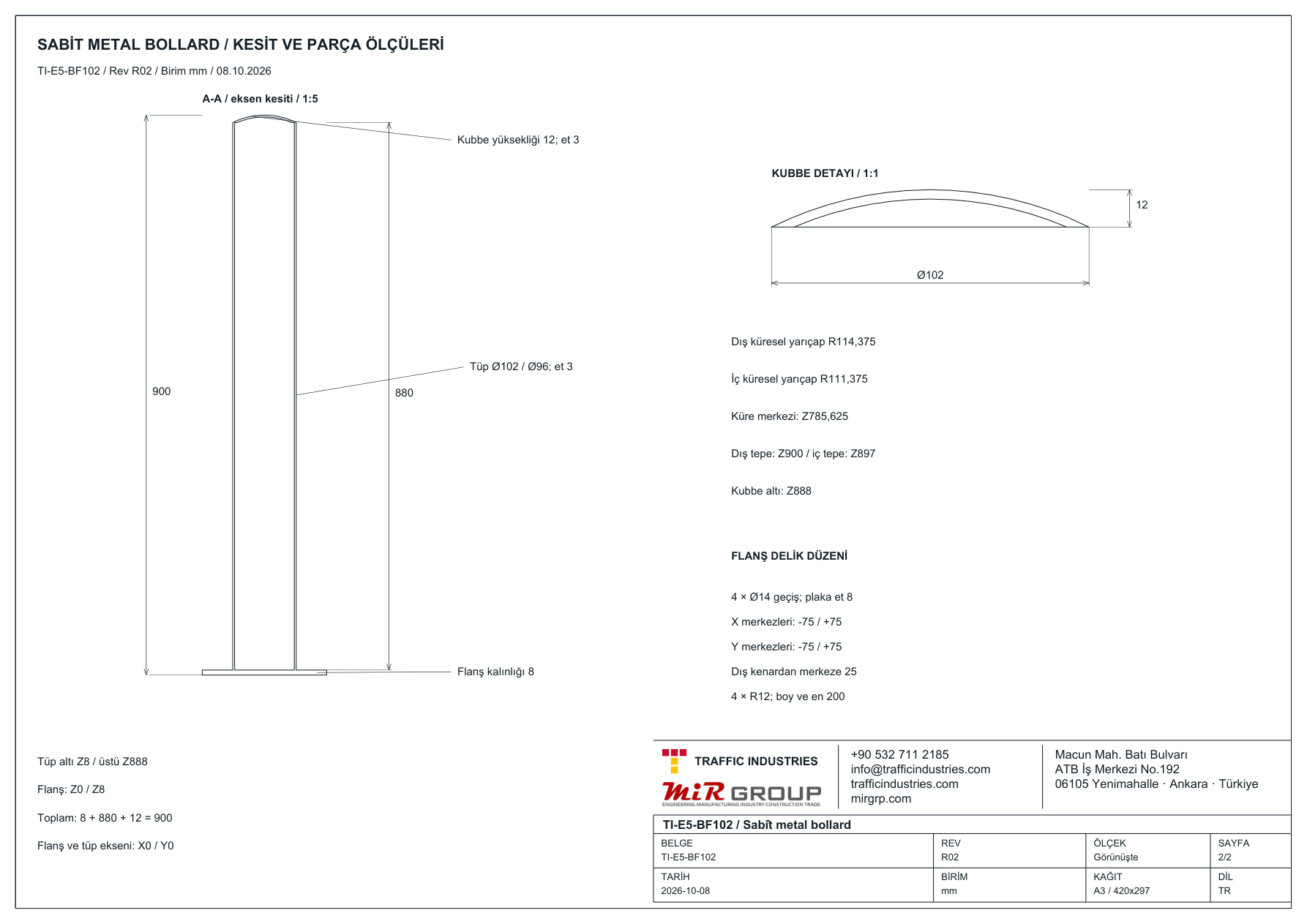
The files are free to download and require no registration.
There is no harmonised European standard for an ordinary guidance bollard; the requirement comes from the authority’s specification. A vehicle security bollard is a different world.
IWA 14-1 classifies performance under a single horizontal impact, and PAS 68 does the same job in the British system. If a bollard is sold as a security bollard, ask which test it was classified under.
Manufactured to the order specification in the Turkish market; the governing document is stated in writing at quotation. A crash-rated bollard is a different product; the bollard we supply is for demarcation and guidance. Test results and certificates are shared with the report and the document.
State any need to open the line for servicing or emergency access. Select the mounting type for the use and access plan; confirm the removable model's socket and lock details separately.
No verified vehicle-arrest rating is stated for this product group. If impact performance is required, confirm the tested model, foundation, arrangement and test report before quotation.
Specify the correct cap and operating arrangement for the empty socket. If vehicles need to pass over it, request the documented drive-over load for the socket and cap.
Send the country, location, layout drawing, mounting type, required size, material and quantities; include pedestrian and service-access requirements.
Parking & facility — all modelsStandard cross-reference table40'HQ container calculationDescribe the job, we list the equipment
Quantity, destination country and your specification if you have one. A technical answer comes back the same day; pricing is prepared by a person, never auto-generated.