
Speed bumps & ramps

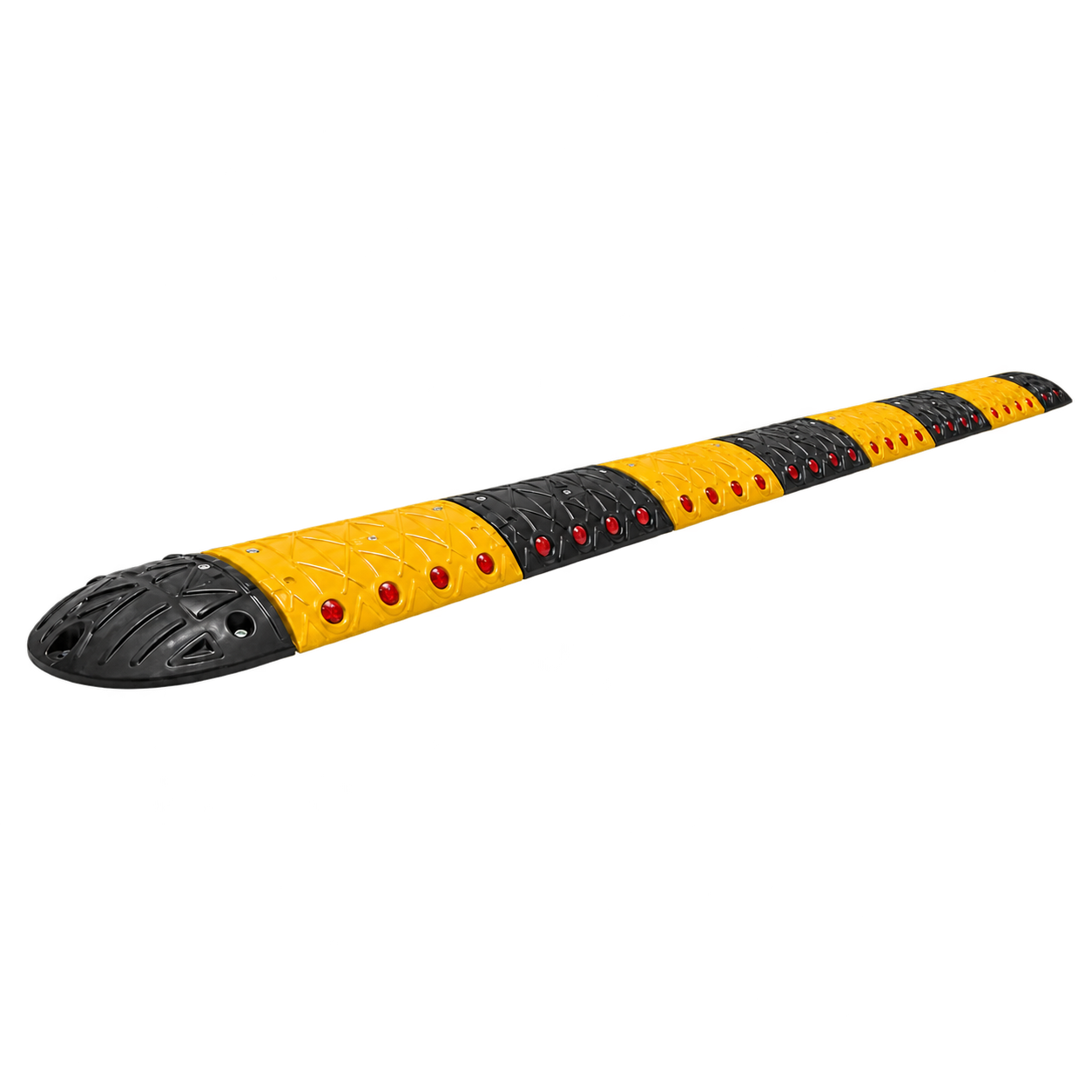
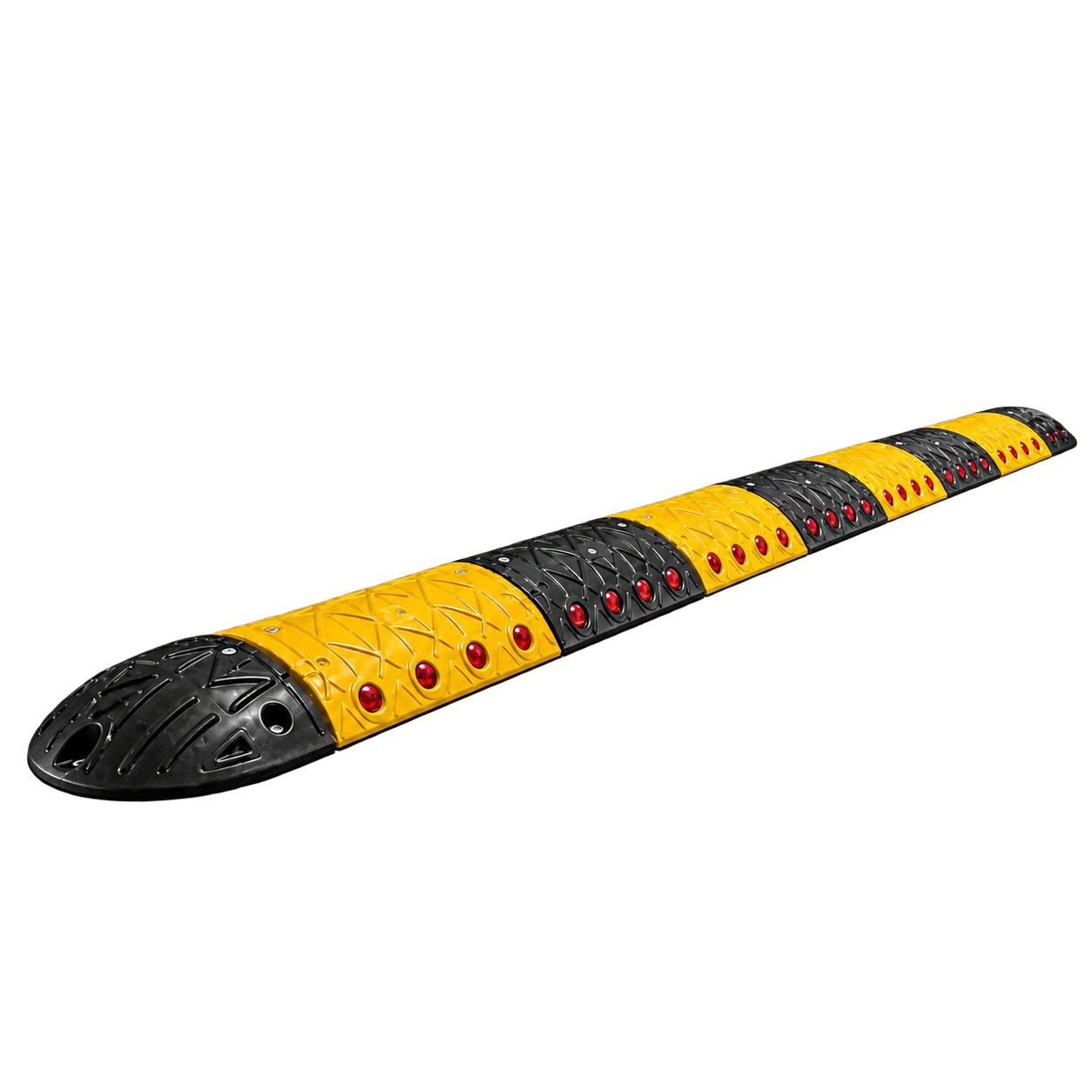
The rubber speed bump goes down where speed must fall under heavy, constant traffic without the body losing shape. The NR-SBR rubber body absorbs the blow and runs quiet; rubber speed bump modules complete to any width with end caps. It is heavy, quiet and durable. Yellow reflective bands show the hump at night; channelled versions also carry hose and cable. The rubber speed bump is used at logistics sites, in ports, on crossing approaches and around hospitals and schools.

  • Holds its shape under heavy vehicles
  • Quieter than plastic
  • Module plus end-cap system

Request a QuoteTell us quantity, country and mounting type — a technical answer comes back the same day.
Technical features

A rubber speed hump is heavier than its plastic equivalent and usually quieter under passage. It holds its shape longer under dense and heavy traffic; life and noise behaviour depend on the model, the installation and the traffic.

For the buyer the real difference is damage to the vehicle. A driver taking it fast or at an angle suffers bumper and suspension damage on concrete. A rubber body compresses instead of cracking and cuts that damage markedly.

Ramp types do a different job. They carry vehicles, trolleys and wheelchairs across kerbs and level changes. The aim is passage rather than slowing, so the gradient is gentler and the seating face wider.

Life follows traffic volume, sun and freeze cycles. In heavy use the reflectors and fixings are expected to need renewing every few years while the body lasts longer. A neglected hump fails through its installation rather than through the product.

The first weeks after installation are decisive: as the rubber beds in, bolts can loosen. Apply the torque value and inspection interval from the manufacturer installation sheet; the first check typically falls within the first month, with later checks on the stated period.

Three products, three separate regimes. The short car-park module goes down on private ground, at the operator’s own decision. A hump on a public road is installed under the authority’s permission, placement rules and signing requirements; the car-park module does not migrate onto a public road. The kerb ramp, in turn, exists to carry traffic across, not to slow it. Public-road work is quoted with the authority document named.

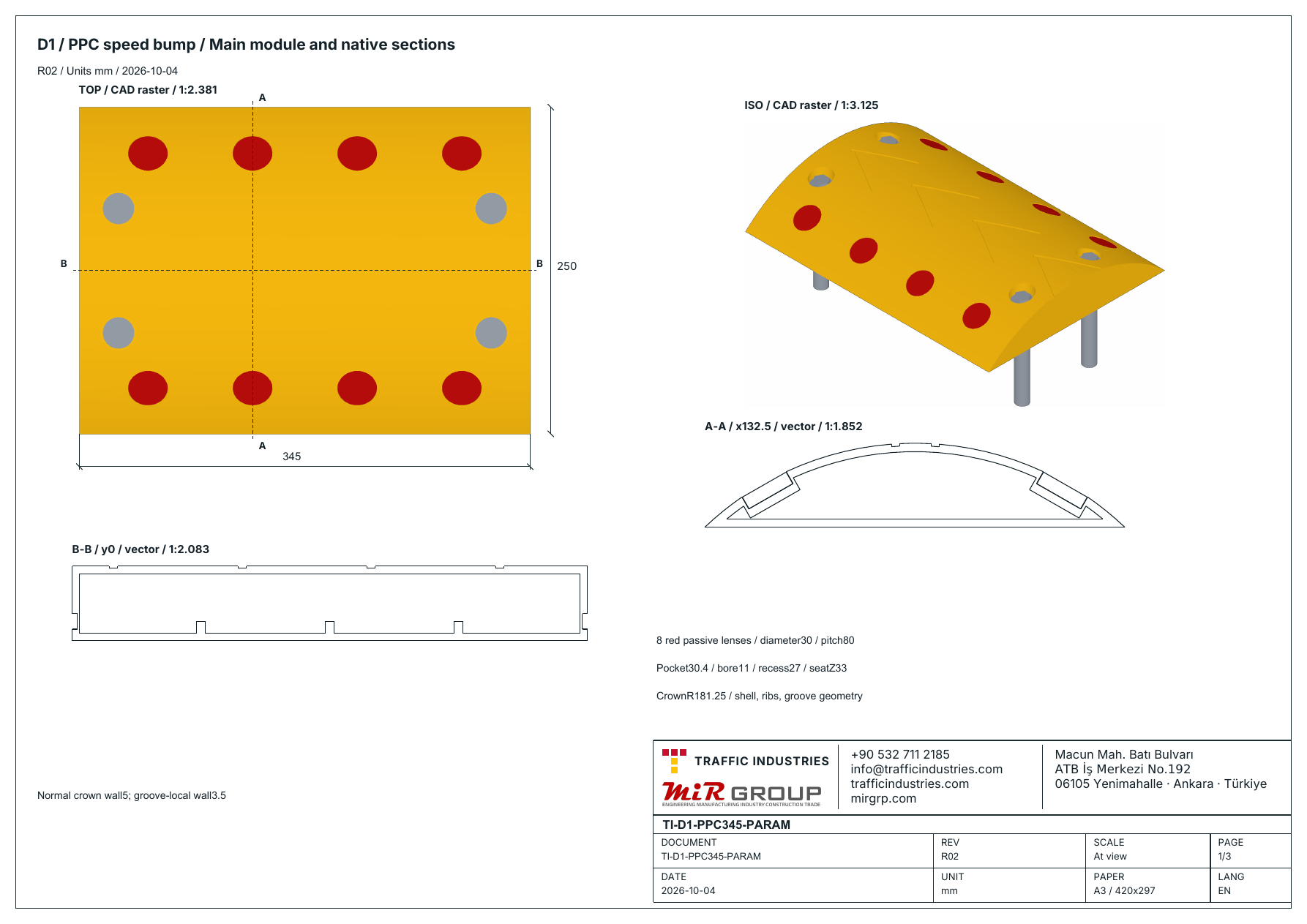
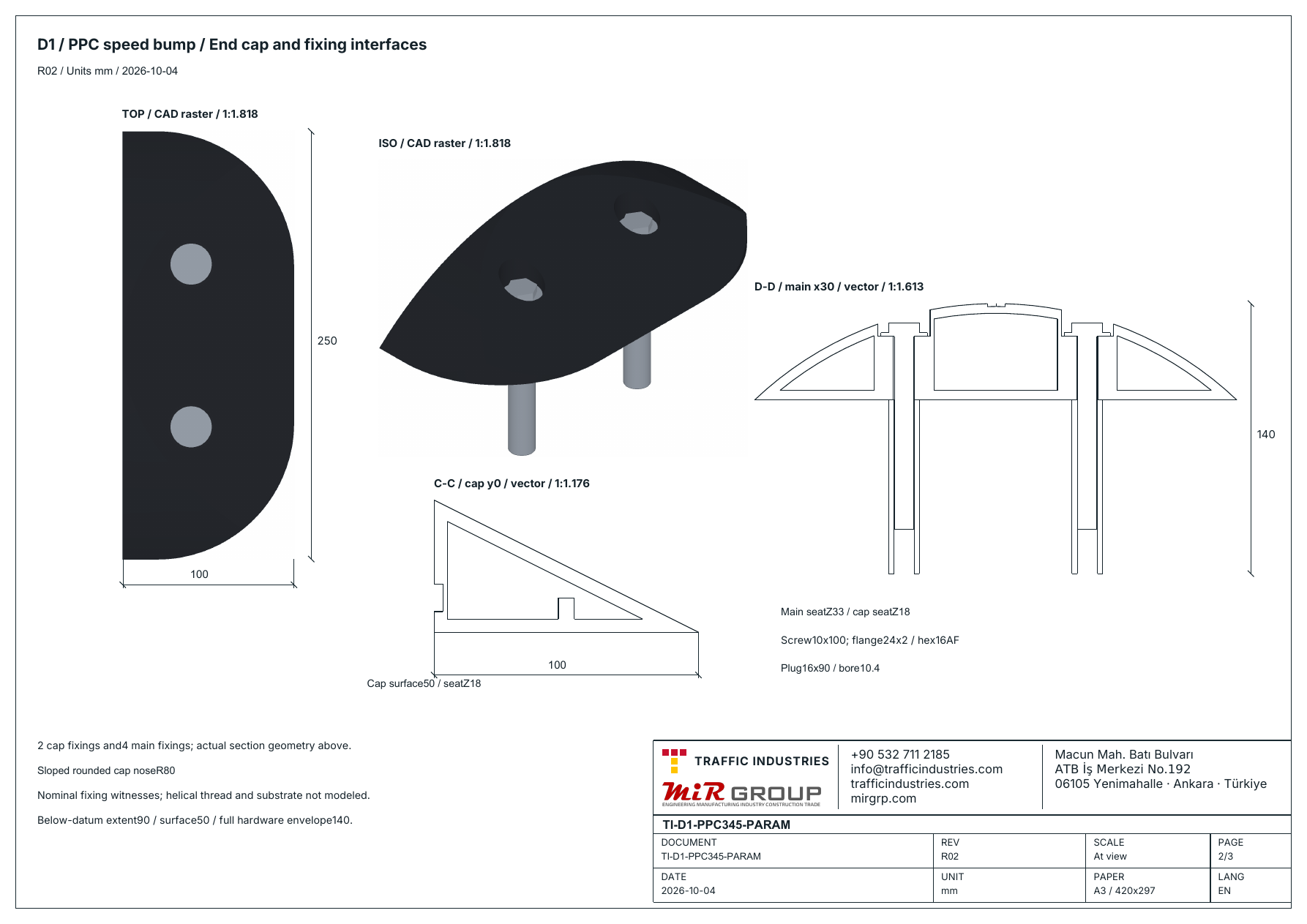
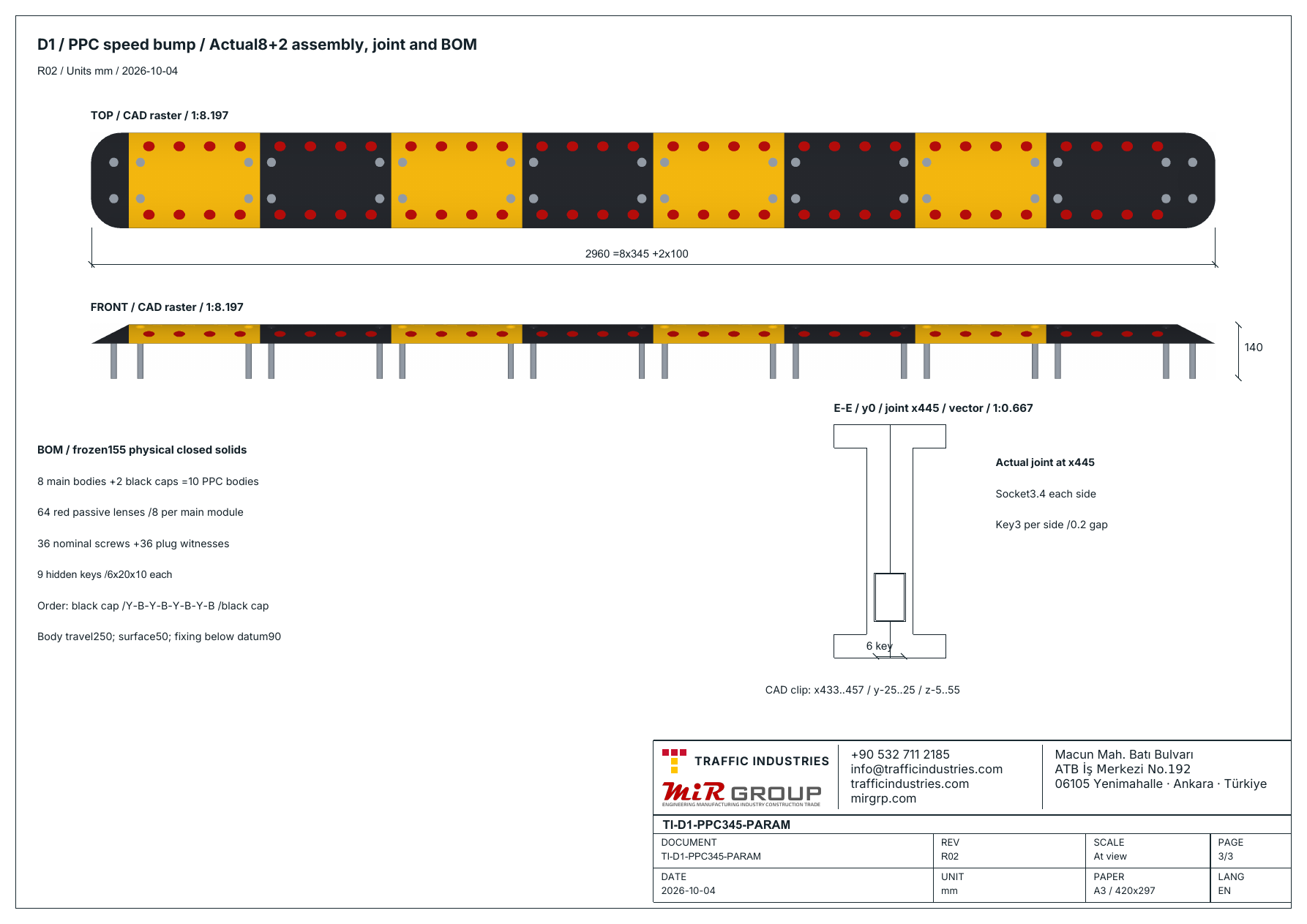
A module dimension is written on three axes: the length in the direction of travel, the transverse module length and the height — a single "size" figure does not carry all three. End caps, reinforcements and the fixing kit are listed separately per model; on channelled versions the channel section joins that list. The quotation arrives with the run drawing and the parts list.

  • Modular sections join to span any carriageway width, with chamfered end pieces.
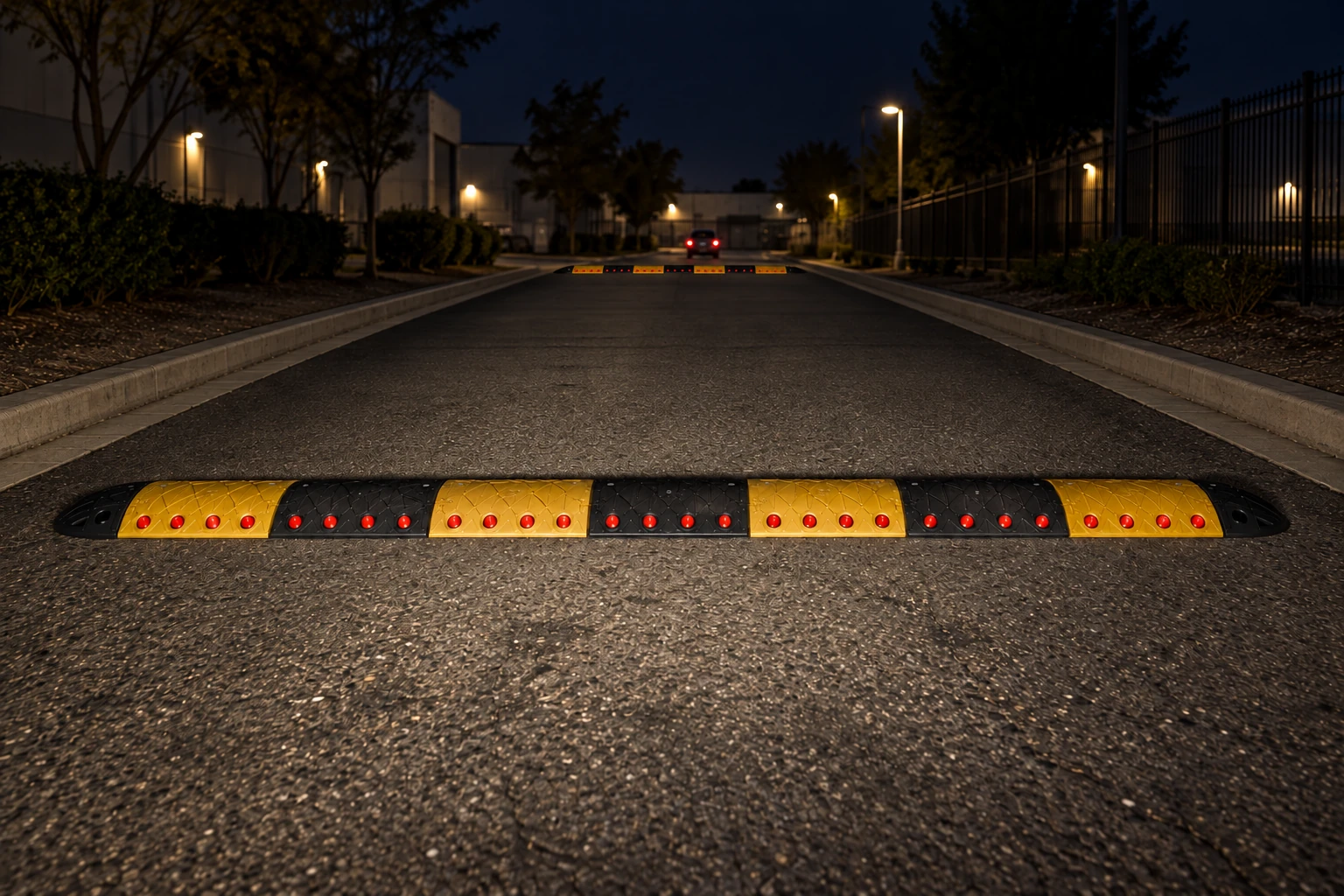
  • Reflectors set into the body reveal the bump under headlights at night.
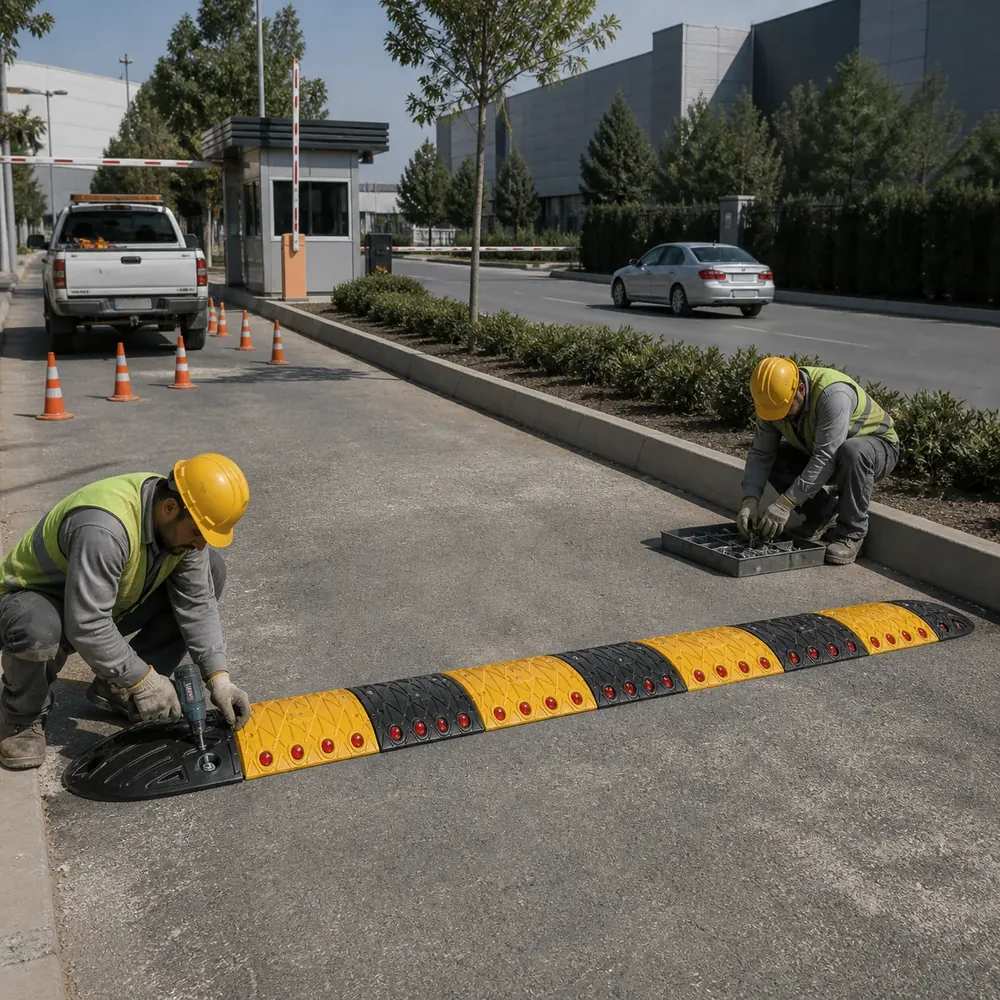
  • Bolted installation with no excavation or concrete, and it can be lifted and moved later.
  • Profile height is chosen from the target speed: the higher the profile, the lower the crossing speed.
Technical summary

The technical values for this group follow the order's specification; size, material and weight are stated in writing with the quotation.

Installation
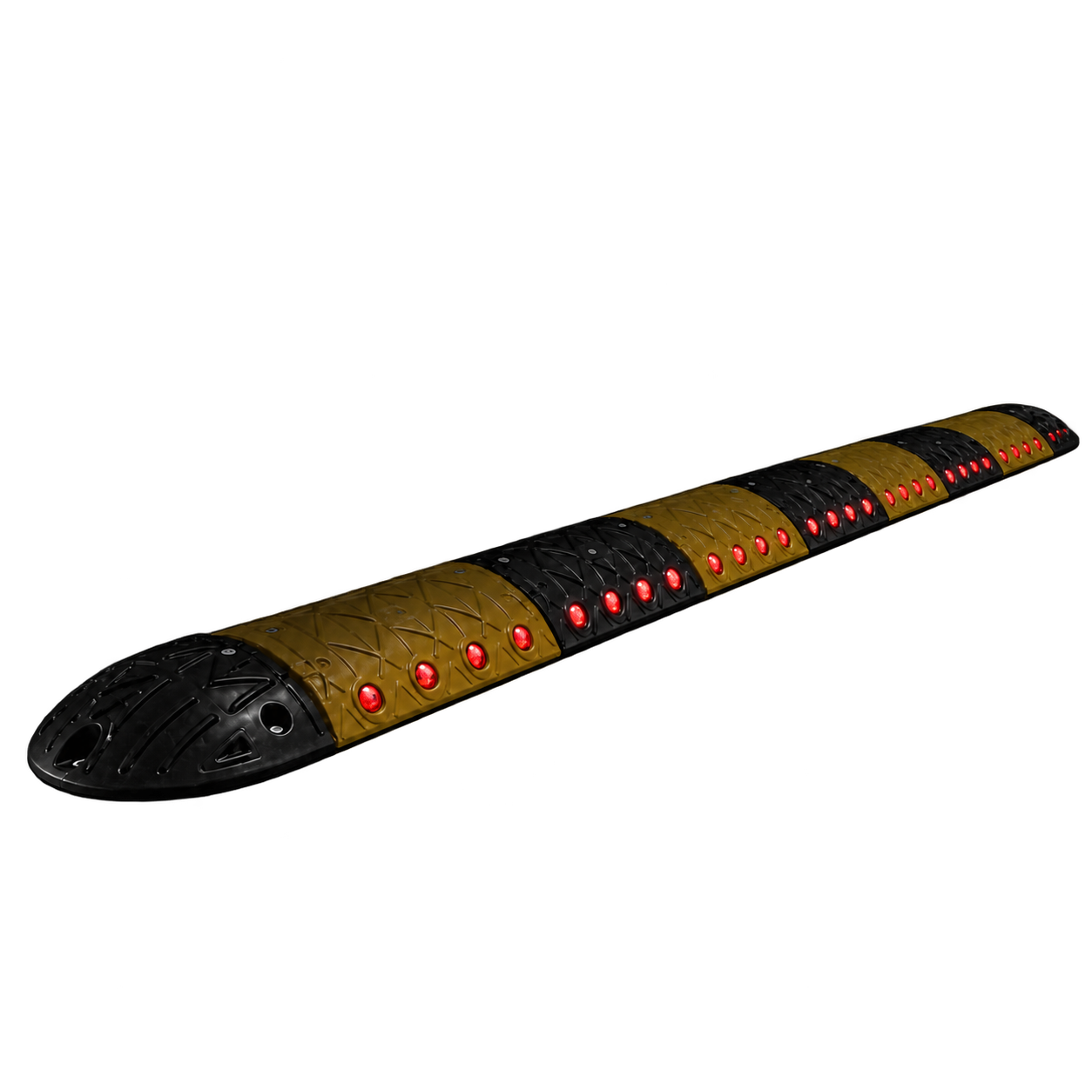
Rubber speed bump run: end cap 400×200 mm + bodies 500×400 mm + end cap; yellow reflective bands
Body and end-cap run — body 500×400×45 mm (7 kg), end cap 400×200×45 mm (2 kg).
Where it is used
  • Logistics site and port. Under heavy vehicle traffic the rubber speed bump holds its shape and keeps working.
  • Before a crossing. The rubber speed bump installs permanently with anchor bolts, tying crossing speed to physics.
  • Hospital and school surroundings. The rubber speed bump cuts speed in a busy pedestrian area without creating noise.
  • Cable-crossing yard. In the channelled version the rubber speed bump shields hose and cable from vehicle load.
Ordering, documents and shipping

Ordering

Minimum order
There is no minimum order requirement. Mixed loads are accepted; you are not asked to fill a pallet or a container with a single item.
Packing
Export packing: shrink-wrapped pallets or cartons, with pallet size and gross weight stated on the packing list.
Container
The 40'HQ count depends on the height and variant chosen; the quotation states it with the pallet and container count.
Lead time
Set by the order quantity; the quotation states it in days and the shipment plan is fixed at order confirmation.
Origin
Stated in writing per item in the quotation.
Delivery terms
FOB · CFR · CIF · DAP

Shipping

  • Pallet. A heavy product — the container is limited by weight rather than volume · Modules are palletised and the count per pallet follows the size · The anchor set travels with the product · Reflectors ship fitted
  • 40'HQ. 40'HQ calculation

Downloads

  • The technical document and specification text are in preparation — sent with the quotation.
  • DWG drawing and installation manual — supplied with the quotation.
Standard reference

Rubber speed bumps, like plastic ones, follow national regulation; a product-specific harmonised European standard was not verified in this research. Rubber earns its place through longer life under heavy traffic and less noise.

A specification usually gives the profile height and the target speed.

Manufactured to the order specification in the Turkish market; the governing document is stated in writing at quotation. Hump placement follows the authority specification; a warning sign ahead of the hump is standard practice. Test results and certificates are shared with the report and the document.

Frequently asked
How long does a rubber speed bump last?

Life follows traffic volume, sun and freeze cycles. In heavy use the industry expectation is that reflectors and fixings need renewing after a few years while the body lasts longer. Maintenance is the real determinant: a loosened bolt is the most common reason a hump leaves the road.

Can a rubber ramp be used for a kerb crossing?

Yes — ramp types exist for exactly this: they carry vehicles, trolleys and wheelchairs across a level change. Unlike a hump, the aim is passage rather than slowing, so the gradient is gentler and the seating face wider. A ramp is not left unfixed against the kerb. Loose, it creeps as heavy vehicles pass and opens a gap at the kerb edge.

Is a rubber speed bump made from recycled rubber?

Recycled rubber is the common feedstock in this product class, and it is a reason to choose it rather than a flaw. It resists impact and temperature swings, compressing instead of cracking. For the buyer, the practical difference is that a vehicle taking it fast or at an angle suffers far less damage than on concrete.

What width of rubber speed hump is needed?

The width must cover the whole carriageway. A gap left at the edge invites drivers to steer around the hump through the middle or the shoulder, and the measure stops working. Modules join side by side to match the road width, with ramped end pieces at the ends. Where a cycle or pedestrian gap is wanted, it is designed and marked rather than left by accident.

Should I choose a plastic or a rubber speed bump?

Traffic volume and vehicle weight decide. A plastic speed bump is light, modular and installed by one person. The right choice for estate roads, car park entrances and low-to-medium traffic. A rubber one is heavier, quieter and holds its shape longer under dense heavy traffic.

How is a plastic speed bump fixed to asphalt?

Modules join side by side to match the road width, ramped end pieces go on the ends. The whole assembly dowels into the surface. Asphalt takes an expansion or chemical anchor, concrete a dowelled bolt. Because no asphalt is laid, the road reopens the same day. Check the surface is flat before fitting. A hump seated over a hollow or a crack does not make full contact and its bolts loosen quickly.

What speed does a plastic speed bump bring traffic down to?

The effect follows the height and width of the profile. Narrow, tall profiles bring vehicles into the 5–10 km/h band and suit car parks. Wide, low profiles hold 15–30 km/h and are used where the flow must not stop entirely. The wrong profile either fails to slow anyone or brings every vehicle to a halt.

What site information should a speed bump enquiry include?

Four facts change the choice: (1) do forklifts and laden vehicles cross — a tall profile upsets load stability, so forklift routes take a low, wide profile; (2) is the route a bus or emergency corridor — there the profile and placement are settled together with the authority; (3) what is the approach — where vehicles arrive fast or blind, visibility is solved first; (4) is the ground asphalt or concrete. Put these four in the enquiry and the profile recommendation is right the first time.

Get a quote for this product

Quantity, destination country and your specification if you have one. A technical answer on Speed bumps & ramps comes back the same day; pricing is prepared by a person, never auto-generated.

Request a Quote