Get a quote for this product
Quantity, destination country and your specification if you have one. A technical answer comes back the same day; pricing is prepared by a person, never auto-generated.
Request a QuoteTell us the nominal model height, quantity and delivery country.
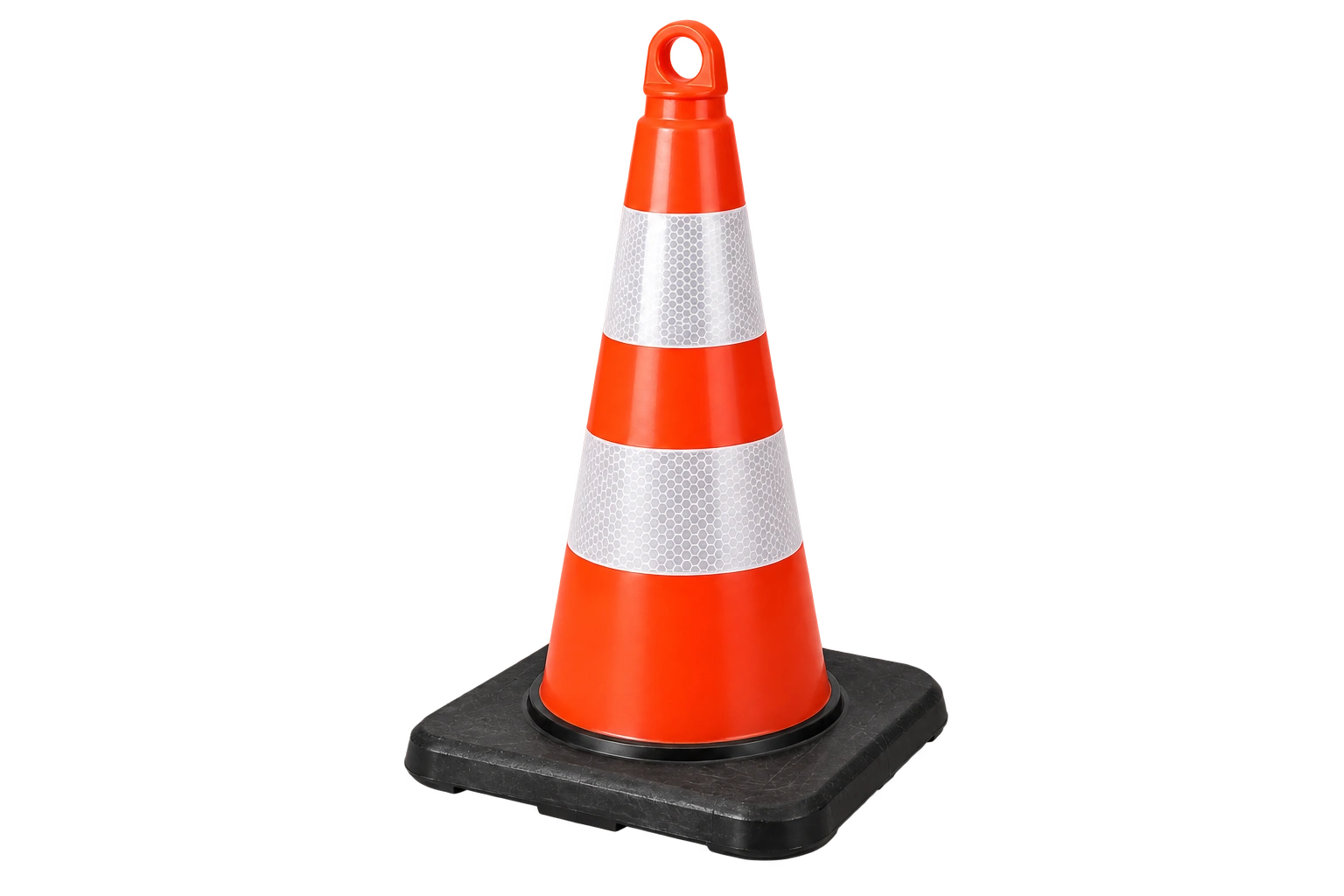
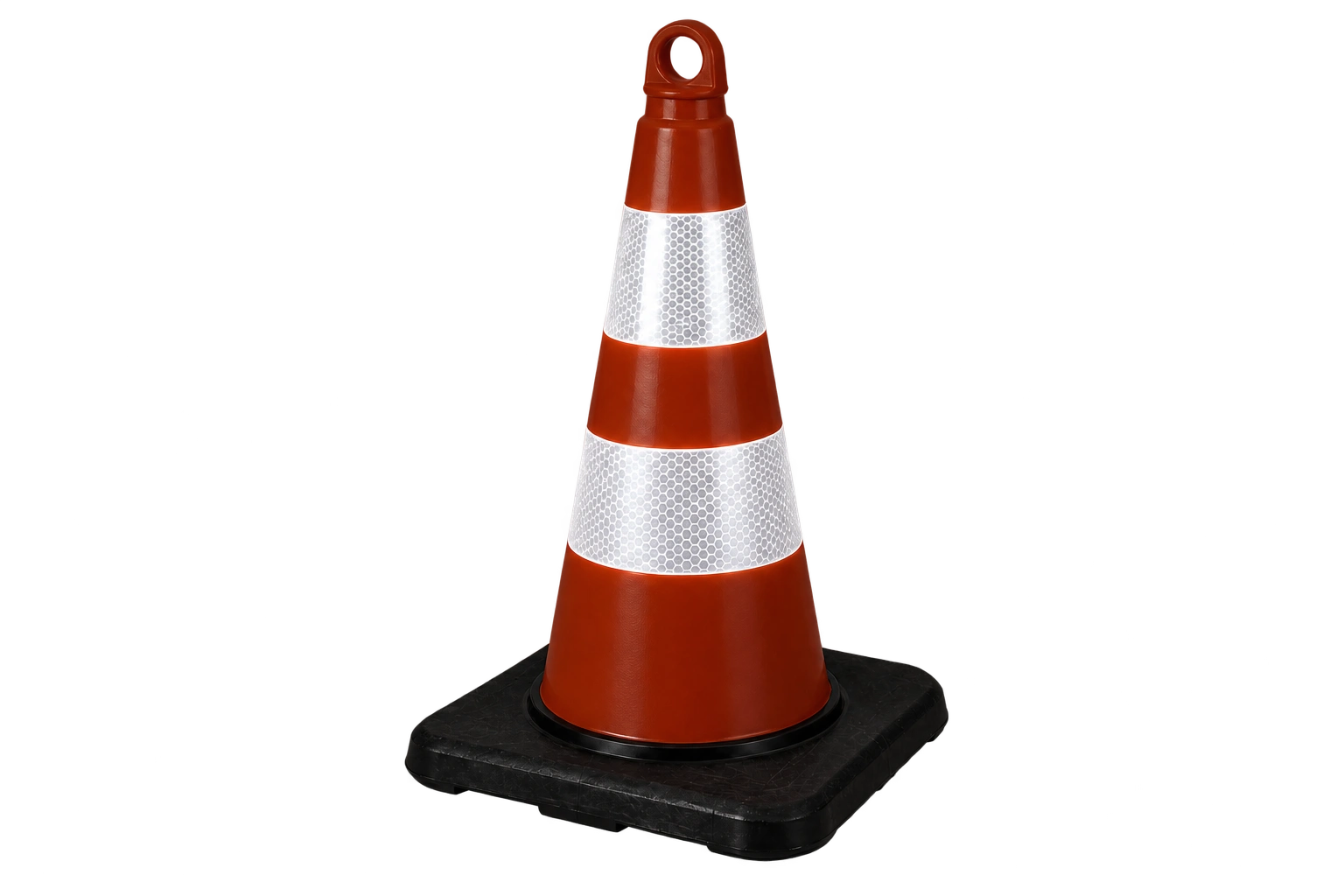
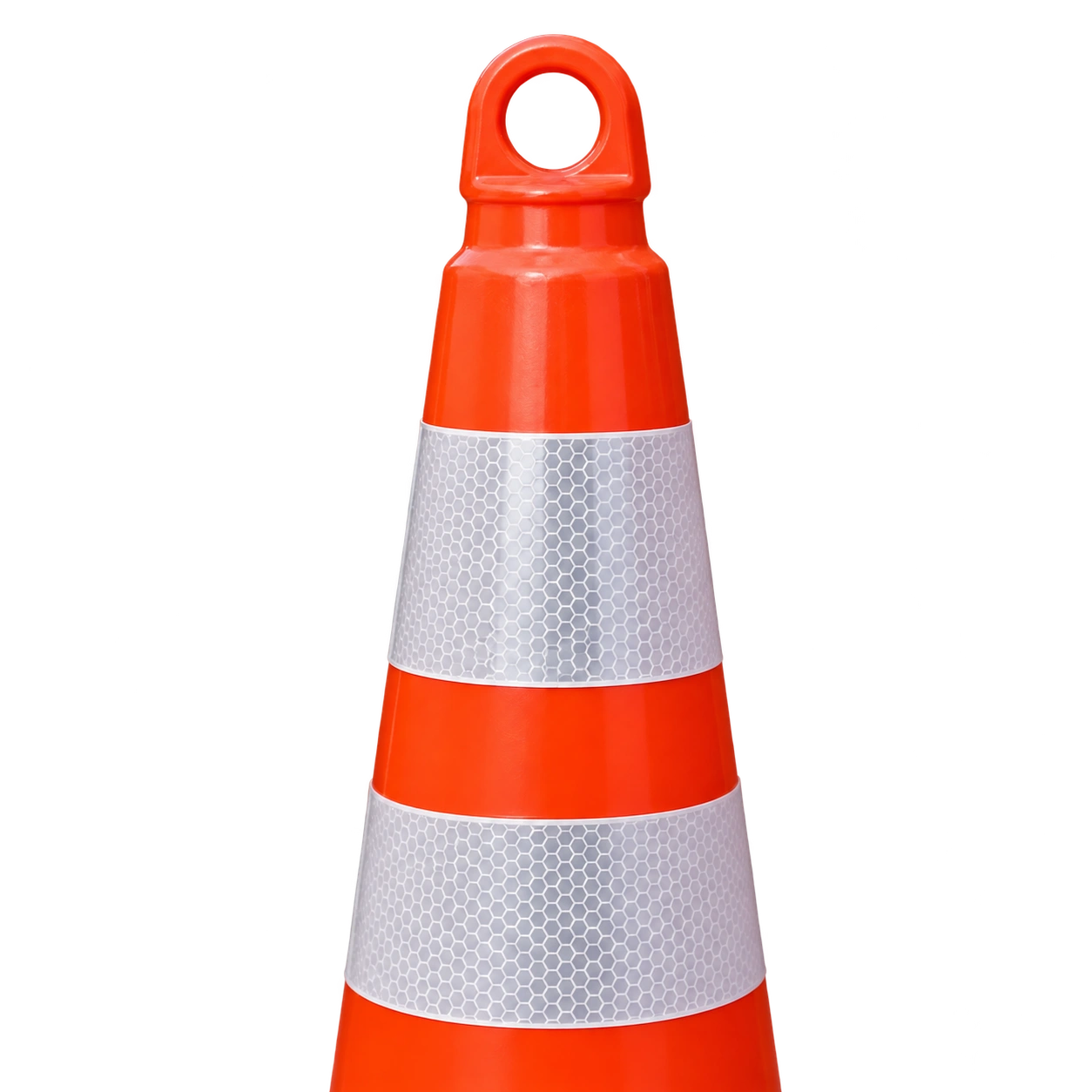

Digital application scenes illustrate how the product may be used; they are not records of completed customer projects.
PVC traffic cones are selected for temporary guidance at road works and facilities. State the road type, visibility conditions and required height in your enquiry. Confirm the selected model's dimensions, base, material and reflective-collar documentation before ordering.
| Single model | TI-C1-PVC75-PARAM-P01 • nominal single-unit envelope 485 × 485 × 750 mm. |
|---|---|
| Nested arrangement | The nominal height of the nested-arrangement reference is 862 mm; this is not the single-unit height. |
| Scope of dimensions | Dimensions refer to the identified downloadable design model; order dimensions and fixings are confirmed on the project drawing. |
| Application location | Road works, car park or facility; country and road type |
|---|---|
| Height requirement | Required cone height; finalised against the selected model's confirmed data sheet |
| Reflective-collar requirement | Collar arrangement and required performance documentation |
| Cone line | Work plan, temporary guidance line and required quantity |
|---|---|
| Accessories | Lamp, sign or chain requirements; parts requested with the order |
| Delivery and documentation | Delivery location, quantity and required product documentation |
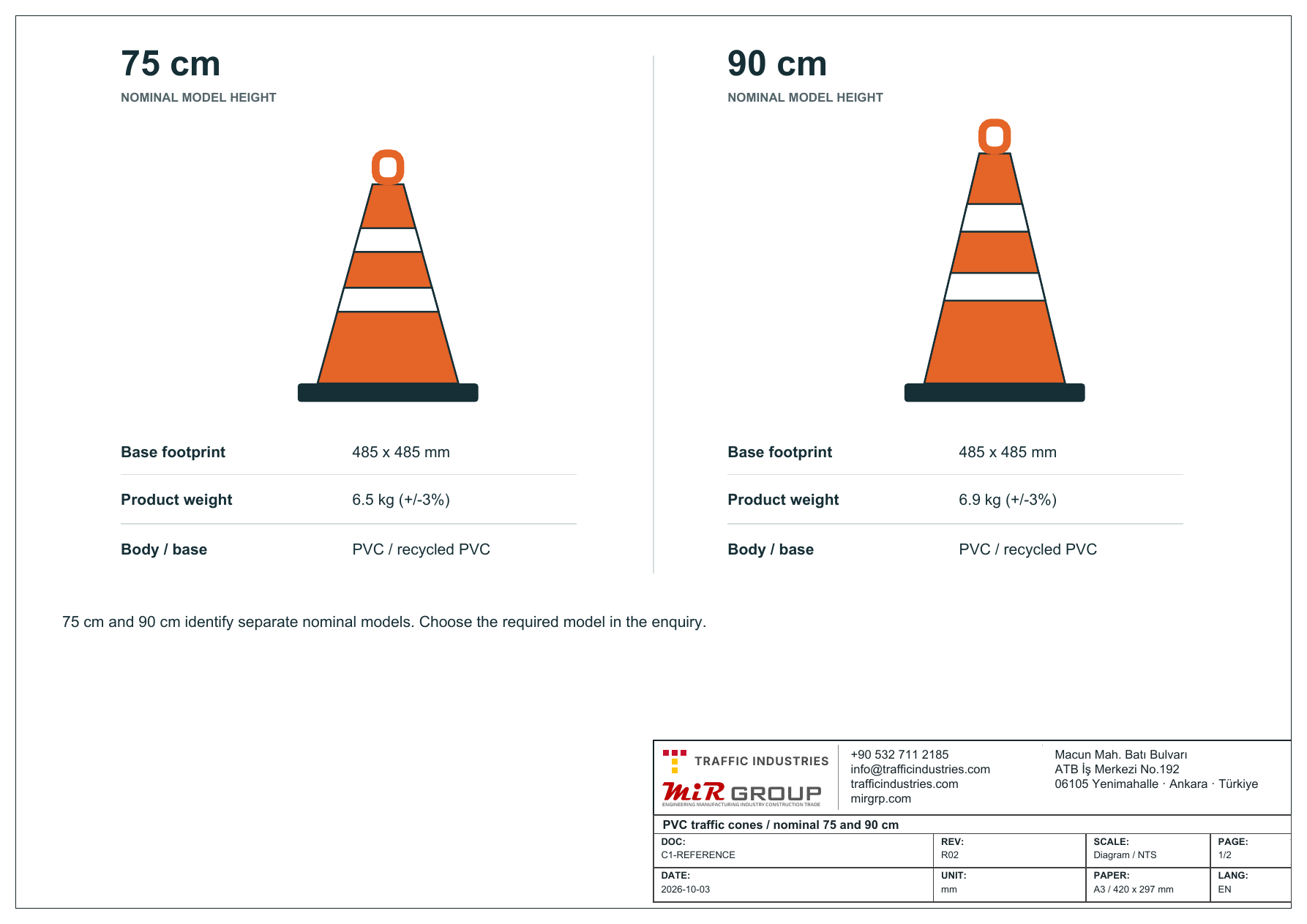
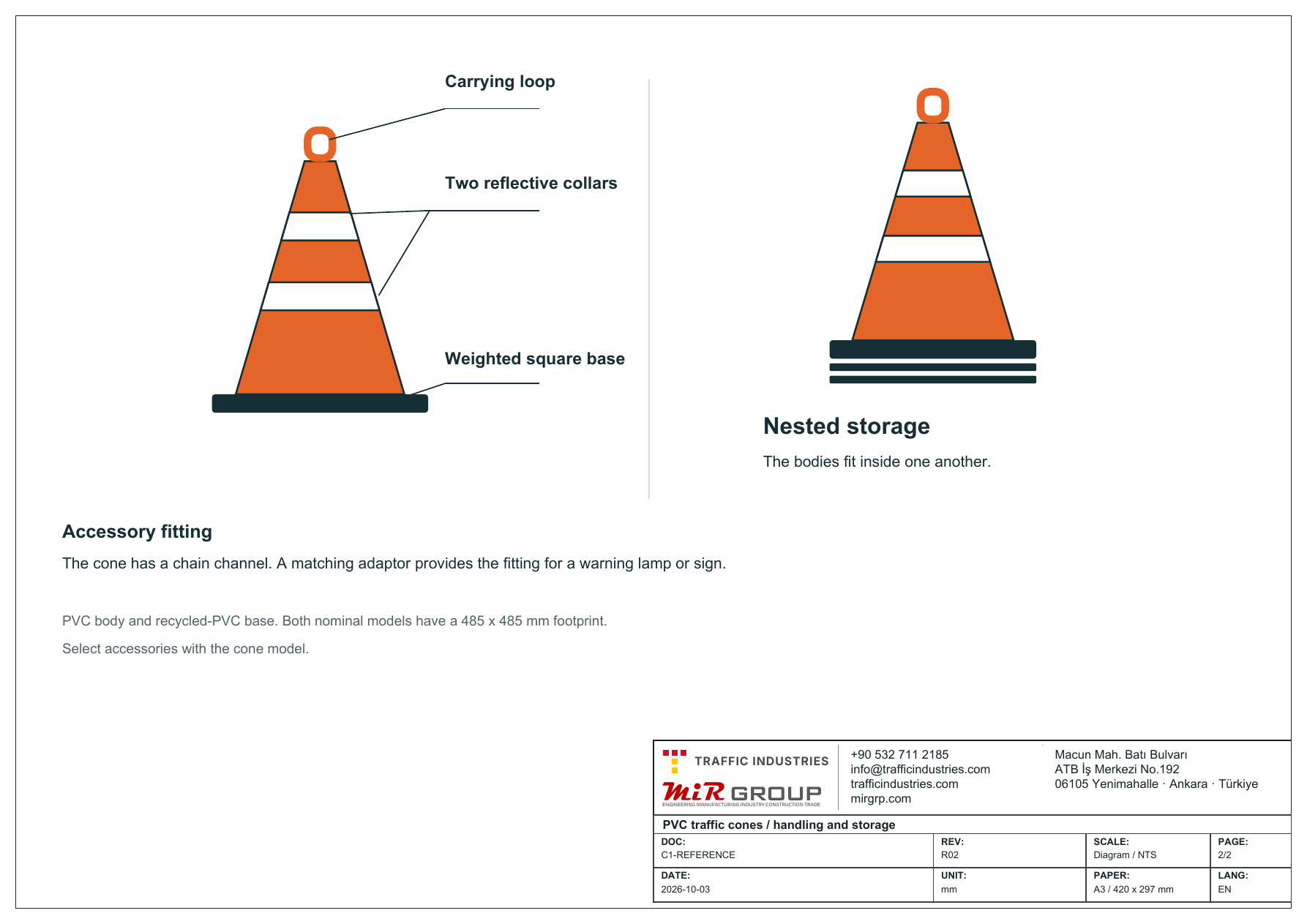
The files are free to download and require no registration.
| Variant | STEP | IFC4 | DWG | DXF | All | |
|---|---|---|---|---|---|---|
| TI-C1-PVC75-PARAM-P01Single cone — nominal 75 cm (750 mm) | STEP | IFC4 | DWG | DXF | ZIP 3.0 MB | |
| TI-C1-PVC75-PARAM-P01-NESTEDNested pair arrangement — 862 mm overall envelope | STEP | IFC4 | DWG | DXF | ZIP 3.0 MB |
The complete package contains the PDF drawing and STEP, IFC4, DWG and DXF files.
EN 13422:2019 defines visual and physical performance and testing for retroreflective traffic cones and cylinders. Conformity of the selected model is assessed against matching reports and supply documentation.
State the road type and work plan. Select height for the application requirements and confirm the model dimensions before quotation.
Request classification and test documentation matched to the selected model. Collar appearance alone does not establish performance.
Specify the accessory with the cone model. Confirm adaptor compatibility and included parts during quotation.
Send the height requirement, location, quantity and delivery destination. Price, minimum order and warranty terms remain unverified and require quotation confirmation.
Quantity, destination country and your specification if you have one. A technical answer comes back the same day; pricing is prepared by a person, never auto-generated.