Access control

Hydraulics that stop vehicles.

Access control: the products

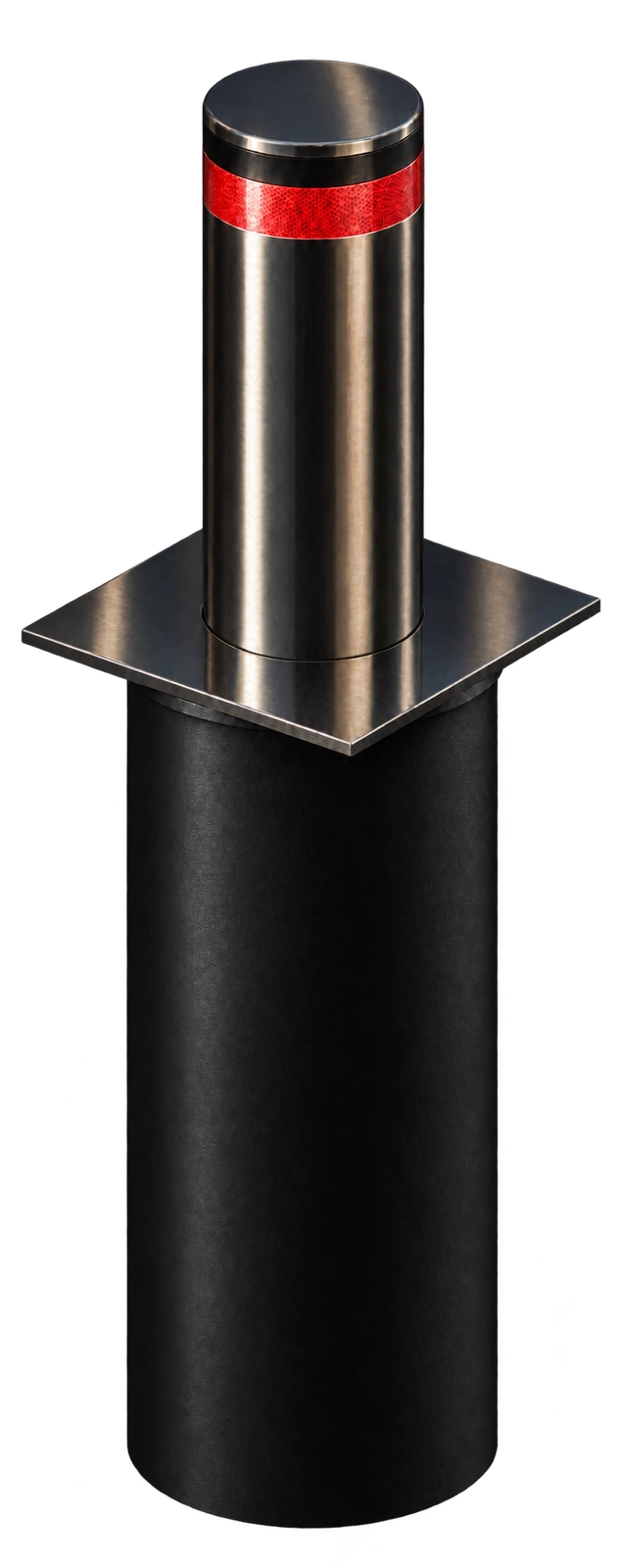
Rising bollards

A rising bollard is a hydraulic obstacle that stops a vehicle rather than warning it. It rests flush with the surface, rises on command and physically closes the route.

Where an entrance opens many times a day it replaces the bollard that has to be lifted by hand.

Technical data and dimensions →

How to choose

This family is a separate world from the rest of the catalogue. The products do not warn a vehicle, they stop it.

They arrive with a hydraulic unit, a control panel and a below-ground housing, and installation is a project.

The choice starts with how much of the opening must close.

Where pedestrians keep moving, a row of rising bollards is used; projects that need the opening closed completely or one-way movement enforced are assessed separately, with the scope set by the project.

The below-ground volume is the first constraint of this family. Where water, gas, power and communications run, the position is planned with the utility drawing. A quotation given without a pre-excavation survey changes on site.

Drainage is the most frequently skipped and most expensive detail. Water collecting in the housing pit destroys the hydraulics. A base drain or a pump removes most of the maintenance cost at the outset.

When asking for a quotation, state the opening width, the ground section, the electrical supply and the power failure scenario.

Without those four neither the time nor the price can be fixed, and the service agreement is discussed in the same quotation.

Lead time in this family is unlike the others. The product does not come from stock but is made to the project dimensions.

Delivery is measured in weeks, commissioning in days, and it needs a field crew.

The service agreement is part of the product. Hydraulic oil, seals and the control board need servicing at intervals. Systems without an agreement stay out of use for weeks after the first fault.

In this family the safety arrangement is inseparable from the product.

Take the sensor, the warning lamp, the audible signal or the floor marking out of the specification and the system works but does not work safely. The commissioning report should show each component tested.

In this family the buyer purchases a service rather than a product. Survey, manufacture, installation, commissioning and maintenance form one chain. Giving one link to another party leaves responsibility unclear when a fault appears.

The position decision changes the traffic too. The queue at the gate grows in proportion to the closing time. The position of the gate and the approach distance are therefore planned as carefully as the product.

Get a quote

Quantity, destination country and your specification if you have one. A technical answer on your enquiry comes back the same day; pricing is prepared by a person, never auto-generated.

Request a Quote