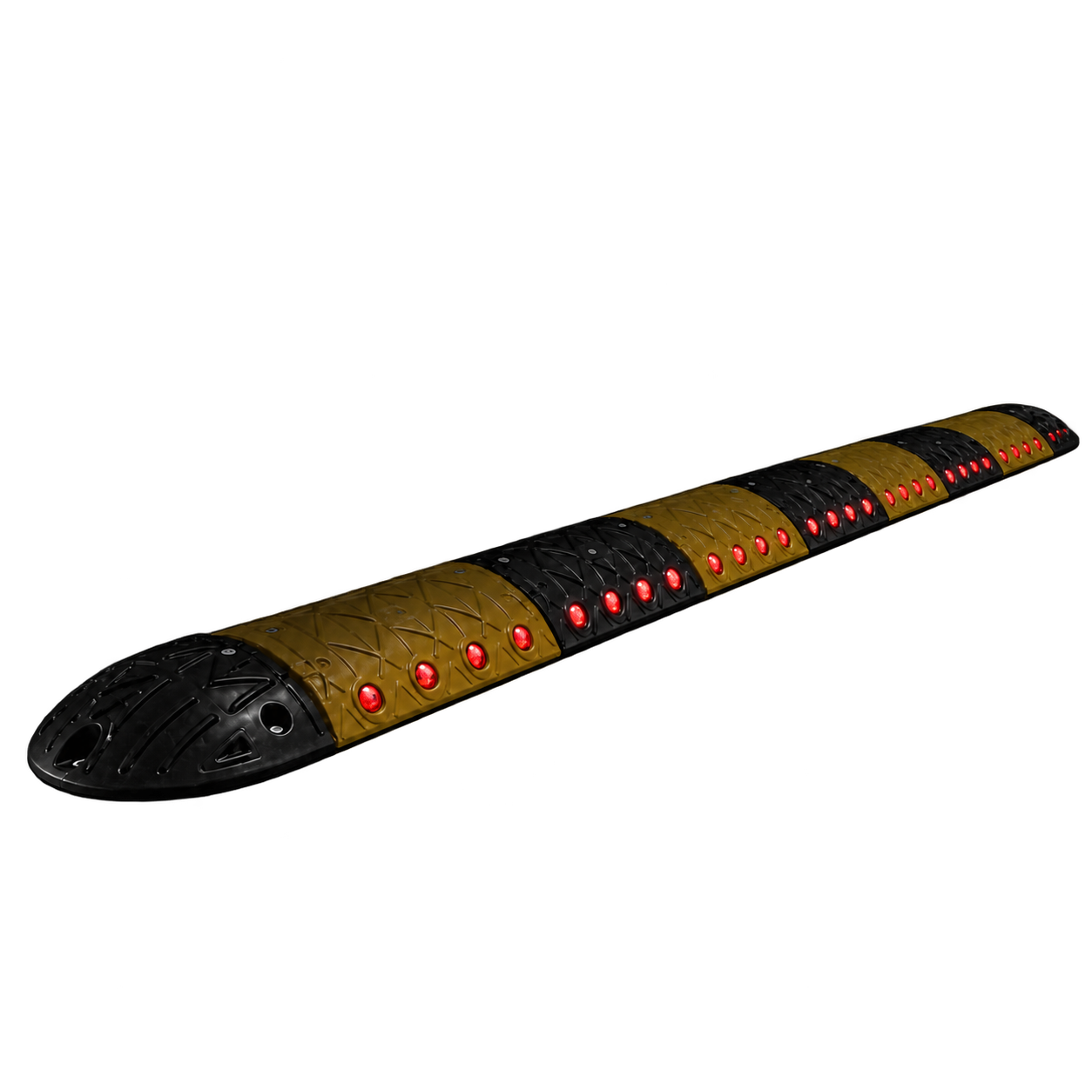
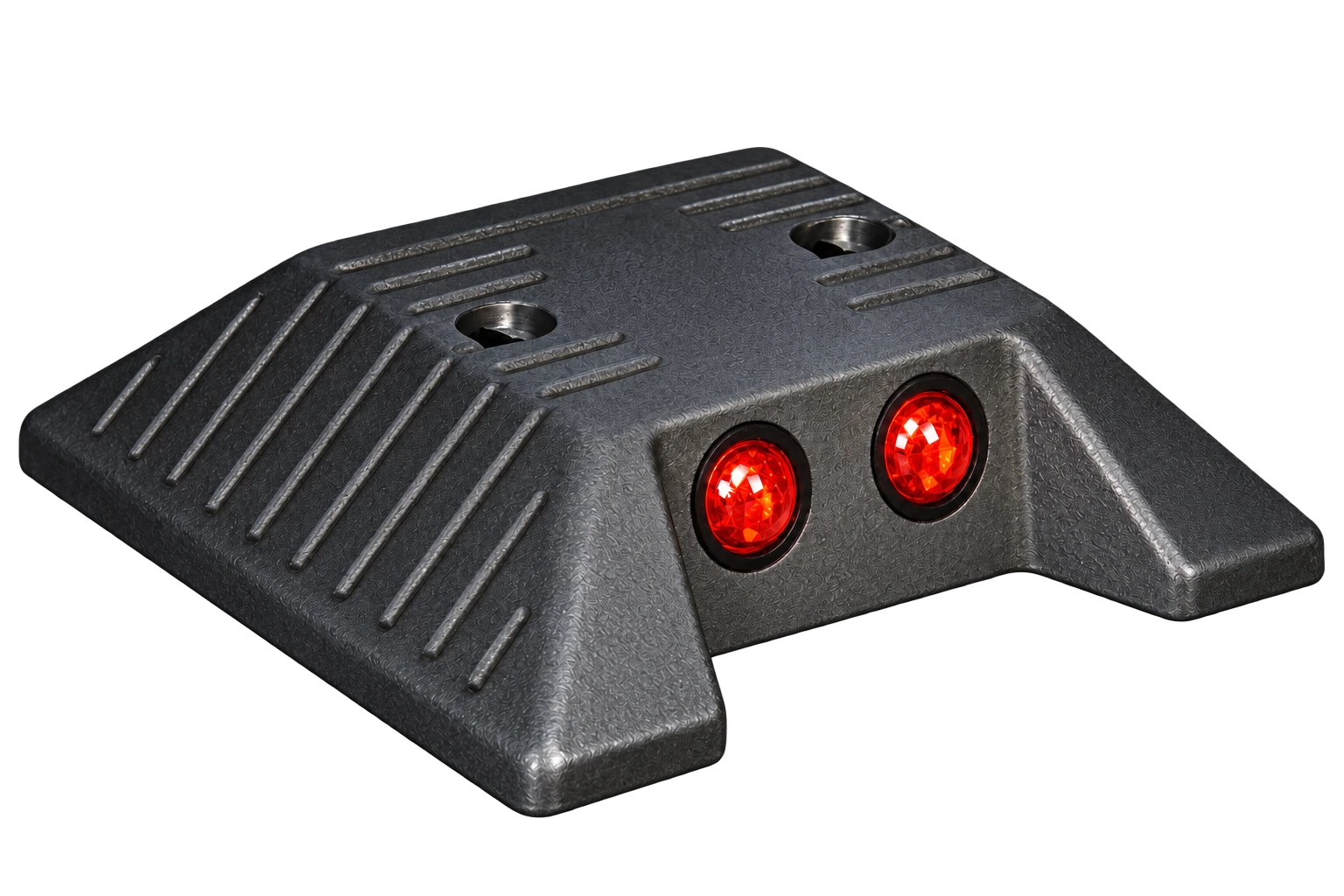
How to choose
The shared logic of this family is cutting speed by physics rather than by warning. A sign can be ignored, a hump cannot.
A road stud does not cut speed; it keeps the lane readable at night.
The choice starts with the target speed. For 5–10 km/h a narrow, tall profile is used; for 15–30 km/h a wide, low one. The profile cannot be chosen before the target speed is written down.
The material decision follows the weight of the traffic. Plastic is light, modular and quick to install; rubber is heavy, quieter and holds its shape longer under dense heavy vehicle traffic.
The commonest mistake is placing a single hump at one point. The driver accelerates afterwards and the average speed does not change; an effective layout repeats along the route.
When asking for a quotation, state the road width, the target speed and the vehicle types using it. The module count and the number of end pieces follow from those three.
In this family the quality of the installation comes before the quality of the product. A loosened bolt lifts the hump off the road.
One torque check a month after installation saves most of the following years.
Where drainage is ignored the hump becomes a block of ice in winter. On a gradient water ponds in front of it.
Unless the layout is planned with the drainage line the measure turns into a hazard.
The road stud does a different job in this family. It does not cut speed; it tells the driver where the road goes at night and in rain, where the painted line disappears.
Used with a hump the two complete each other.
In this family the product is inspected twice over its life: a month after installation and at the start of each season. The first checks bolt torque, the second the reflectors and the fixings.