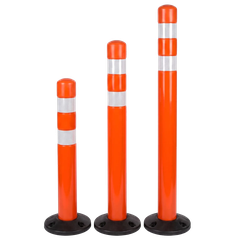
Get a quote for this product
Quantity, destination country and your specification if you have one. A technical answer comes back the same day; pricing is prepared by a person, never auto-generated.
Request a QuoteTell us quantity, country and mounting type — a technical answer comes back the same day.


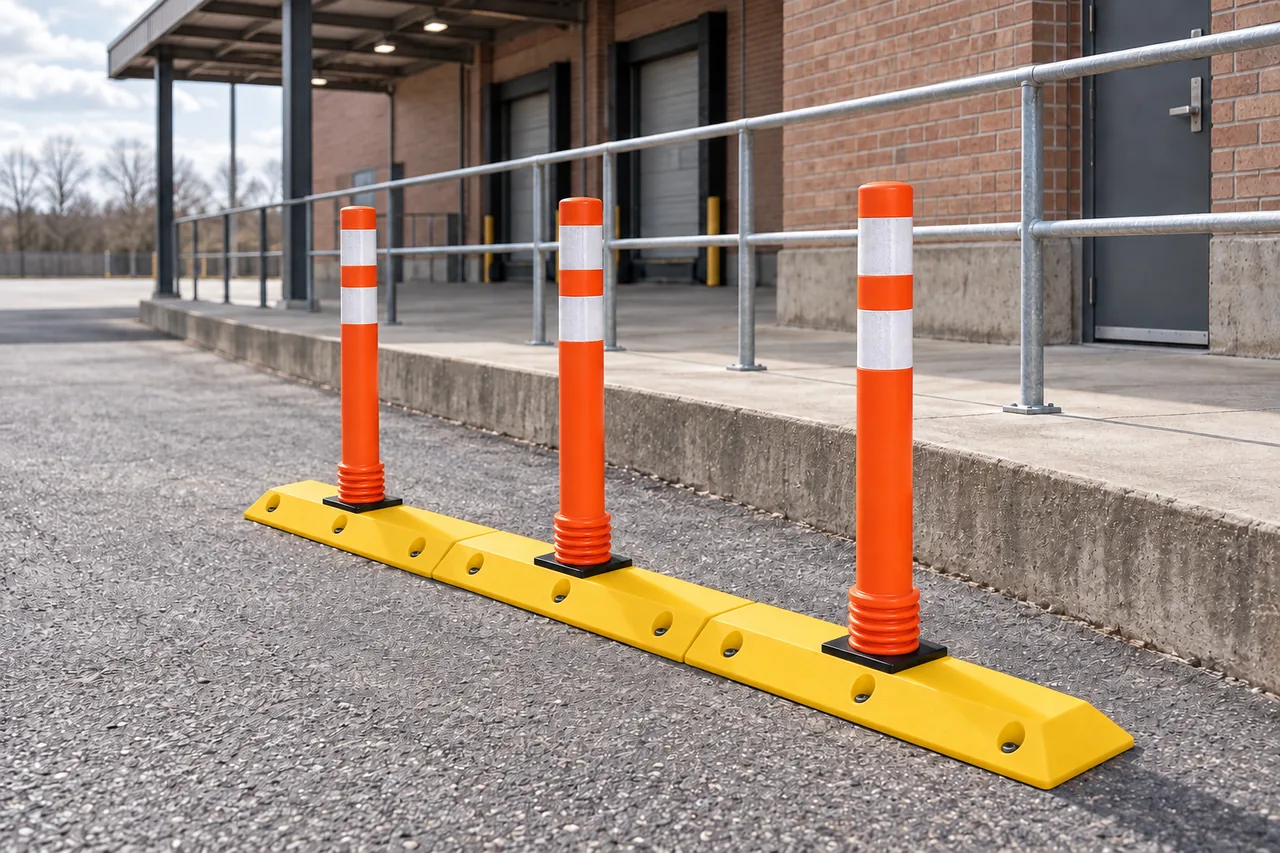
Digital application scenes illustrate how the product may be used; they are not records of completed customer projects.
The lane channelizer is a low-profile separator unit fixed to the road to divide two streams physically. A driver can ignore a painted line but feels the lane channelizer through the wheel — where the model profile and the layout allow it, its sloping sides let emergency vehicles cross, and a delineator, cat eye or flap mounts on top. It is low, modular and relocatable. Because its top socket accepts a vertical marker, the lane channelizer becomes one line that warns by contact and by eye. The lane channelizer is used on bus lanes, in cycle-lane separation, at turning pockets, on junction islands and in opposing-flow division.
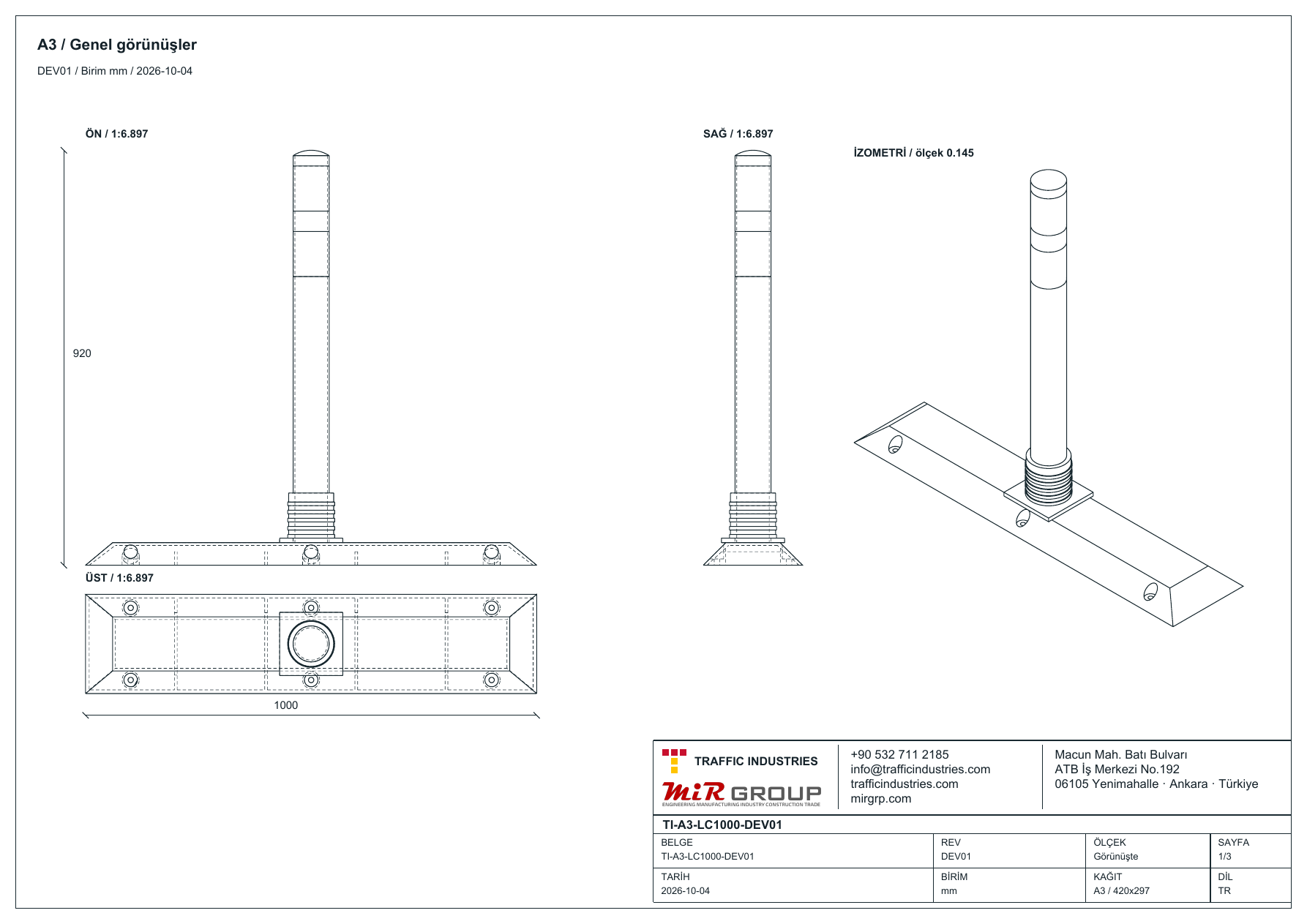
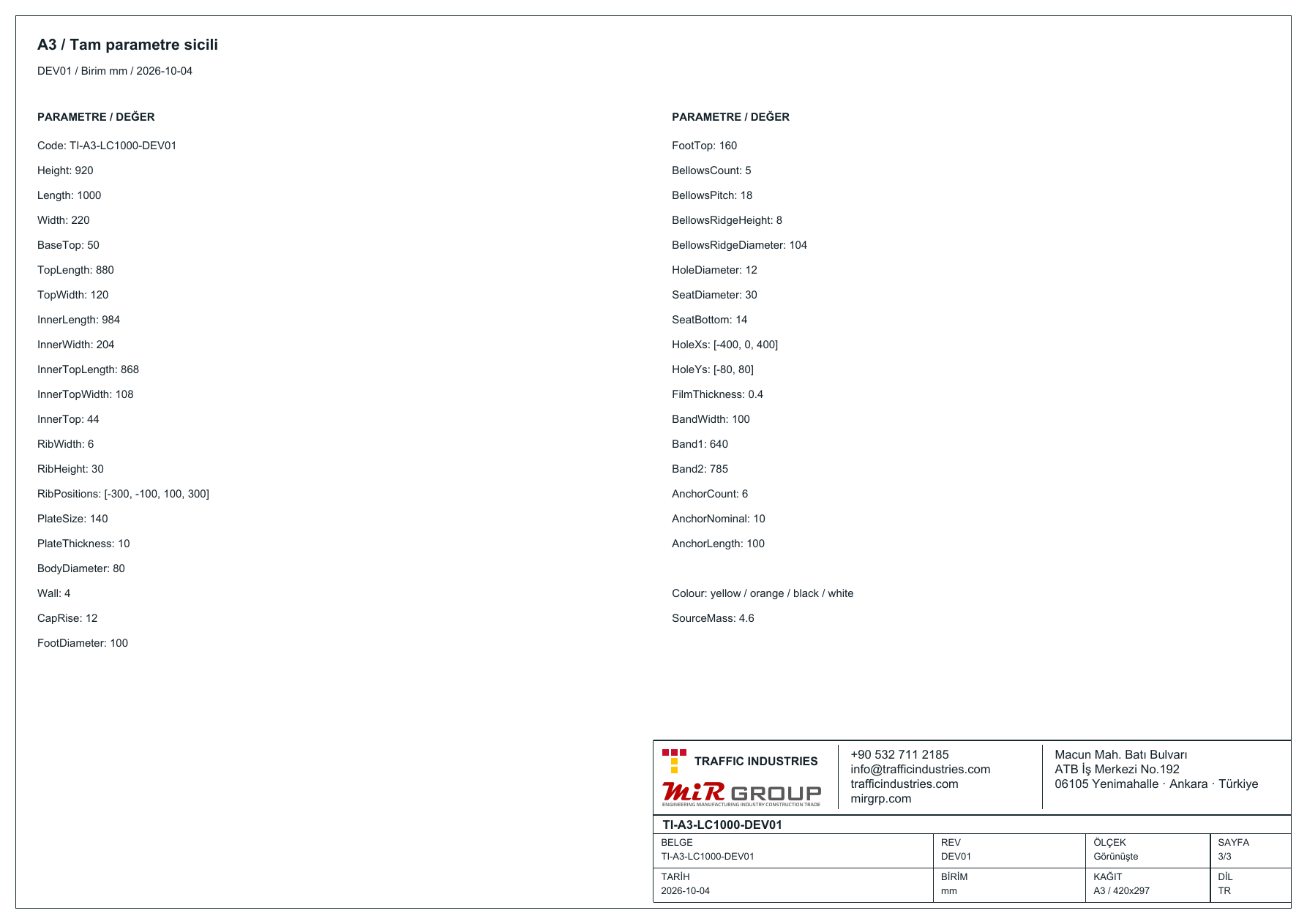
| Model reference | TI-A3-LC1000-DEV01 • nominal design envelope 1000 × 220 × 920 mm |
|---|---|
| Scope of dimensions | Dimensions refer to the identified downloadable design model; order dimensions and fixings are confirmed on the project drawing. |
| Country and road layout | Country of use, road or facility type and traffic streams to be separated. |
|---|---|
| Size and layout requirements | Required module length, width, top fitting and overall height from the project; product dimensions are confirmed against the selected datasheet. |
| Visibility requirements | Required body colour, reflective colour and sheeting class; attach the specification where available. |
| Ground and fixings | Surface type, existing ground condition and fixed or removable mounting requirements. |
|---|---|
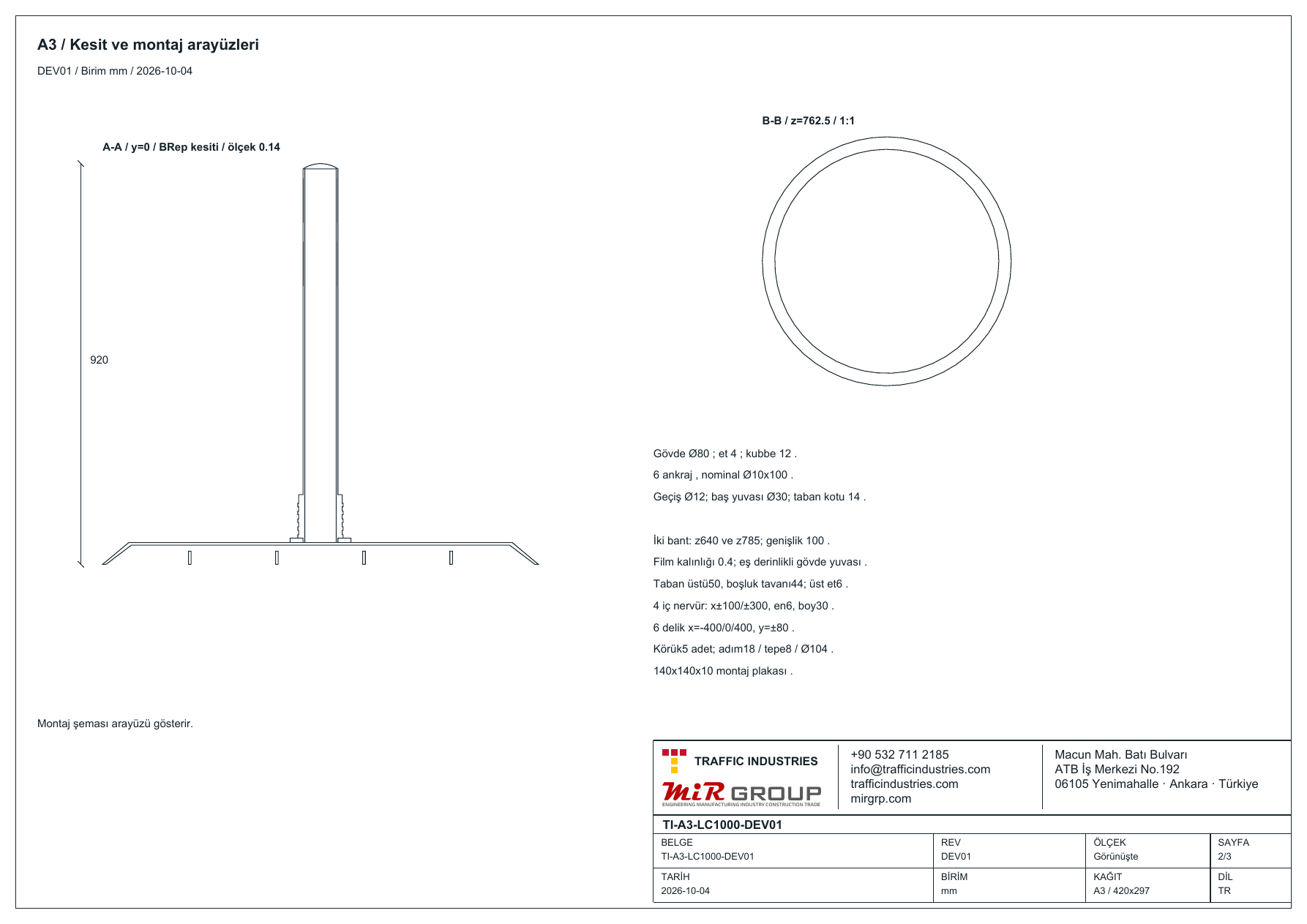
| Anchor-head recess | The screw head remains recessed in the D-0007 connection. The screw/anchor type and ground-specific installation details are defined by the technical drawing and project. |
| Openings to retain | Drainage points, side-road and cycle entries, and service and emergency-access openings. |
| Quantities and supply scope | Module quantities, top fittings and fixing requirements; included parts are listed in the quotation. |
The files are free to download and require no registration.
| Türkiye | Manufactured to the order's specification; the governing document is stated in writing at quotation. |
|---|---|
| USA — MUTCD | Described by the temporary lane separator definition of MUTCD Section 6K.11: a low base with sloping sides carrying a retroreflective vertical device. These devices are not protection barriers; they are not used to shield obstacles or protect pedestrians or workers (6K.10, 6K.11). |
It is considered for marking lane and access boundaries. Show the traffic streams, road geometry and required access openings on the layout plan.
Define emergency-access openings on the layout plan. Safe vehicle passage over a channelizer must be verified for the selected model and project.
Send the country of use, layout drawing, surface type, required dimensions, quantities and top-fitting needs; attach the technical specification where available.
Included parts are listed in the quotation for the selected model. Check the scope for the post, base, fixings and other top fittings individually.
Lane guidance & delineation — all modelsStandard cross-reference table40'HQ container calculationDescribe the job, we list the equipment
Quantity, destination country and your specification if you have one. A technical answer comes back the same day; pricing is prepared by a person, never auto-generated.