The road edge
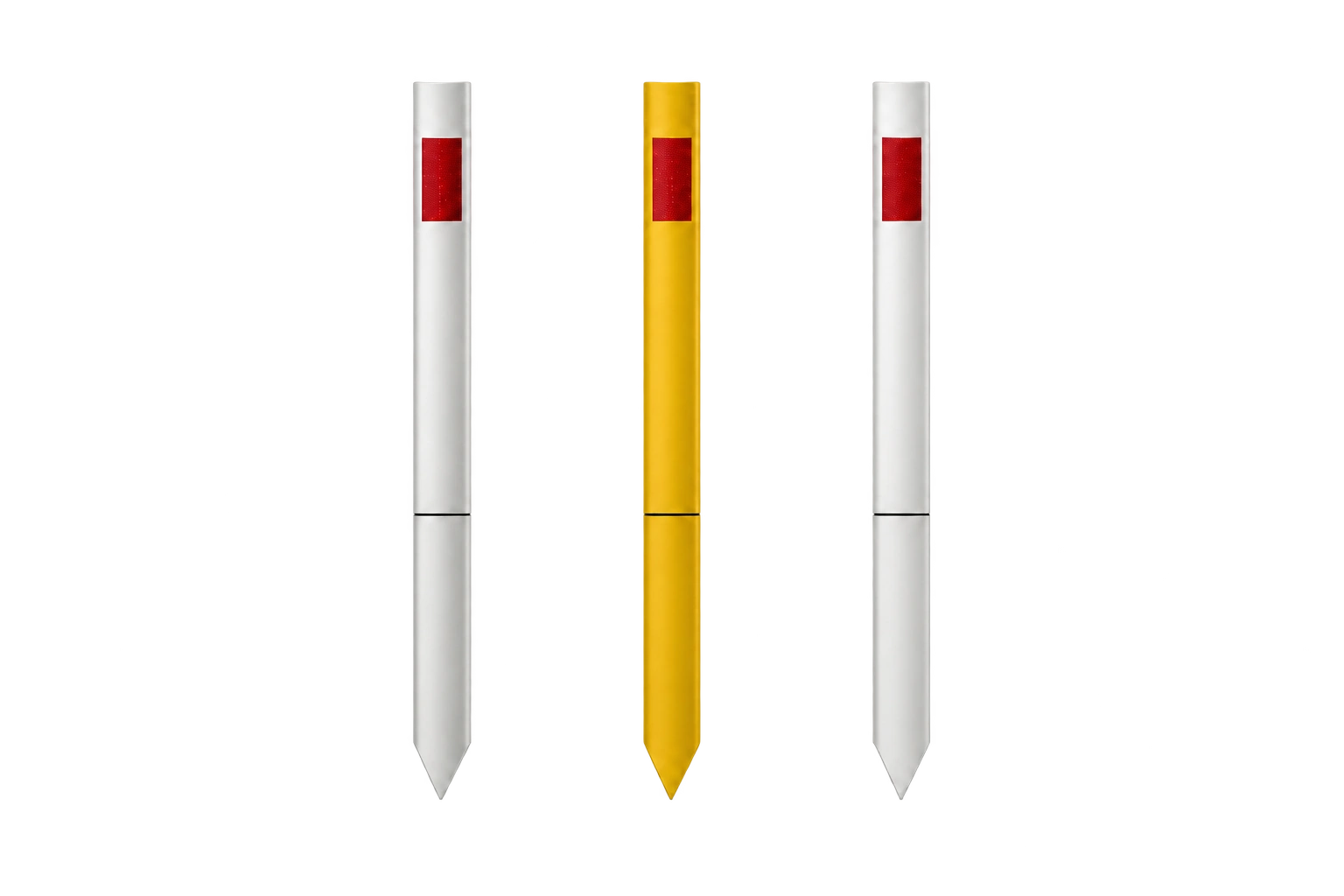
A delineator post returns the headlight beam and tells the driver where the road ends.
On an unlit route it is the highest-return investment: no power and little upkeep — checks after soiling or impact are enough.
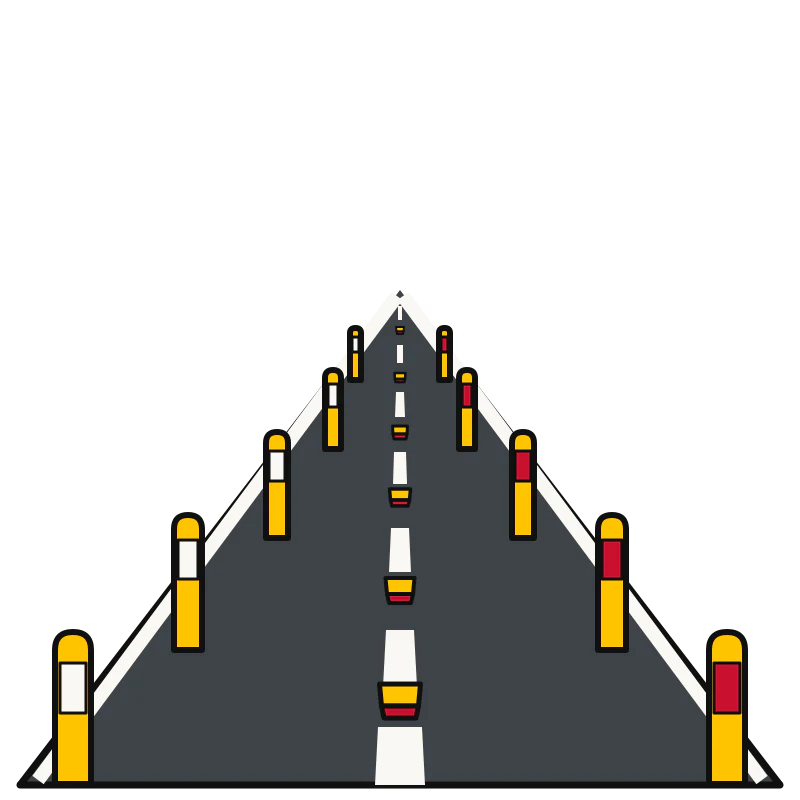
Night visibility is solved in three layers rather than one product. Where the road edge is, where the lane is, and where the hazard is.
Trying to solve all three with one product is the most expensive route.
A delineator post returns the headlight beam and tells the driver where the road ends.
On an unlit route it is the highest-return investment: no power and little upkeep — checks after soiling or impact are enough.
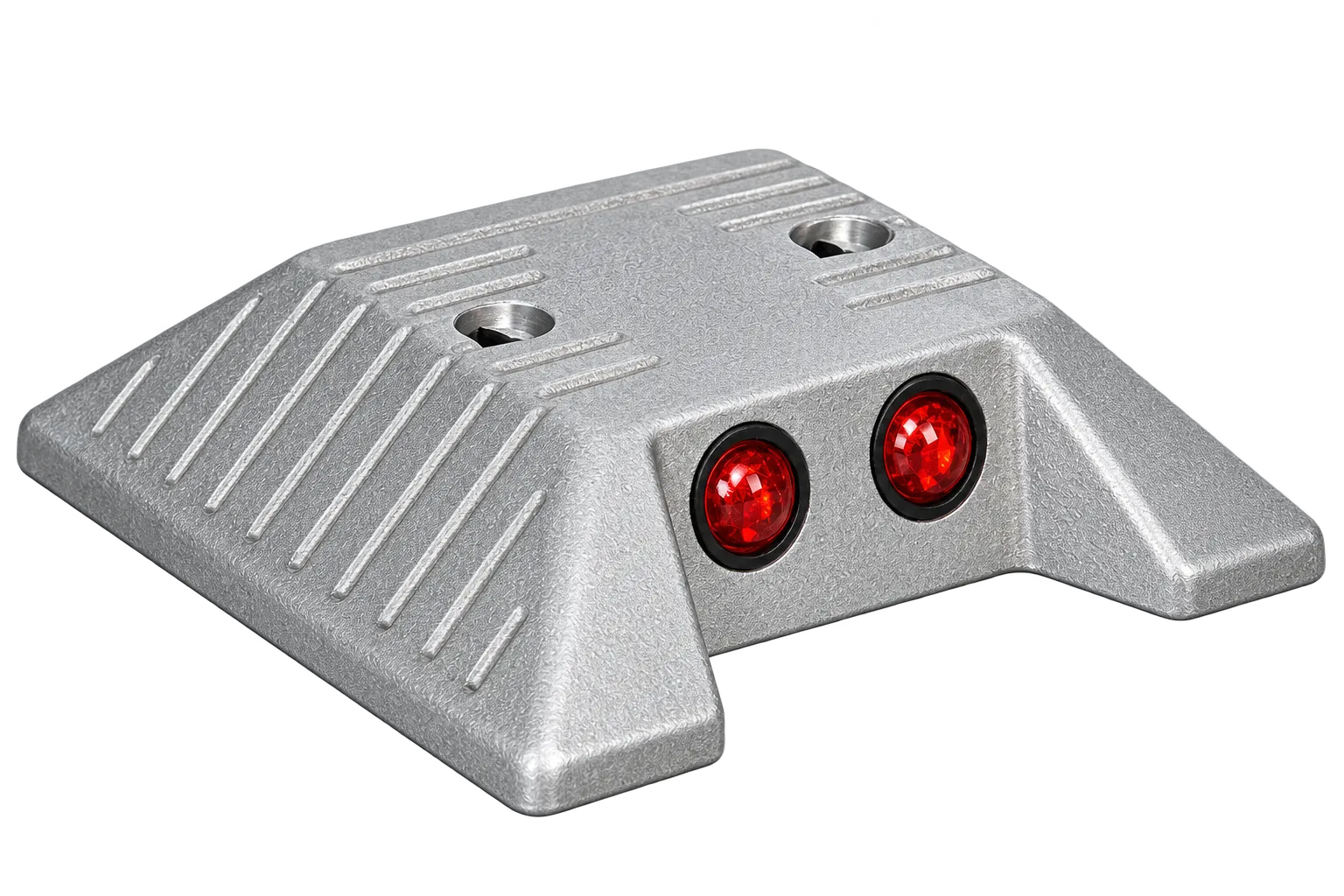
The passive stud has 2+2 glass cat eyes or lenses facing opposite directions. Aluminium and PPC models have separate dimensions and weights.
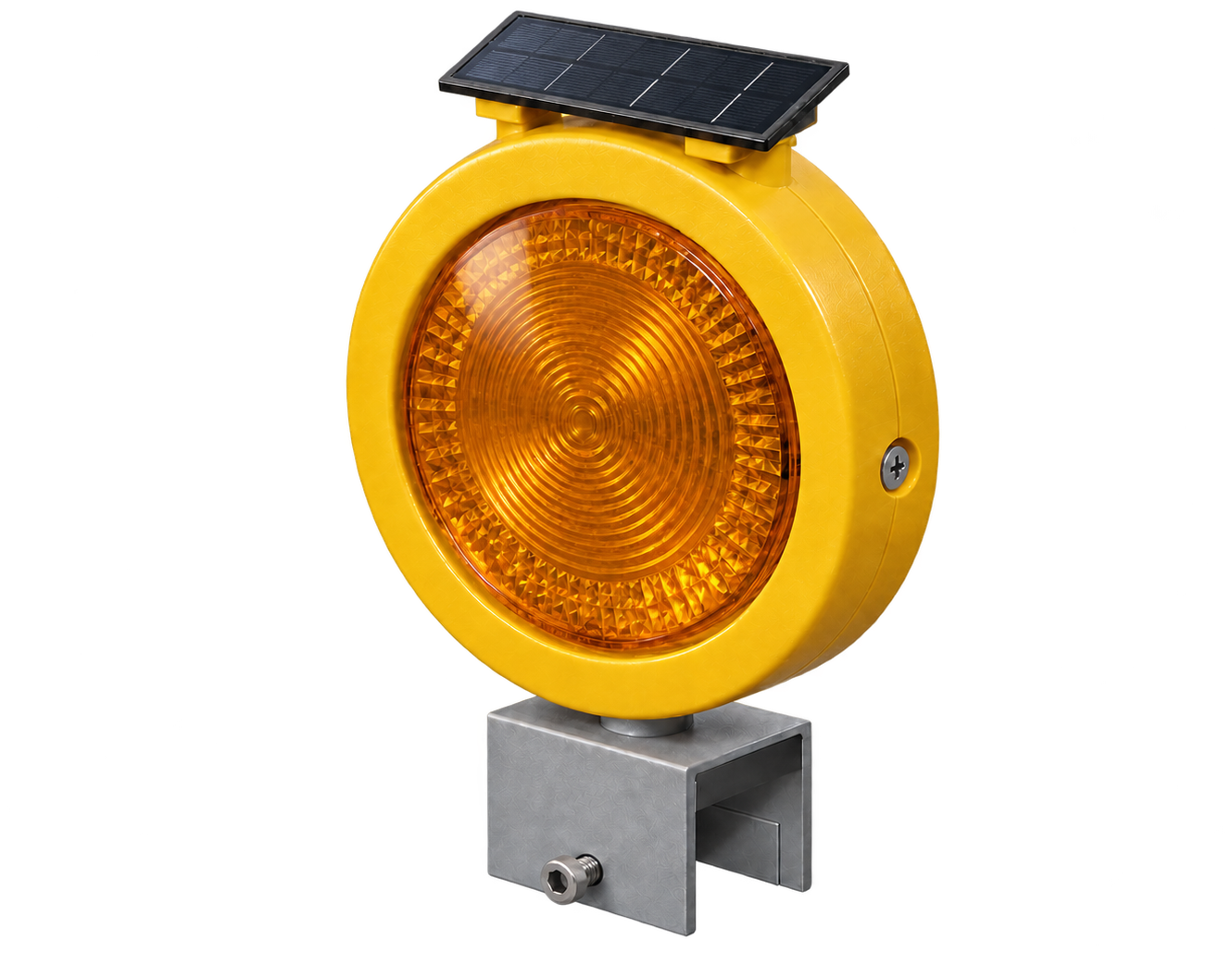
A bend, a junction or a work zone needs an active warning. A solar lamp works without a cable, and a work-zone specification usually asks for a light class.
The most common mistake is buying without asking the class of the retroreflective material.
Two posts that look identical read at markedly different distances depending on the reflector class (the gap can be manyfold; the exact figure depends on class, angle and conditions).
The difference is in the reflector, not the body — and it shows in the price. The second common mistake is never looking again after fitting a reflective product.
A dirty reflective face returns no light, and because the product looks sound nobody notices. The check is made at night from a moving vehicle; a daylight look does not reveal this fault.
With these three, the price and loading plan come in the first reply; without them we have to ask first.
Quantity, destination country and your specification if you have one. A technical answer comes back the same day; pricing is prepared by a person, never auto-generated.