Road studs & markers

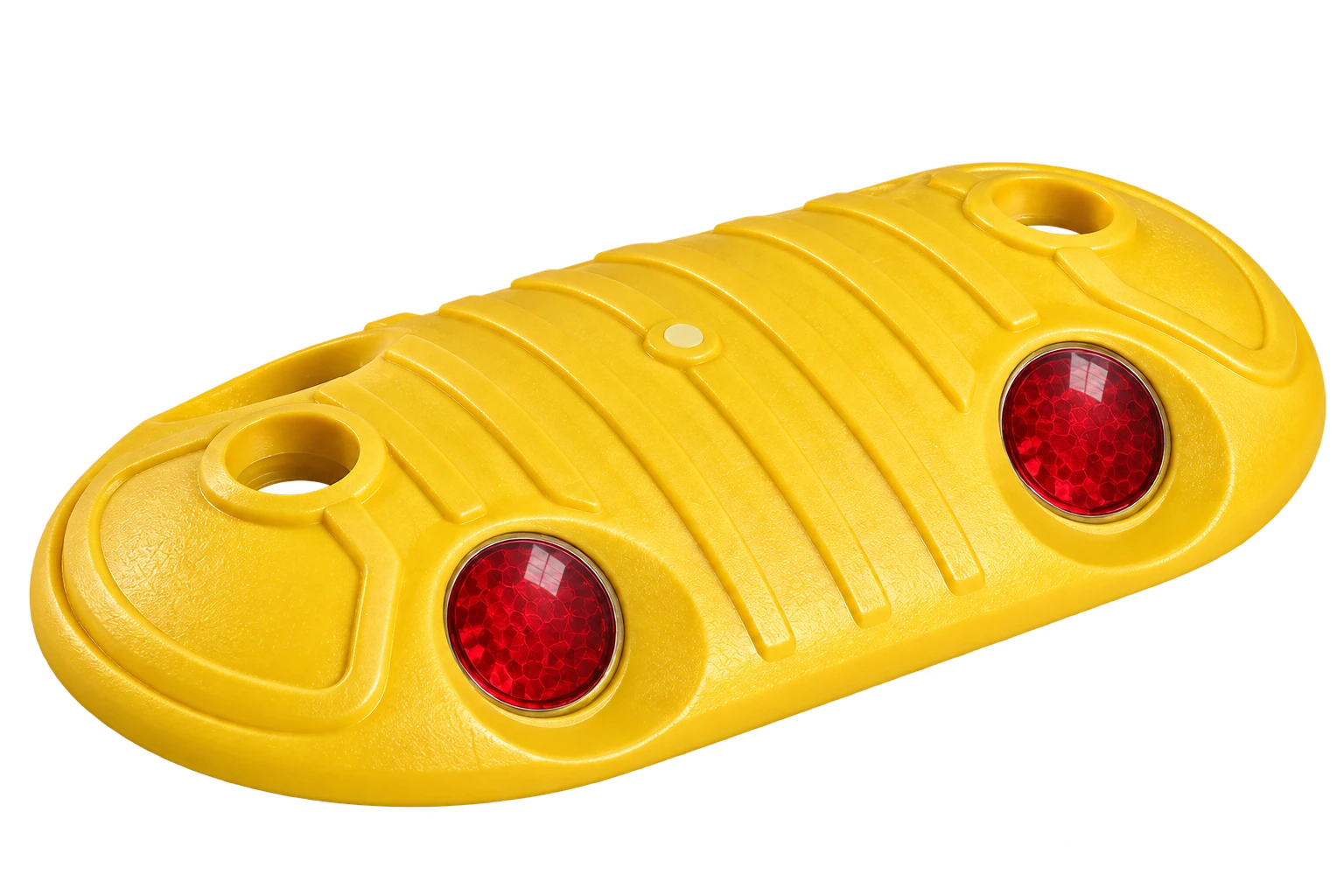
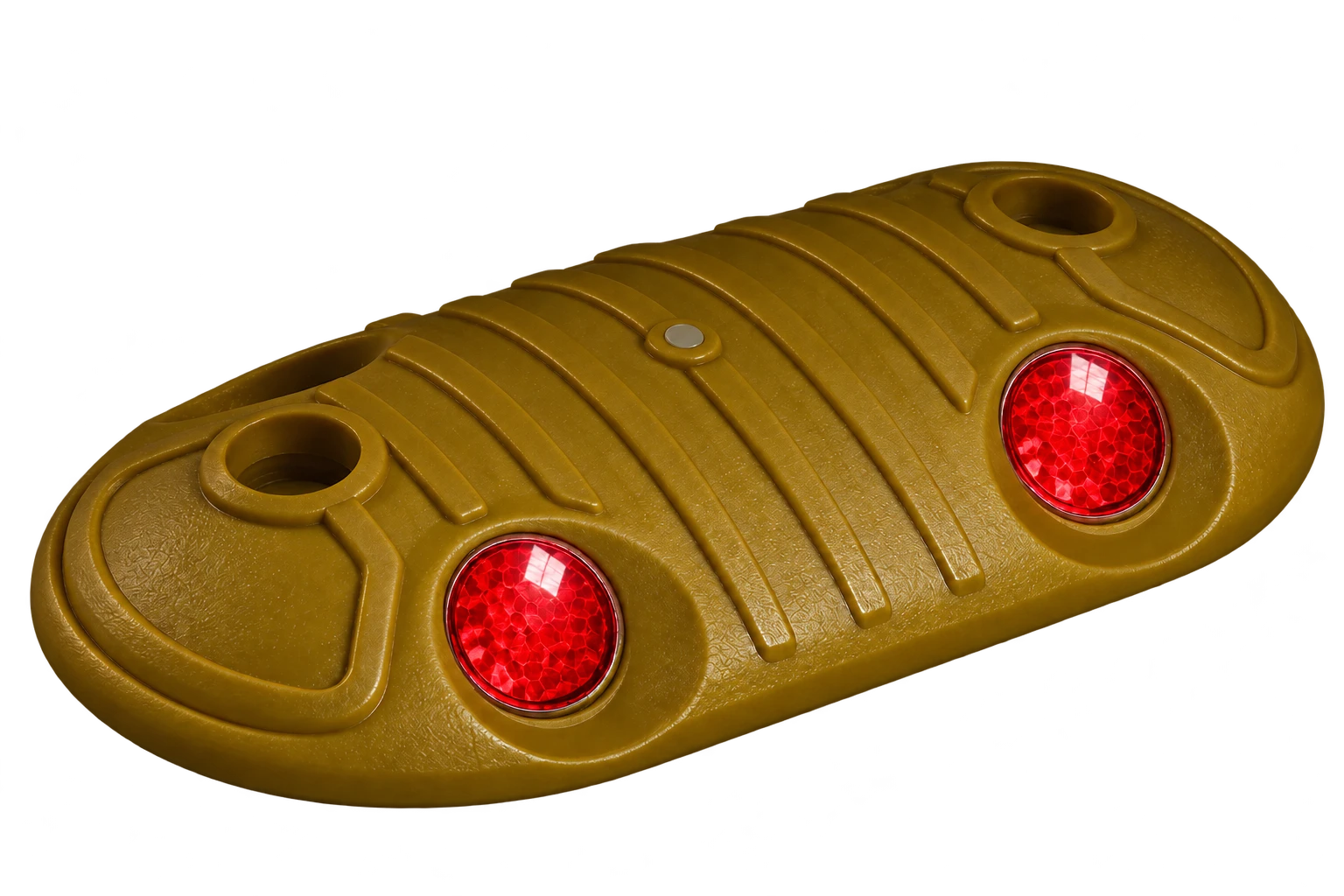
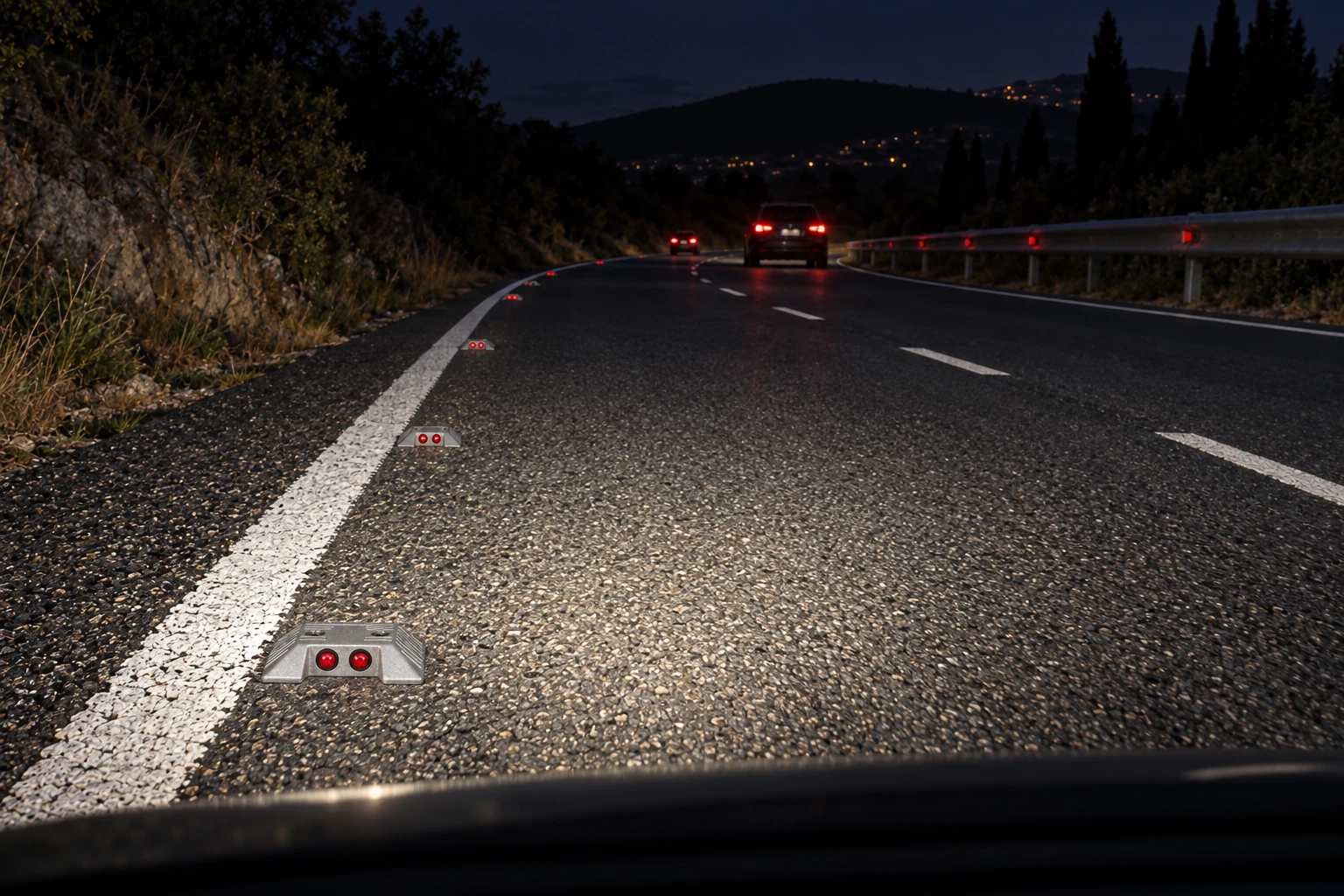
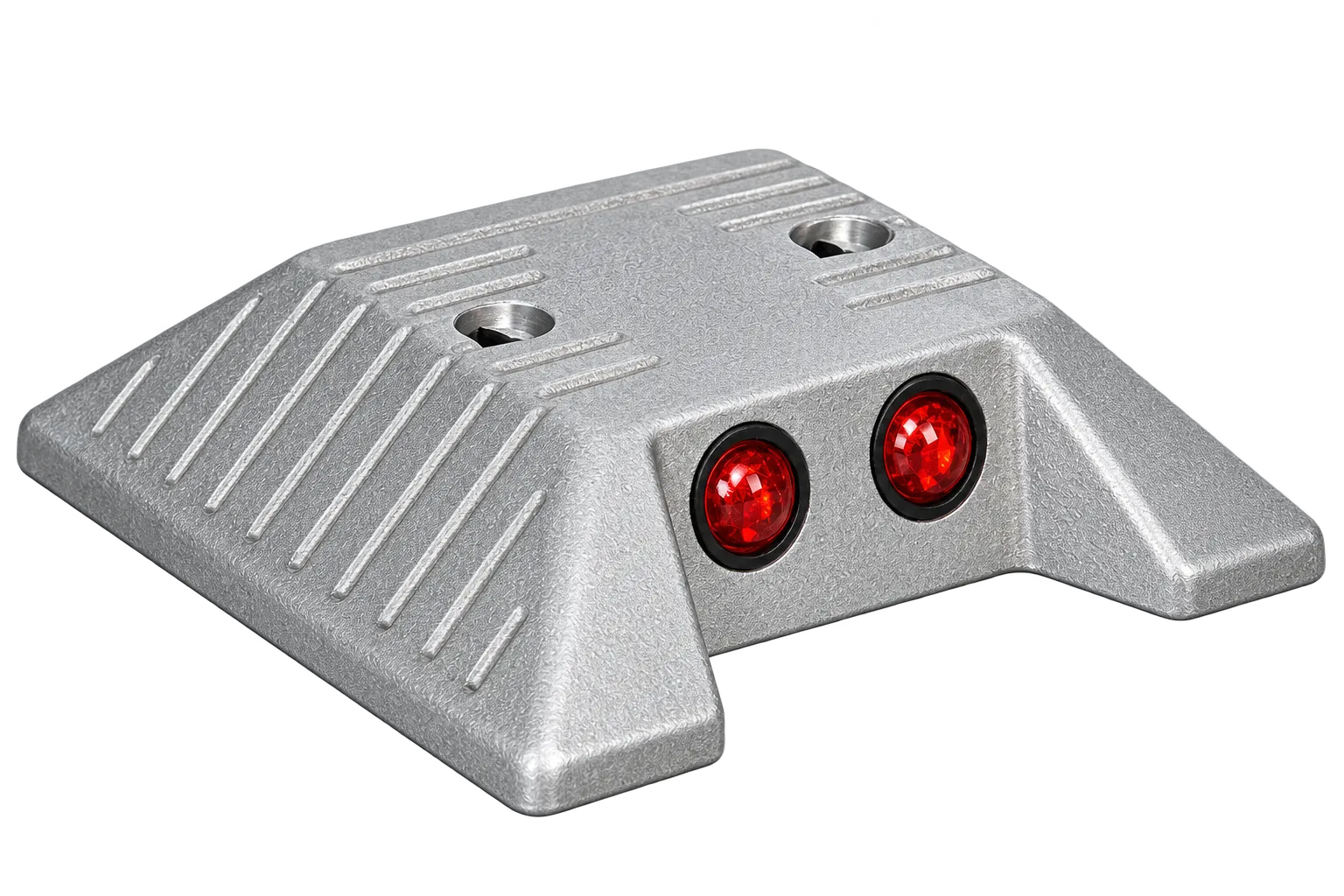
The road stud is set into the road to give the driver back the lane line that vanishes at night and in rain. A glass-bead or microprismatic reflector returns headlight to its source; the road stud also warns by vibration when a wheel touches it. It is low, durable and visible. The solar version makes its own LED light, drawing the line even on unlit sections. The road stud is used at bends and junctions, along median and island edges, at tunnel exits and on crossing approaches.

  • Gives the line back on wet asphalt
  • Warns by vibration underwheel
  • The solar version makes its own light

Request a QuoteTell us quantity, country and mounting type — a technical answer comes back the same day.
Technical features

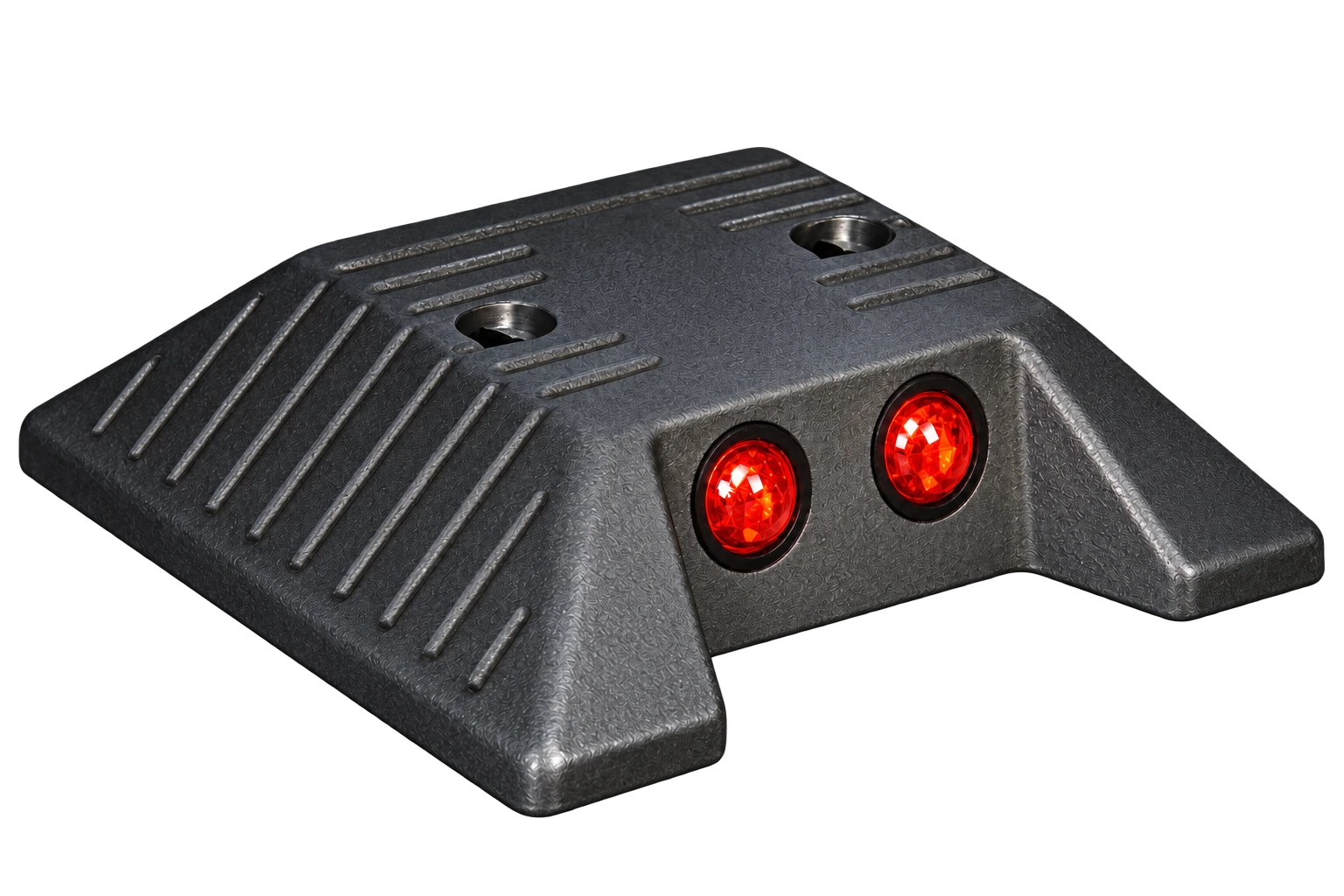
Aluminium, plastic and solar types; the reflector class is chosen to suit the tender.

The real enemy of a stud is the plough blade. A stud standing proud catches the blade, tears out and scatters across the road, so on ploughed routes the recessed or depressible type is chosen.

A stud order becomes definite through one chart: which country and authority, which line function (edge, divider, island), colour and direction per face, the spacing, and the height above the surface. Each of these five can be right on its own, yet they are verified together against the project — colour schemes differ between countries, and the height above the surface decides the type on ploughed routes.

Documents are discussed per model: optic and body performance by report identity, site acceptance by the criterion in the order specification, replaceable components (lens, body, stem) by the parts list. A solar model carries a longer identity: the panel, the battery type and chemistry, the operating mode, the condition under which the no-charge runtime was measured, and how the battery is replaced are all stated on the datasheet — a solar offer with those fields empty cannot be compared.

  • The aluminium-bodied type suits heavy traffic; the plastic type suits light traffic.
  • Prismatic reflector faces, available in one-way and two-way versions.
  • The solar type makes its own light, which earns its place on unlit bends and junctions.
  • The body is either recessed or bonded; with the right recess detail the recessed type is protected from a snow-plough blade; on bonded types, surface preparation and adhesive cure decide the life.
Technical summary
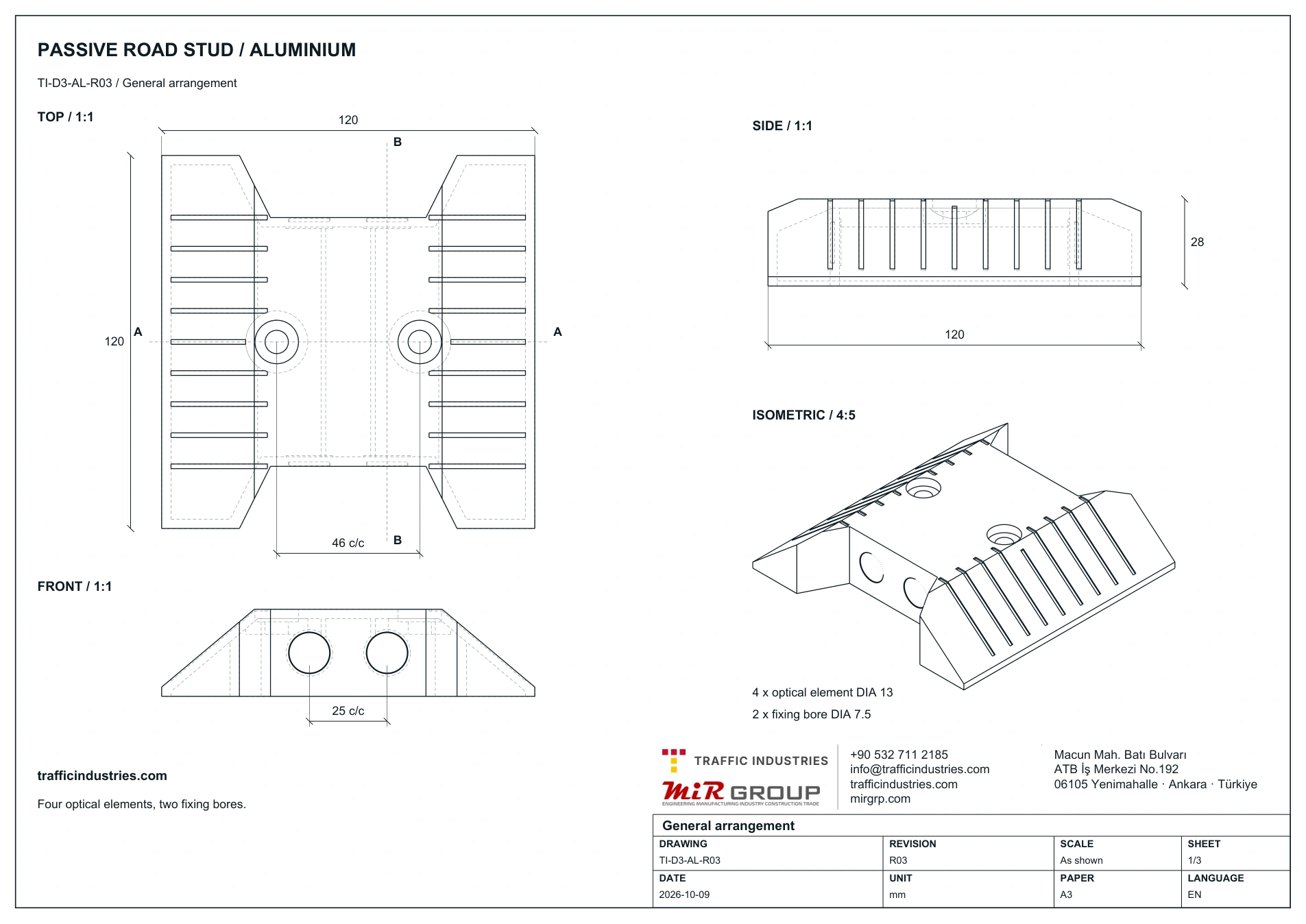
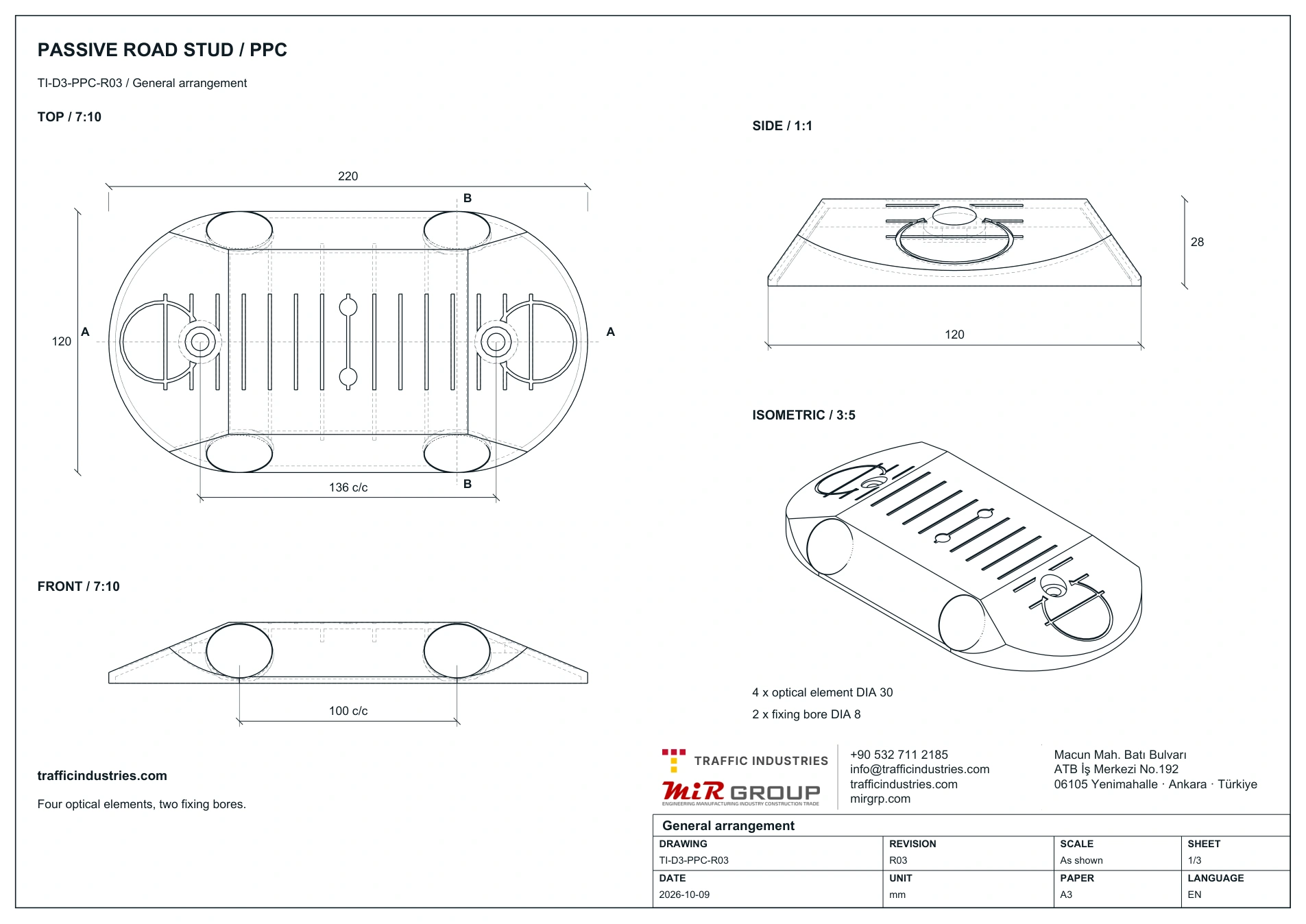
Body classes100×100×20 mm (aluminium) · 220×120×28 mm (oval PPC)
MaterialABS · Aluminium · PPC
Weight0.12–0.45 kg
Anchor depth50–70 mm (anchored types)

These values show the typical range found in this product group — neither one single product nor a confirmed model list. The exact size, material and weight for your order come with the quotation.

Installation
Road stud anchor section: 100×100×20 mm body, epoxy + stem, anchor depth 50–70 mm
Anchor section — epoxy + stem or screw and plug; 50–70 mm anchor depth is the practical band.
Where it is used
  • Bends and junctions. Gives back the lane line that disappears on wet asphalt.
  • Median and island. Marks the edge of the divider early at night; the solar type makes its own light where there is no street lighting.
  • Tunnel exit. Carries the lane through the change from light to dark.
  • Crossing approach. The solar type makes its own light at an unlit crossing.
  • Car park guidance. Marks the turning direction on a covered level in headlights.
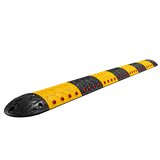
  • On a speed hump. Shows the driver where the hump begins before reaching it at night.
Ordering, documents and shipping

Ordering

Minimum order
There is no minimum order requirement. Mixed loads are accepted; you are not asked to fill a pallet or a container with a single item.
Packing
Export packing: shrink-wrapped pallets or cartons, with pallet size and gross weight stated on the packing list.
Container
The 40'HQ count depends on the height and variant chosen; the quotation states it with the pallet and container count.
Lead time
Set by the order quantity; the quotation states it in days and the shipment plan is fixed at order confirmation.
Origin
Stated in writing per item in the quotation.
Delivery terms
FOB · CFR · CIF · DAP

Shipping

  • Pallet. Packed in counted boxes · Solar types ship with the battery fitted and isolated · Epoxy adhesive is a separate item and follows dangerous goods rules · Low weight, small volume
  • 40'HQ. 40'HQ calculation

Downloads

Standard reference

EN 1463-1 defines the initial performance of road studs. Body type A (non-depressible) and B (depressible), reflector type 1 (glass), 2 (plastic) and 3 (plastic with an abrasion-resistant layer).

Night visibility is measured as the coefficient of luminous intensity R, with thresholds that vary by reflector type and colour. EN 1463-2 covers the same product’s field performance.

In Russia/CIS language the road stud is described by class КД3 of GOST R 50971 (the reflector for flow division, crossings and artificial humps). The US market speaks of road studs through ASTM D4280 and the European market through EN 1463; class and conformity are written with the supplier document. Test results and certificates are shared with the report and the document.

Frequently asked
Are solar road studs better than reflective road studs?

They work by different physics. A reflective stud returns the headlamp beam: no beam, no visibility, and the range is limited to the headlamp’s reach. A solar stud makes its own light and is seen beyond the beam and around a bend. Solar suits unlit bends, medians and tunnel exits; reflective suits urban work and constrained budgets.

How long does the battery in a solar road stud last?

In practice the battery gives several years of service and expires before the housing does; climate and charge cycles set the life. It charges on overcast days too, because the panel works on light level rather than direct sun. Though brightness falls through a long dull spell. Brightness falls before the battery dies. Early dimming is never pinned on one cause: state of charge, panel soiling, mode and battery are checked together, using the manufacturer diagnostic method.

How is a road stud fixed into asphalt?

With epoxy adhesive, or on shank types by bedding the shank into a drilled hole with epoxy. A dry, dust-free surface decides the whole of the bond strength. A stud set on damp or dusty ground comes out in the first ploughing season. Temperature matters too: epoxy cures more slowly in the cold, and if traffic returns too early the stud shifts out of place.

What colour should a road stud be?

Colour follows the line the stud represents. White marks general lane division, yellow the continuous line and the median, red the left edge and the wrong-way direction, green the entry and exit points. Practice differs slightly between countries, so describing the line rather than the colour in a specification removes the risk of the wrong order.

Get a quote for this product

Quantity, destination country and your specification if you have one. A technical answer on Road studs & markers comes back the same day; pricing is prepared by a person, never auto-generated.

Request a Quote