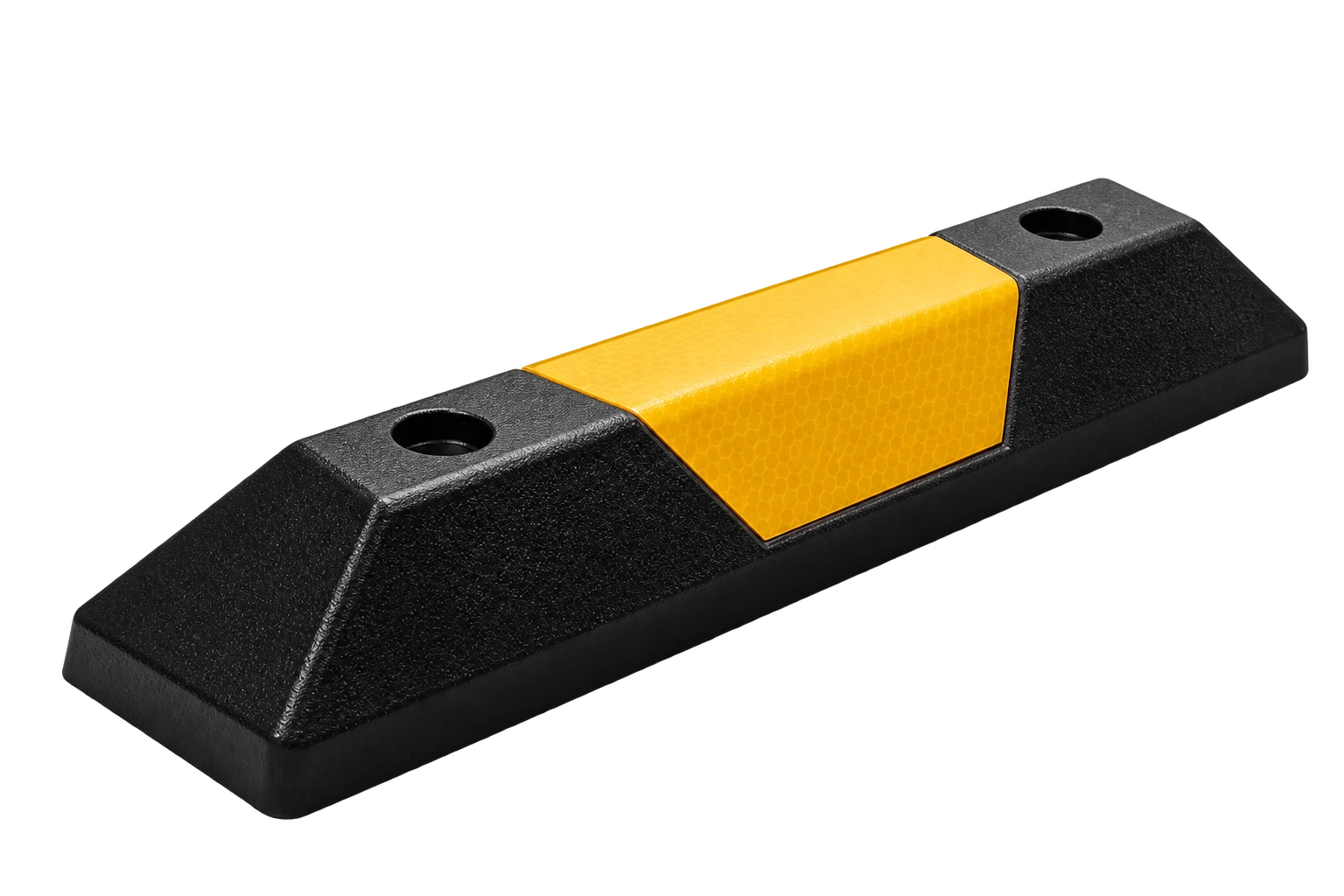
Where the vehicle stops
A wheel stop halts the tyre and protects the bumper and the wall. Height matters: too low and the car rides over it, too high and it touches the front apron.
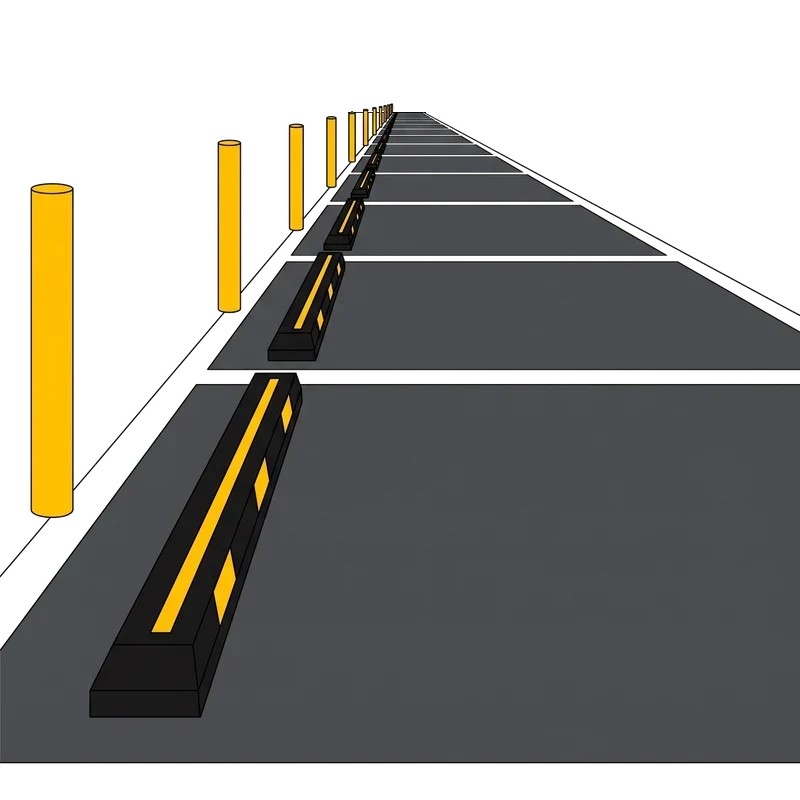
A car park has three separate problems: where the vehicle stops, keeping the structure undamaged, and pedestrian safety. Each needs a different product.
A wheel stop halts the tyre and protects the bumper and the wall. Height matters: too low and the car rides over it, too high and it touches the front apron.
Columns and corners take the most damage.
A row of bollards in front of the column meets the manoeuvring error before it reaches the structure; reflective marking on critical corners cuts the contact risk from the start.
The pedestrian route is drawn with tactile surfacing and separated from the vehicle area with bollards.
Ramp exits and blind turns are backed with marking and a warning lamp; on covered levels products with reflective faces are chosen.
 Tactile indicators & anti-slipTactile indicators provide floor information that blind pedestrians can detect…
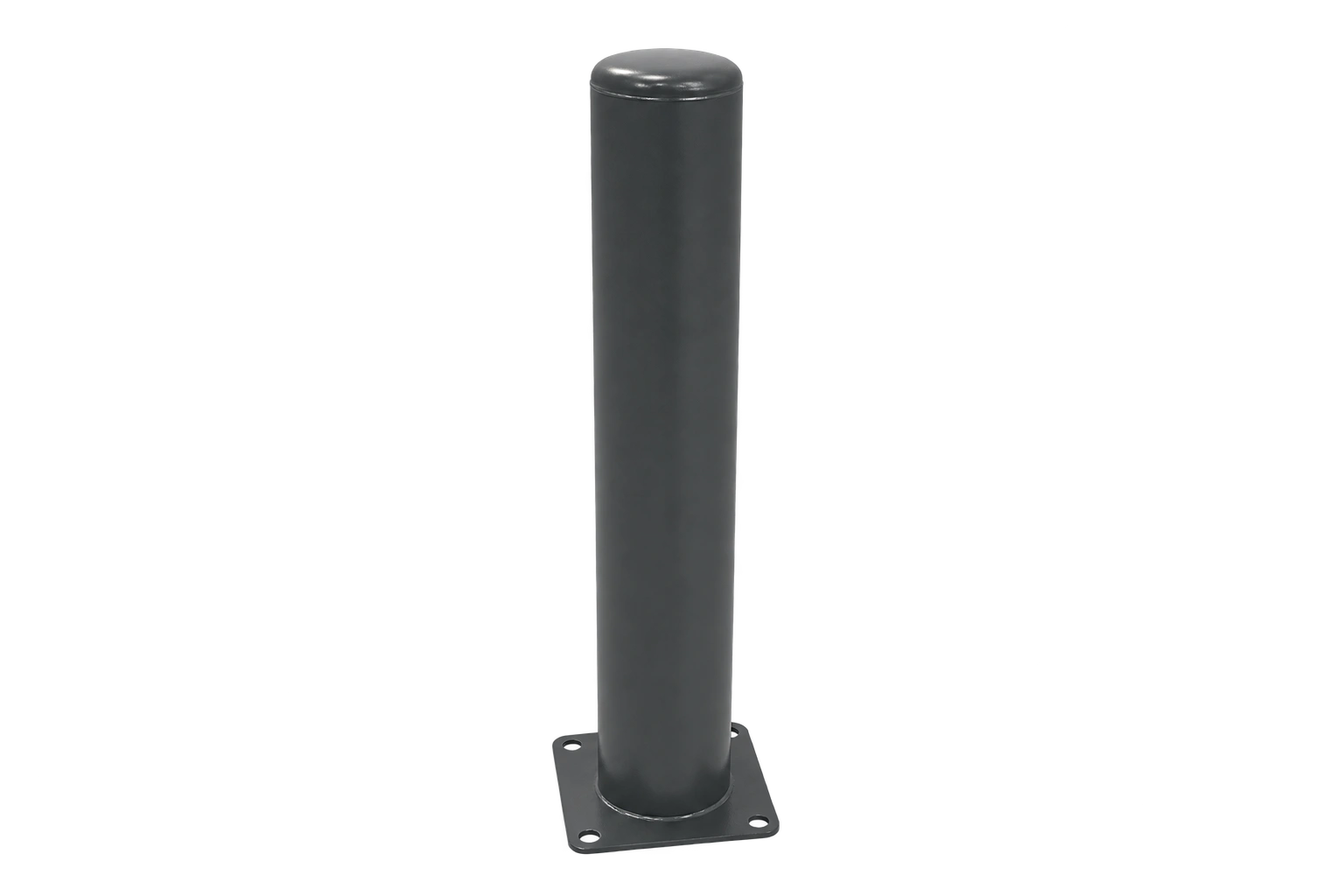 Bollards, fixed & removableA bollard is a vertical element used to demarcate vehicle routes and manage ac…
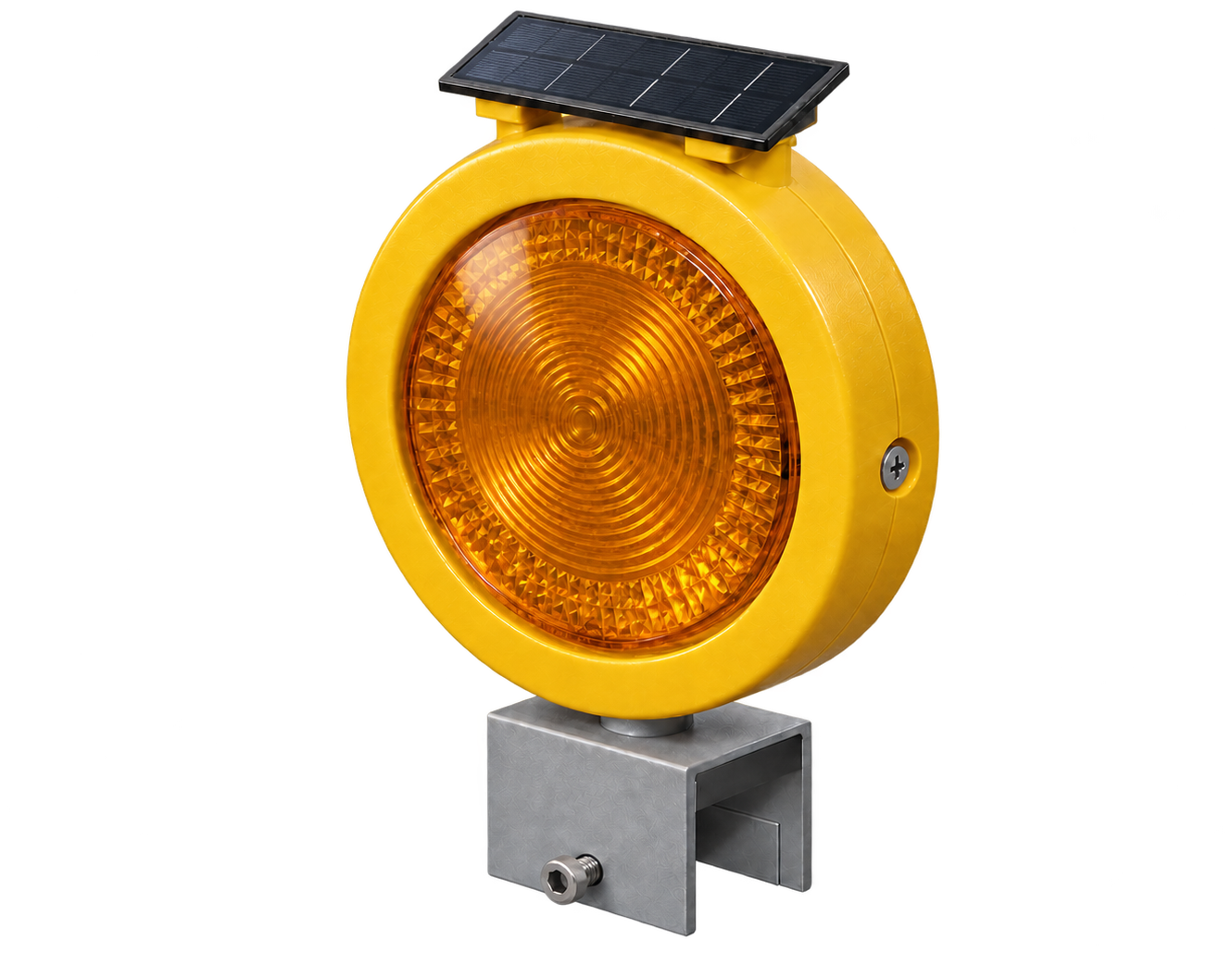 Solar & AC warning lampsSelect warning lamps for work areas and hazard points by power supply, operati…
The most common mistake is bonding a wheel stop or fixing it with an undersized dowel. It works loose in the first winter and becomes a loose obstacle in the car park.
The anchor must follow the substrate. The second common mistake is not measuring before placing the product.
A wheel stop in the wrong place narrows the footway, and a bollard placed without measuring closes off the manoeuvring space. The measurements come from the site rather than the drawing.
With these three, the price and loading plan come in the first reply; without them we have to ask first.
Quantity, destination country and your specification if you have one. A technical answer comes back the same day; pricing is prepared by a person, never auto-generated.