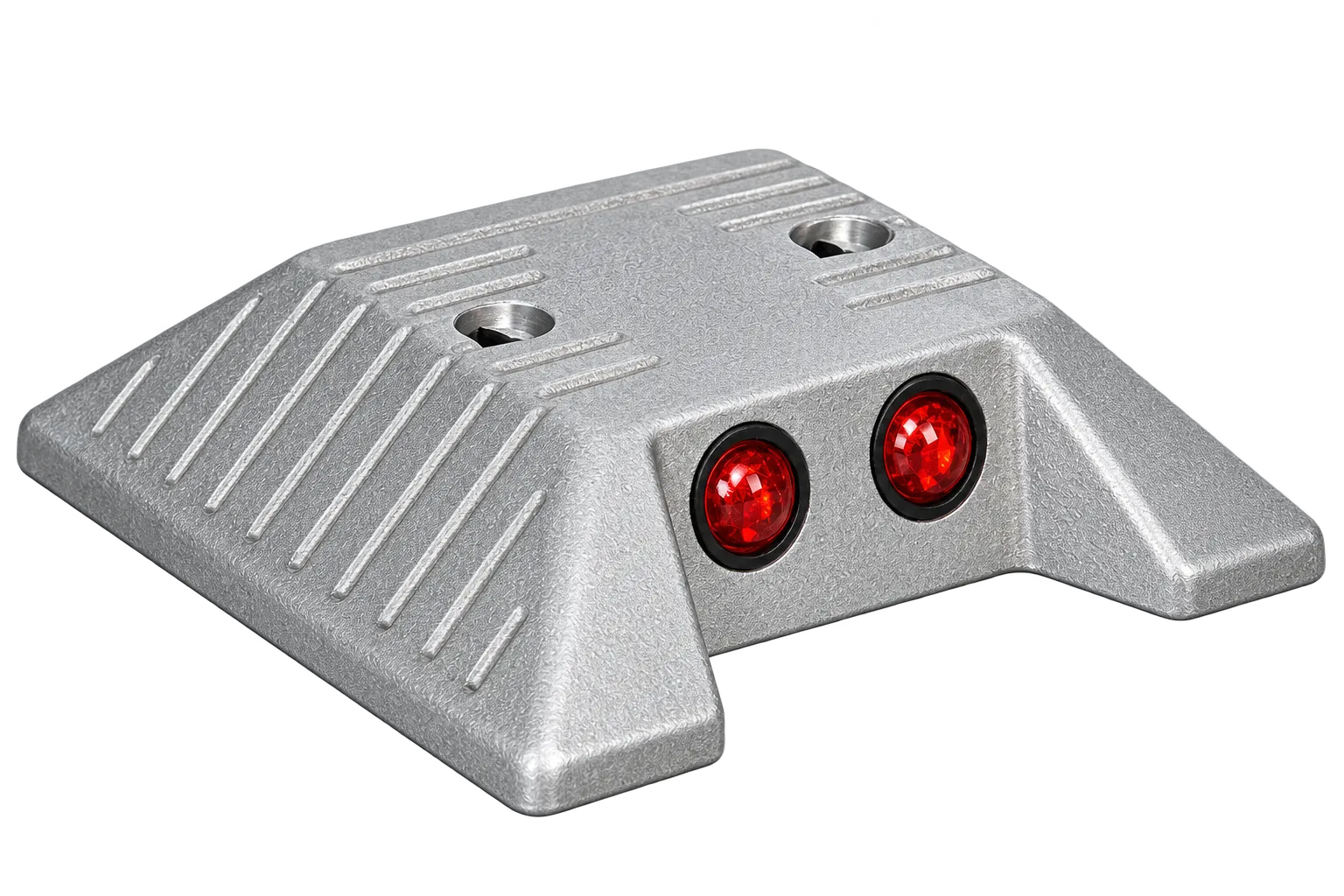
What is a reflective class, and what separates RA1 from RA2?
Short answer
The class states how much light the material returns. RA classes are defined in EN 12899-1 in Europe and type numbers in ASTM D4956 in the United States. And the two do not map one to one.

Of two posts that look identical, one may read at markedly greater distance than the other depending on the reflector class (the gap can be manyfold; the exact figure depends on class, angle and conditions). The difference is not in the body but in the retroreflective material on it. And most of the price difference comes from there. When a specification omits the class, the offers stop being comparable.
Select the retroreflective class to the authority’s specification. Assess service life separately using the product’s weathering data, operating conditions and written warranty scope.
Ask for the retroreflective material’s class and the standard used to measure it. Request the measurement report in writing; without the report, the class claim is not documented.
A class is a measured quantity of returned light. The measurement is taken at defined angles and recorded in a table, so two products of the same colour can sit in different classes. Colour is not a class.
The class falls over time. Material weathers under sun, salt and washing. A surface meeting its class on day one may not meet it a few years later. A specification therefore asks not only for the class but for how long it is held.
Speed, placement and nighttime viewing conditions enter the assessment. Retroreflective class alone does not establish braking distance; use the class required by the route’s applicable specification.
The specification carries the class and the measurement standard together. The class alone is not enough, because the same letter carries different values under different standards. Naming the standard makes the delivered product measurable.
The commonest mistake is confusing class with colour. A white face can sit in a low class and a yellow one in a high class. Colour carries meaning to the driver while class carries visibility, and they are separate decisions.
What to ask a supplier for is the measurement report. A declaration is a sentence and a report is a measurement. The gap between them is where most tender objections come from.
Performance over life also belongs in the specification. Meeting the class on day one is not enough. Stating what value it falls to after how many years moves the comparison from price to value.
The logic of classes does not stand in for a certificate: that a given product meets a given class is shown only by a measurement report, which is requested with the product.
The class is decided once and held along the route. Using two classes on one road changes the brightness the driver sees, and that change looks to them like information.