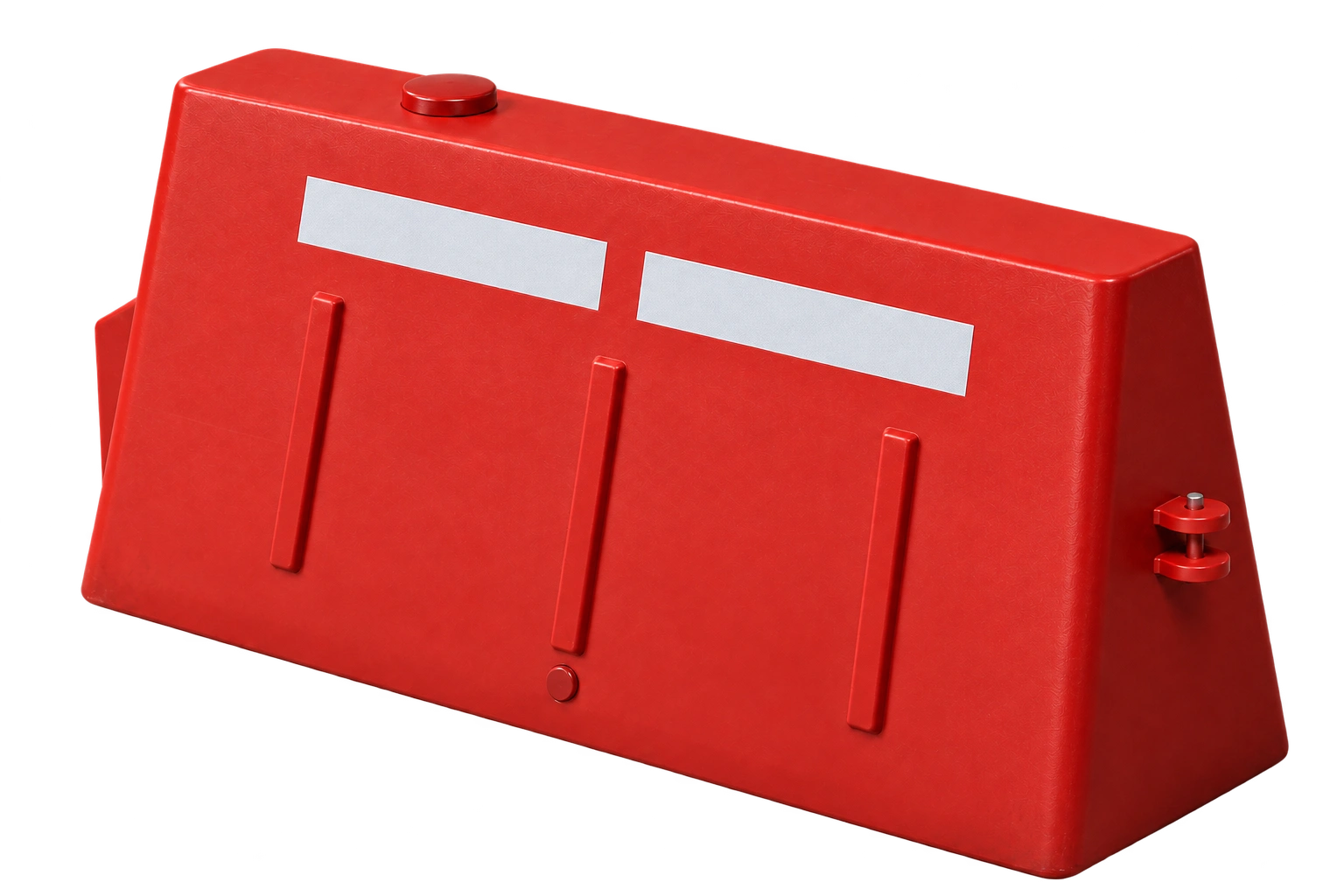
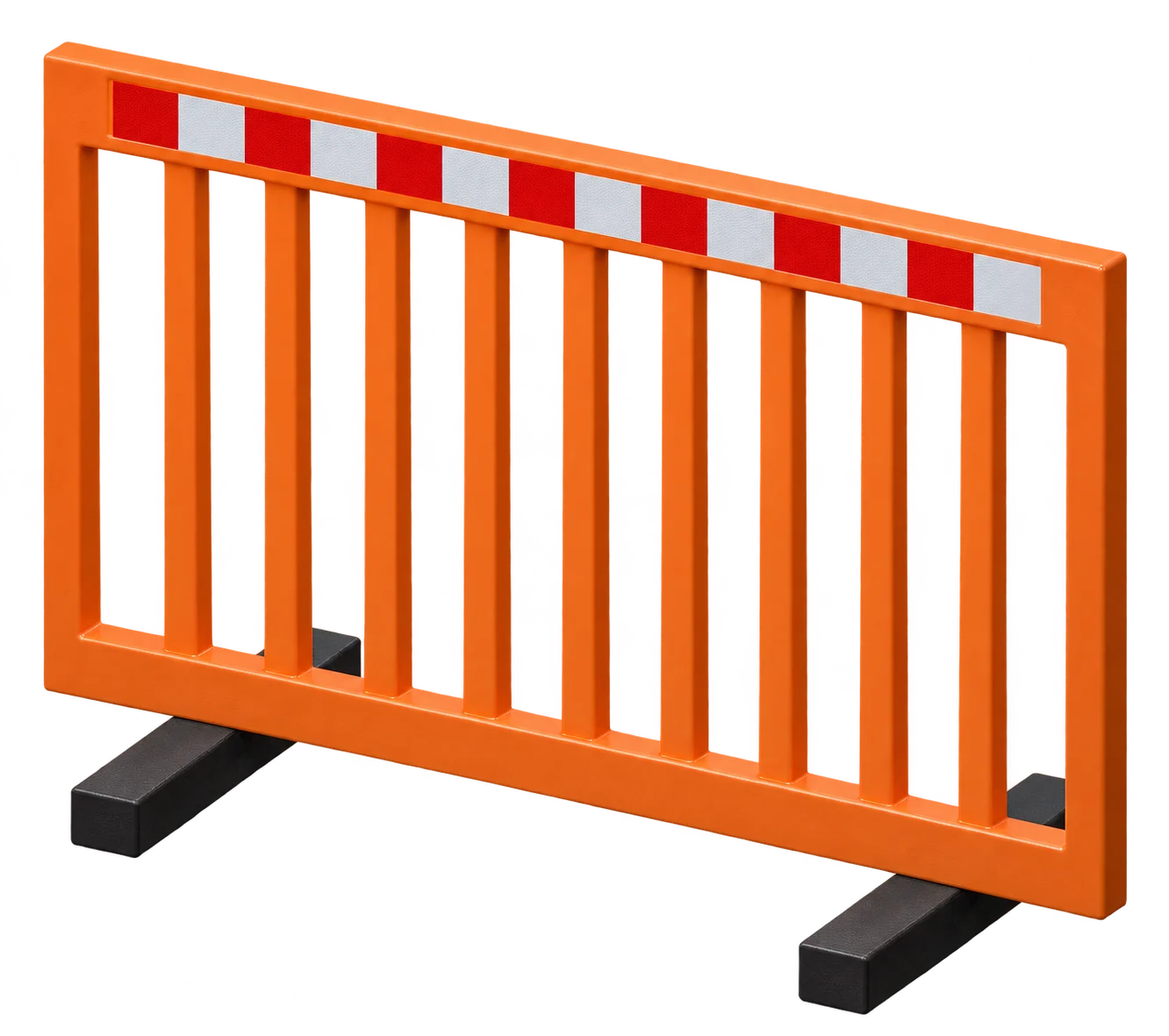
Water-filled or concrete barrier?
Short answer
Channelizing traffic and containing vehicles are different duties. Material and duration alone do not decide the choice; check the product’s documented function and project specification.
Where vehicle containment is required, request the product test report covering the specified performance and installation arrangement. Do not assume that a channelizing product can contain a vehicle.
On the logistics side the difference is starker. A water-filled barrier ships empty and fills on site, so the container is limited by volume rather than weight. Concrete means several times the freight for the same run, plus a crane.
Ask which containment class the product has and which test report supports it. “Complies with EN 1317” alone does not identify either.
The decision is usually made in transport. A concrete barrier needs a crane, a low-loader and a large crew because of its weight. A water-filled barrier travels empty and is filled on site, so the crew shrinks and the time falls.
The level of protection is a separate matter. In fast traffic the job of restraining a vehicle belongs to systems whose impact performance has been measured. In most layouts the job of a water-filled barrier is to divide and guide; the two are not interchangeable.
Where freezing is possible, check the selected model’s manufacturer instructions. Keep the ballast type and fill level within the documented operating and installation conditions. A concrete barrier has no water ballast but still needs plant to move it.
Compare product, freight and installation costs. A concrete barrier is heavier to produce and needs a crane and low-loader to move, as well as more crew time to install. A water-filled barrier with a plastic-based composite body costs less across these items. It can be drained, moved and set up again; repeated use can widen the cost difference on short-term layouts that change often.
State the duration, traffic conditions and required function in the specification. A temporary layout may still require vehicle containment; select to the project’s performance and installation requirements.
The commonest mistake is confusing the job of dividing with the job of restraining. A dividing barrier guides traffic while a restraint system holds a vehicle. Asking for both in one line delivers a product that does neither fully.
The questions for a supplier are the empty and filled weights and the ballast volume. Without those three neither transport nor installation can be planned, and numbers missing from the quotation become surprises on site.
Storage enters the decision as well. An empty barrier stacks and takes little room. A concrete barrier occupies the same area out of season and still needs plant to move it.
Choosing a vehicle restraint system is a separate matter: systems with measured impact performance are a separate product class assessed project by project. What is described here is dividing and guiding.