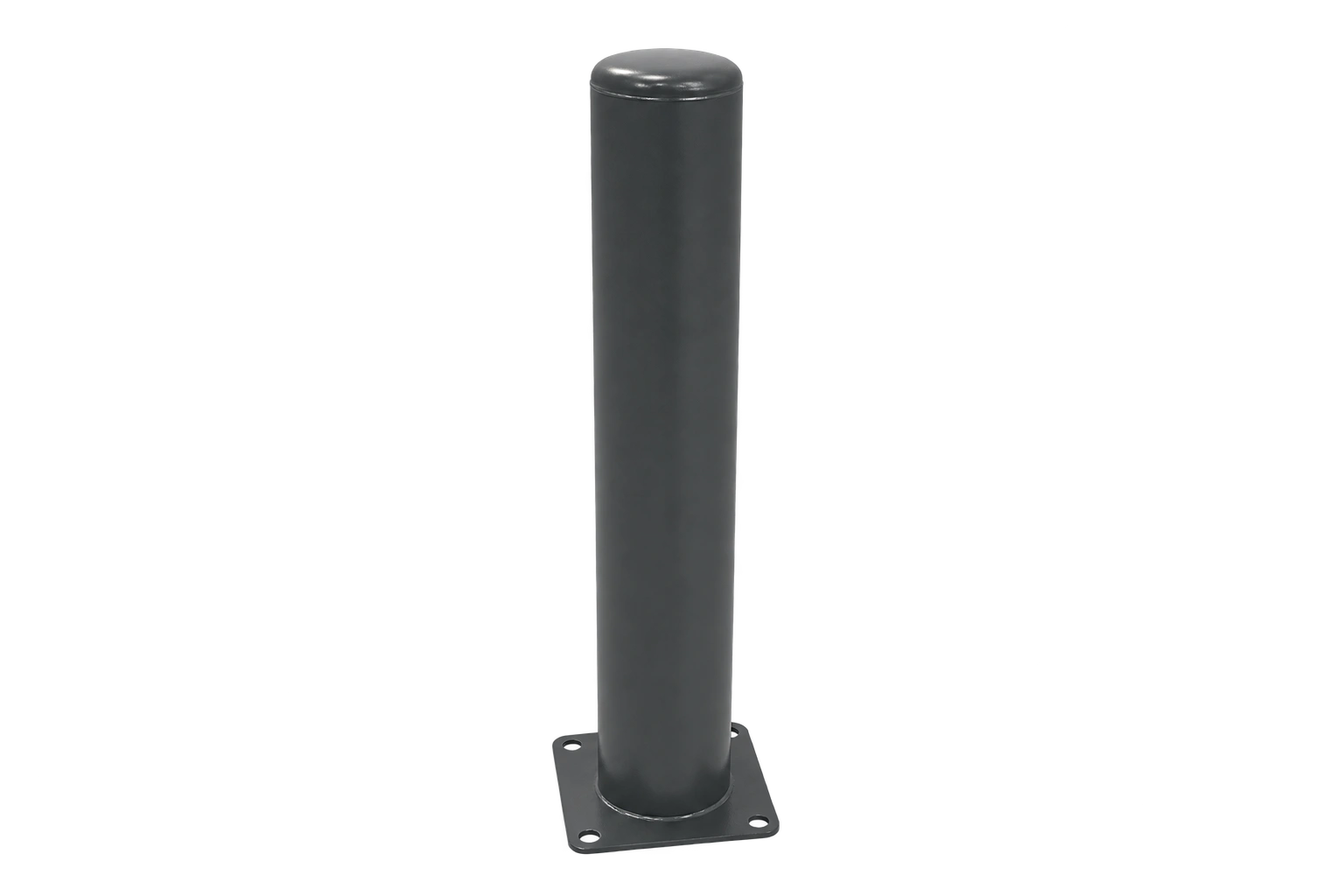
Surface marking of the route
Marker posts flag the route at intervals set by the line of sight. The plate wording and colour follow the rules of the authority that operates the line.
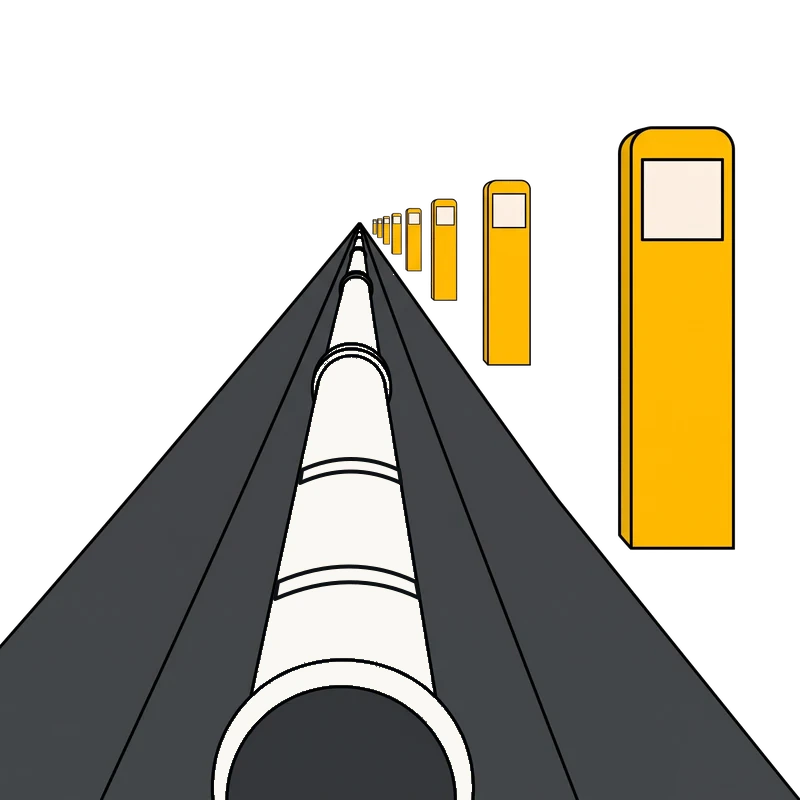
The aim is not to show the line but to stop the digging. The marking must be where and at a distance the excavation crew will see it; an unseen marker does not exist.
Marker posts flag the route at intervals set by the line of sight. The plate wording and colour follow the rules of the authority that operates the line.
At bends, depth changes and road crossings the marking is tightened. The same body carries a different plate.
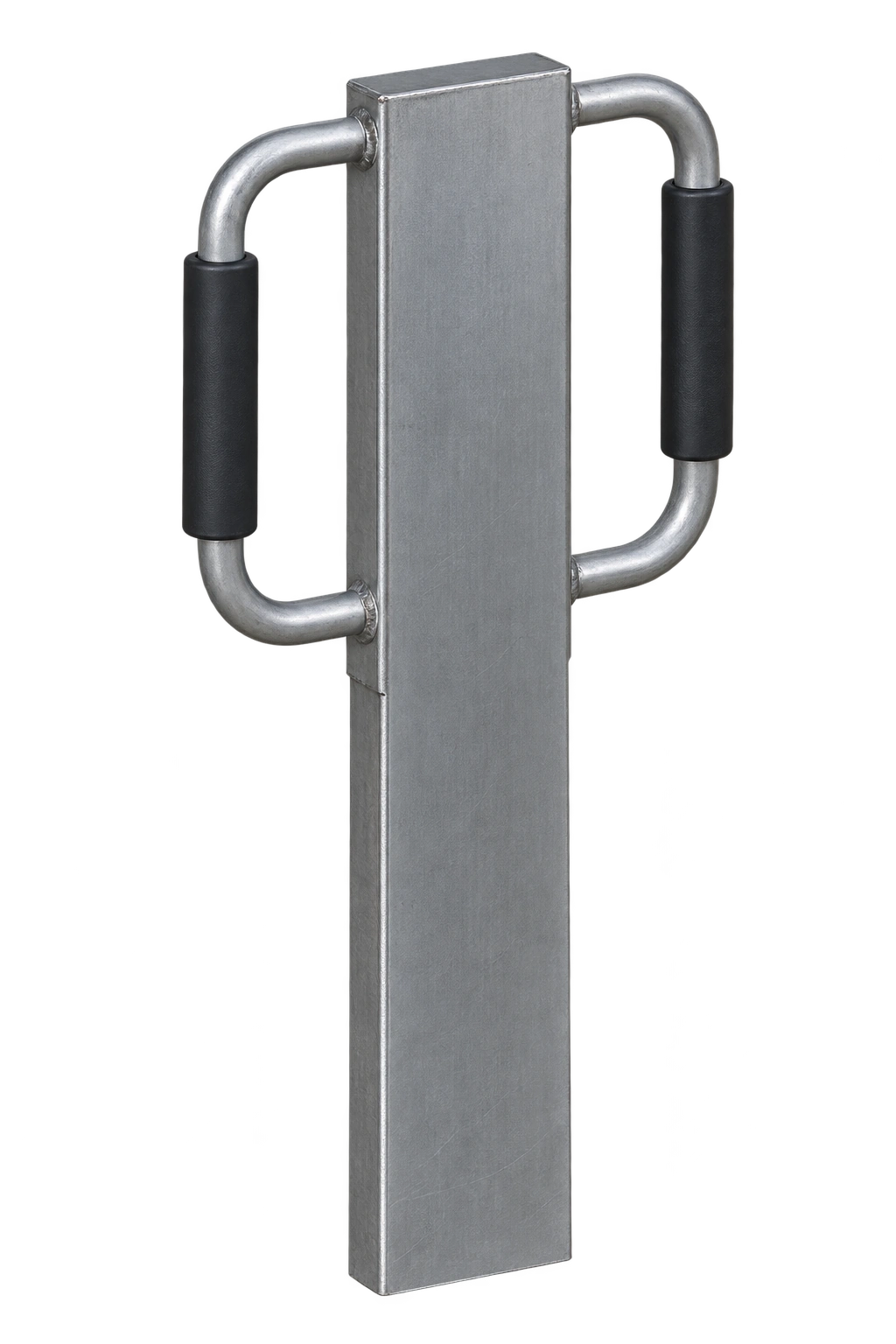
The SM1 manual driver is designed for GRP roadside delineator posts with a 100 × 10 mm section. Its sheet-steel body and two side handles are shown in the technical drawings.
The most common mistake is marking only over the line. An excavator operator approaches from the side; if the marker is not visible from that direction, it does not protect the line.
The second common mistake is renewing a damaged post slightly off its original point. The job of the post is to mark a place.
One shifted by a few metres gives false information that the excavation crew trusts. The third is counting a post with an unreadable label as sound.
With these three, the price and loading plan come in the first reply; without them we have to ask first.
Quantity, destination country and your specification if you have one. A technical answer comes back the same day; pricing is prepared by a person, never auto-generated.