Which traffic cone height should I choose?
Short answer
Speed decides the height: small cones for slow traffic and indoors, 750–900 mm on the open road. The further away it must be seen, the taller the cone.
A cone is a marker rather than an obstacle. To do its job the driver must have time to react to it. As speed rises the sight distance grows and the cone has to read from further away. Which means height and the number of reflective collars.
The second criterion is wind and slipstream. The air a heavy vehicle drags behind it topples a light cone, so on the open road base weight matters as much as height. Inside a warehouse, that same weight is unnecessary cost.
Distance decides the height as much as speed does. The distance left between where the driver first sees the cone and the cone itself must exceed the stopping distance at that speed. On a fast section, therefore, not only the cone height but the start of the run is brought forward.
The second criterion is base weight. A tall cone stays put because of its heavy base rather than its height. On a route worked by heavy vehicles, a tall cone on a light base topples sooner than a short, heavy one.
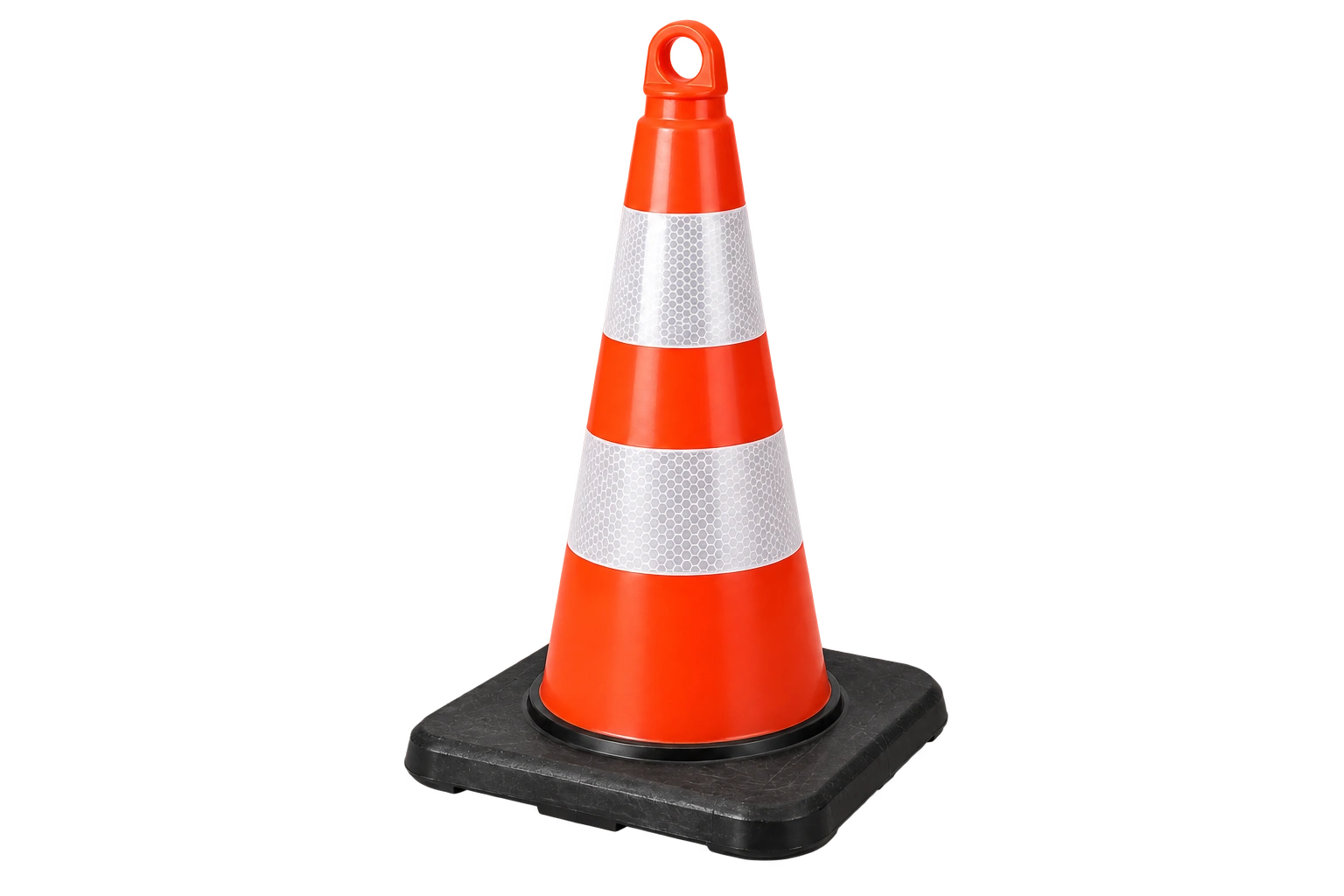
The number of reflective collars rises with height. One collar is enough on a short cone. Two on a tall one return the beam from two different heights, so the cone reads earlier at night.
Storage and freight also follow the height. A tall cone nests less, the count per pallet falls and the container cost rises. Crews buying mixed heights cover both road and car park needs in one shipment.
What belongs in the specification is the condition of use rather than the height. Given speed, night use and wind, the height and base weight are set together. A specification giving only a height can be met by very different products.
The commonest mistake is buying a large number of cheap cones. Light-based cones scatter in the first season and a second purchase follows. The total exceeds what the right base would have cost at the outset.
There are two things to ask a supplier: the base weight and the class of the reflective collar. Without those in writing, cones are compared on price alone, and price by itself does not describe the product.
The storage decision follows the height as well. How many cones fit the same shelf area decides how many trips the crew makes. Choosing a height is therefore a logistics decision and not only a road one.
This page does not cover country-specific requirements. Some authorities fix a minimum cone height for certain roads by specification. Where such a rule exists it takes precedence over the assessment here.
| Where it is used | Height | Why |
|---|---|---|
| Warehouse, car park, indoors | 320–500 mm | Walking pace; short sight distance, easy handling matters |
| Urban road, events | 500–700 mm | Low speed, equipment that moves often |
| Highway, lane closure | 750–900 mm | High speed; must read from a distance and needs a heavy base |