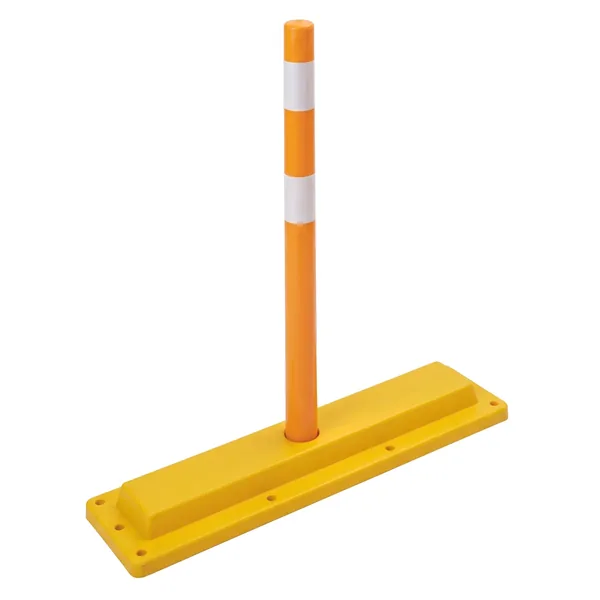
Get a quote for this product
Quantity, destination country and your specification if you have one. A technical answer on Roadside delineator posts comes back the same day; pricing is prepared by a person, never auto-generated.
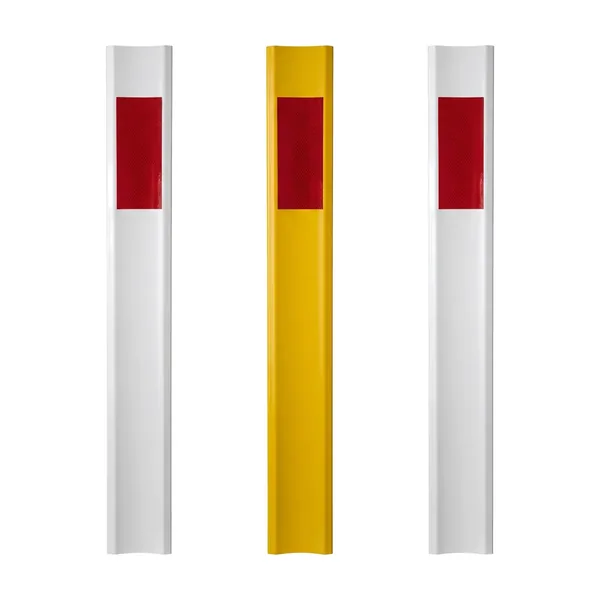
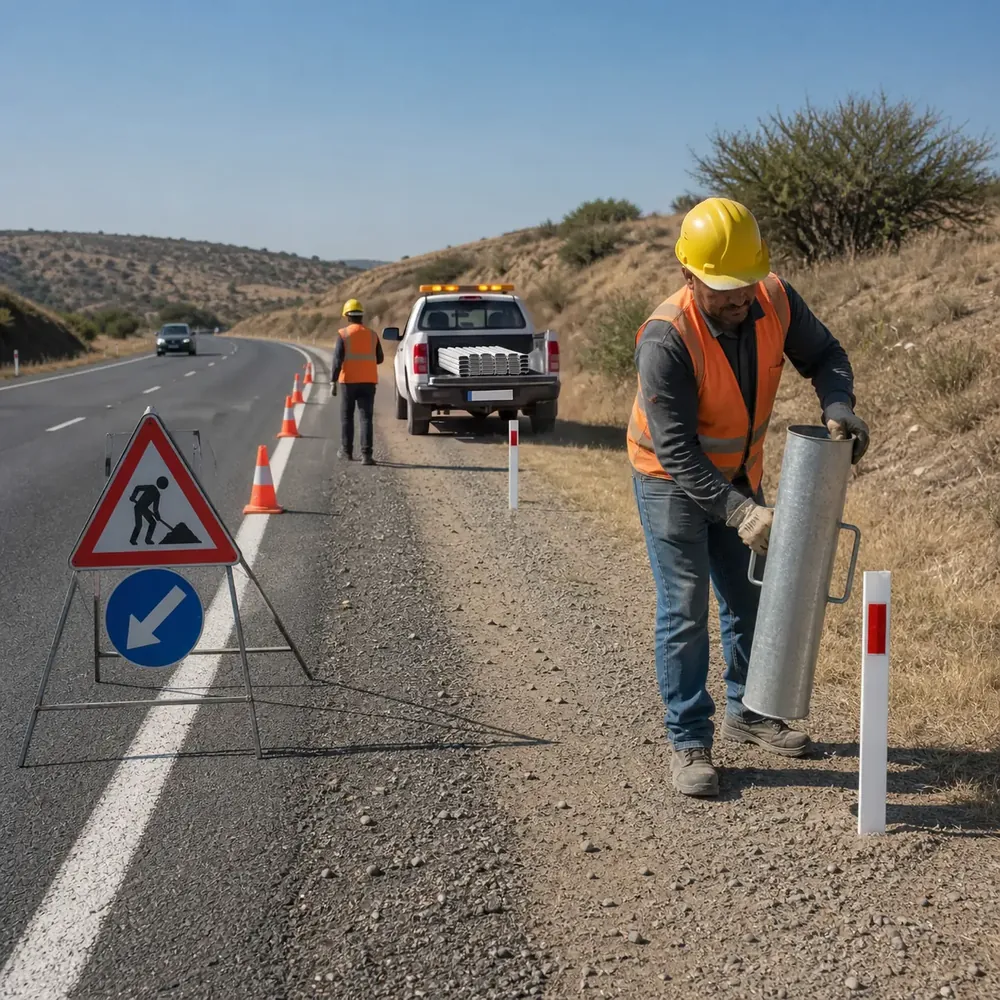
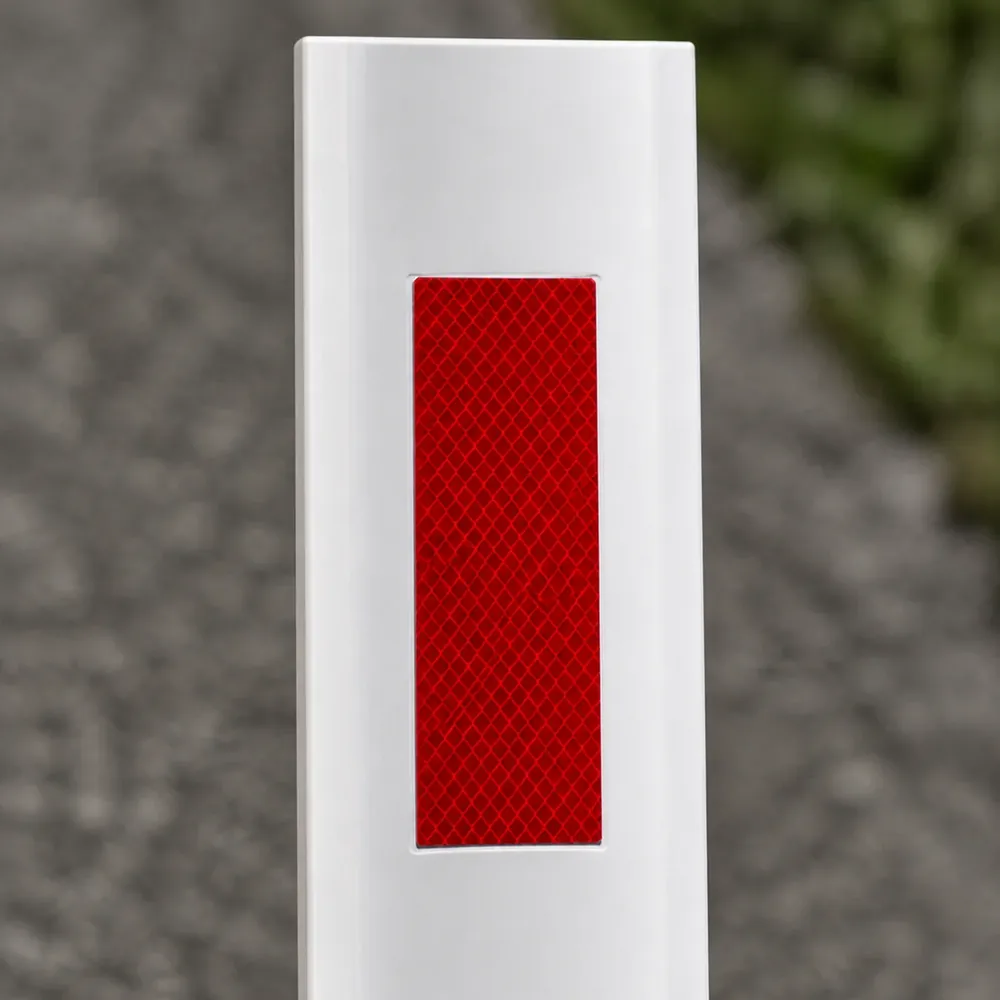
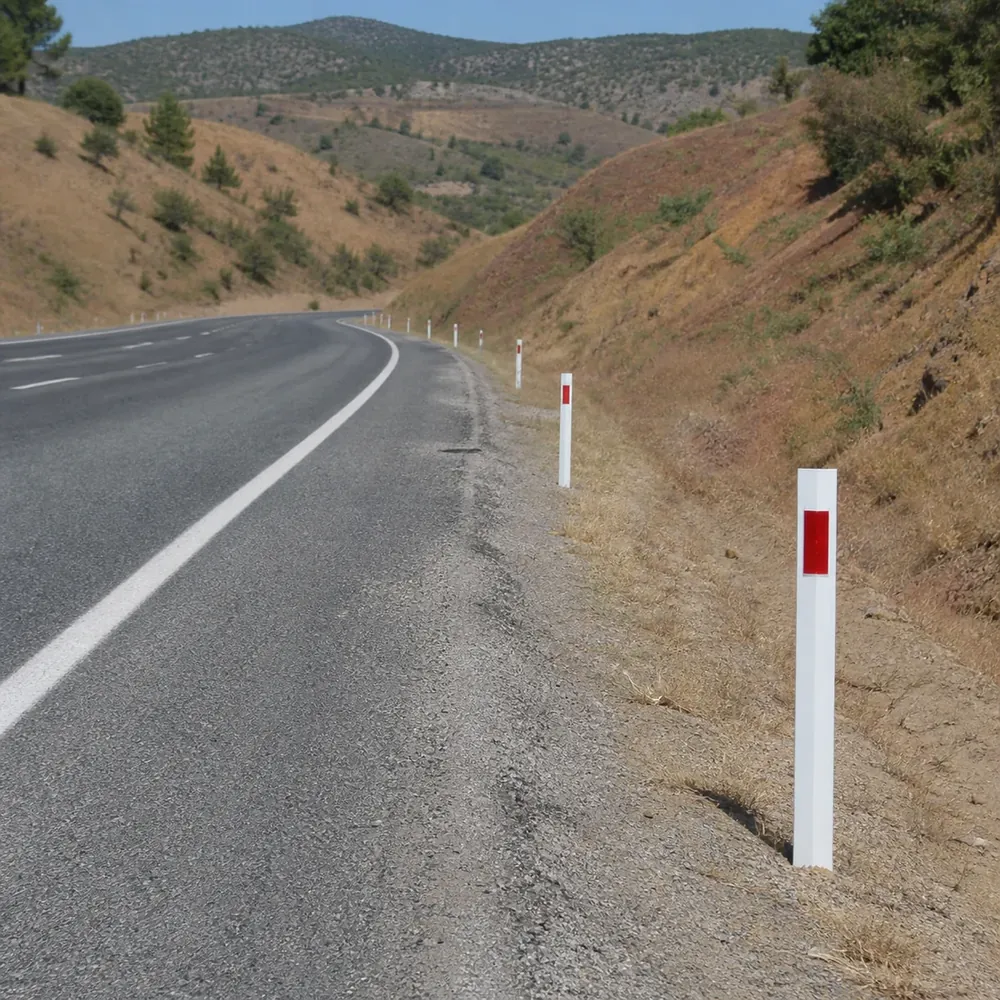
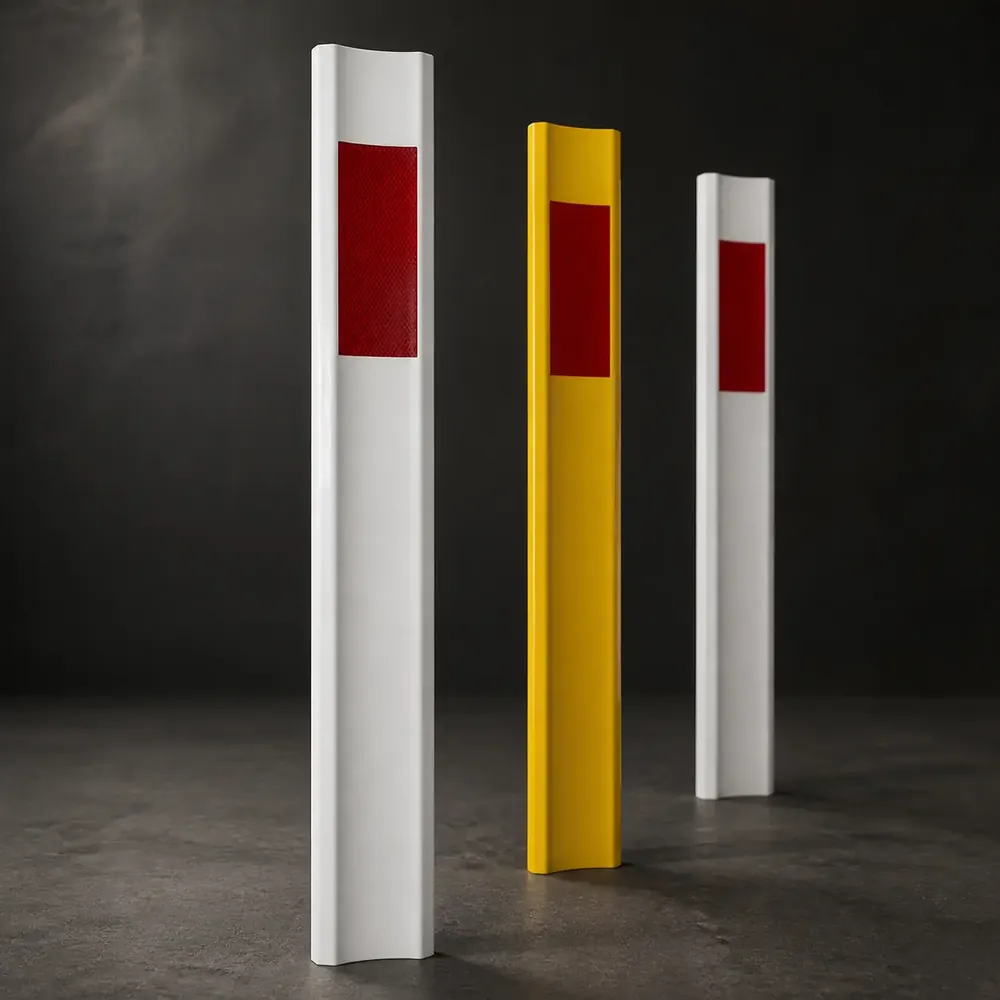
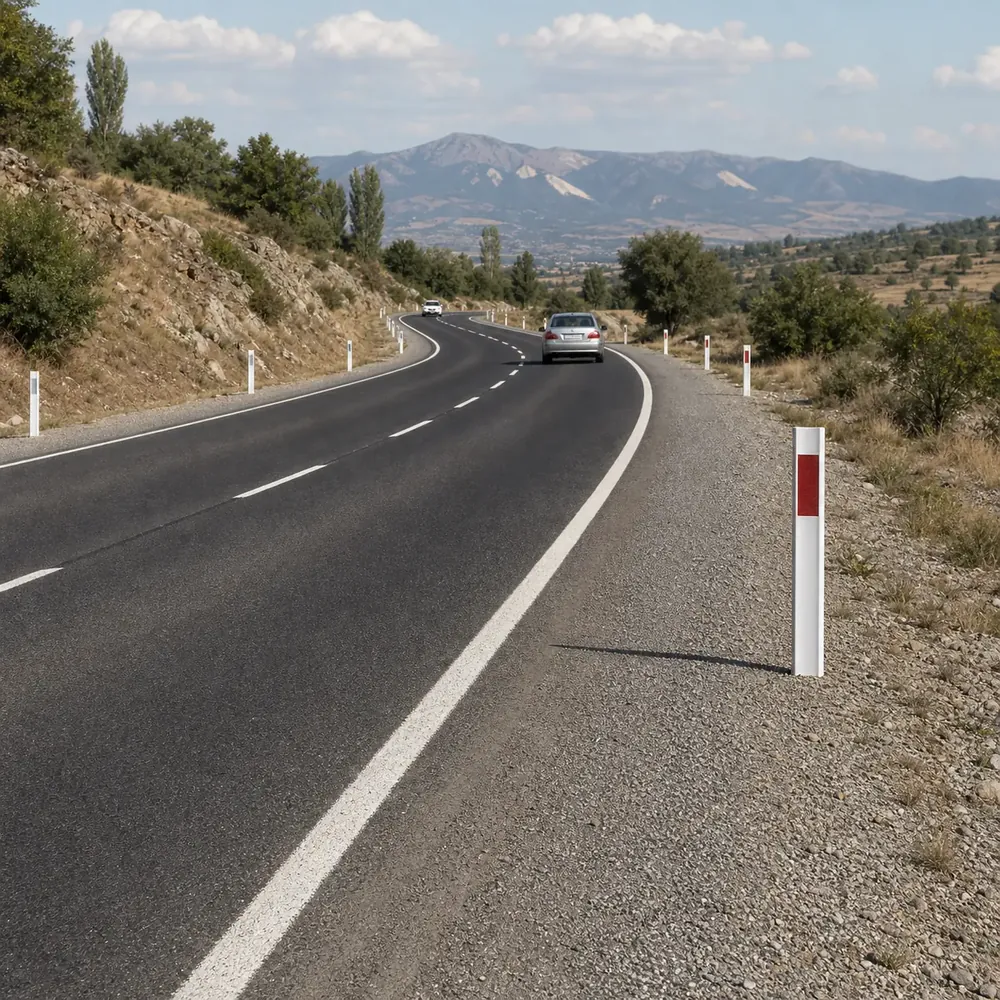
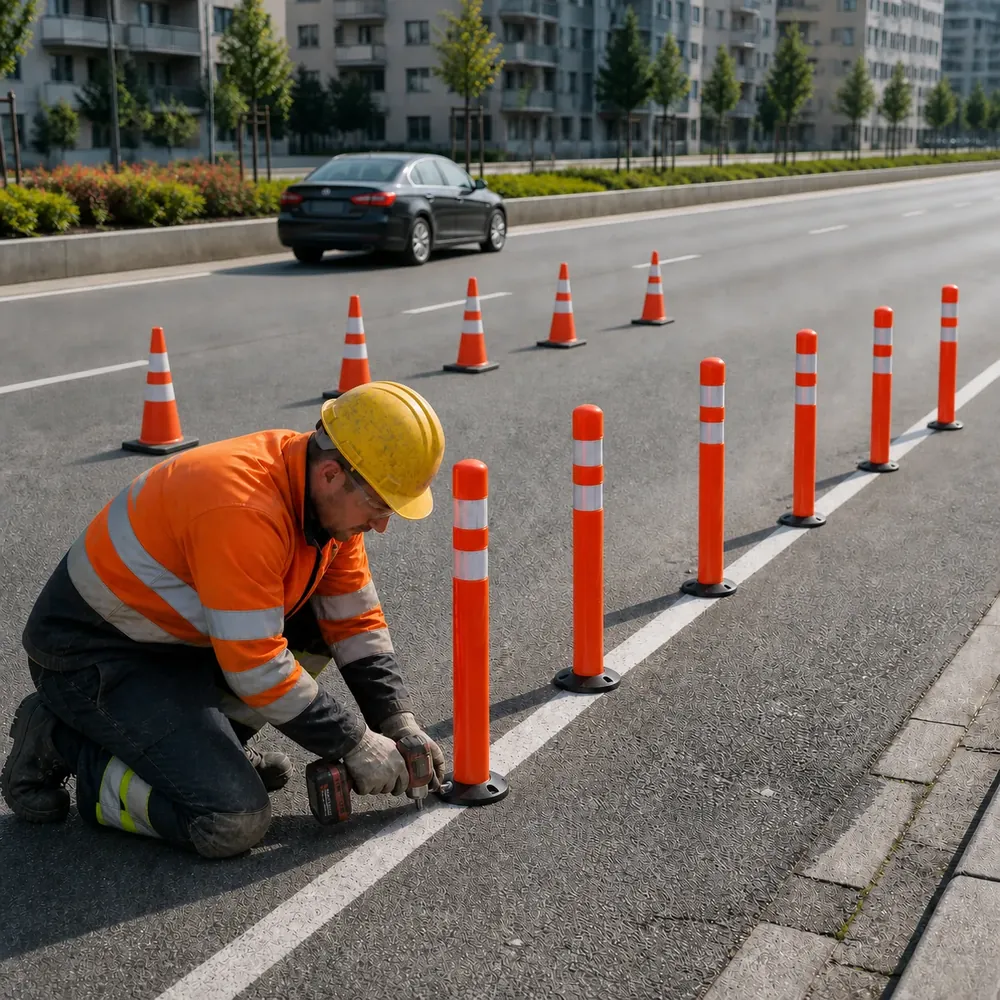
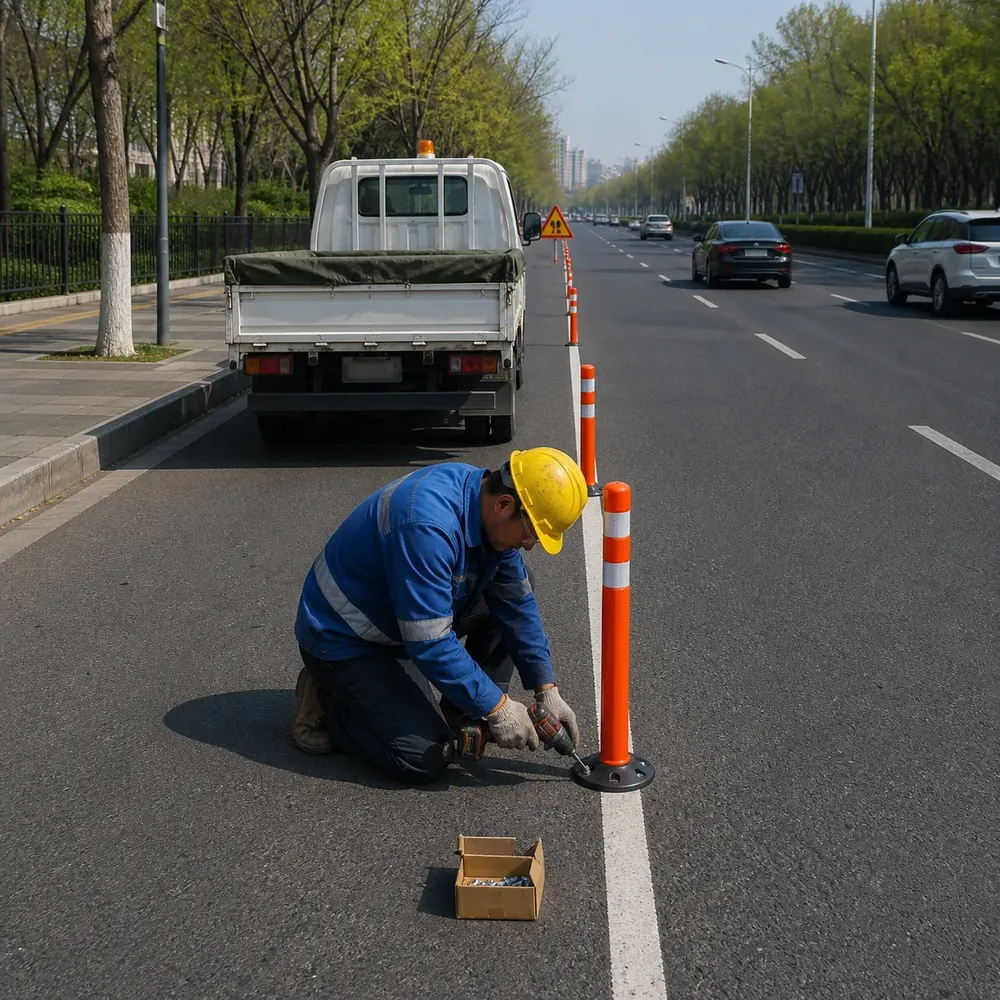

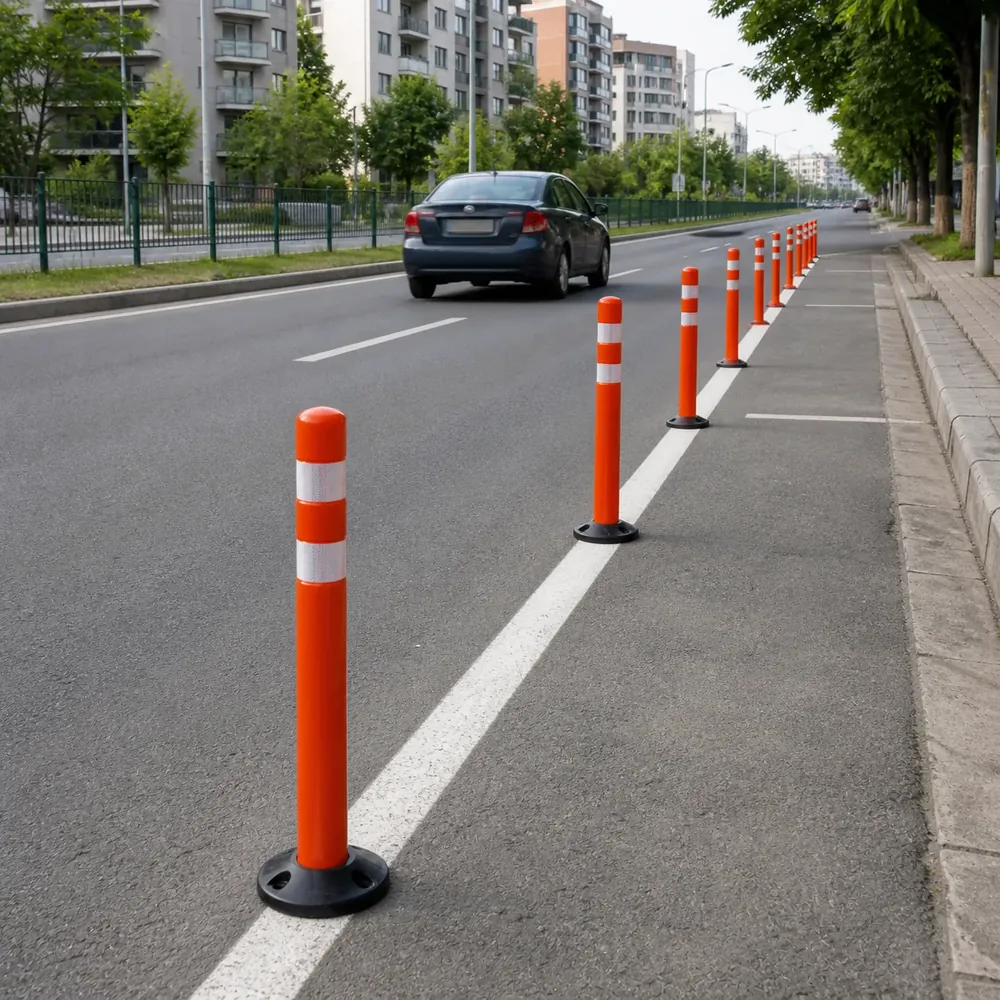
The roadside delineator post is designed to keep the edge line of the road and the boundary of the embankment visible to the driver at night and in bad weather. The glass-reinforced polyester body spends impact energy by flexing; in typical glancing contact the roadside delineator post flexes without damaging the vehicle and returns to position. It is flexible, fade-proof and long-lived. With reflectors on both faces the line reads from either direction, and with bolted mounting it marks the top of an existing steel barrier. The roadside delineator post is used on interurban roads, on village and rural roads, in work-zone diversions and along pipeline routes.
Request a QuoteTell us quantity, country and mounting type — a technical answer comes back the same day.
The colour is in the body rather than in a coating, so it does not fade. It withstands thermal cycling; the 20-year service life is a design target tied to the conditions in the manufacturer document, shared at quotation stage.
Installation and removal are straightforward: the 500 mm buried section is marked at the factory. Authority emblems can be applied to the body on request.
| Height — total / above ground | 1150/700 · 1300/800 · 1500/950 mm — the standard height is 1300 mm; for snow and fog regions special lengths up to 3000 mm are made to order |
|---|---|
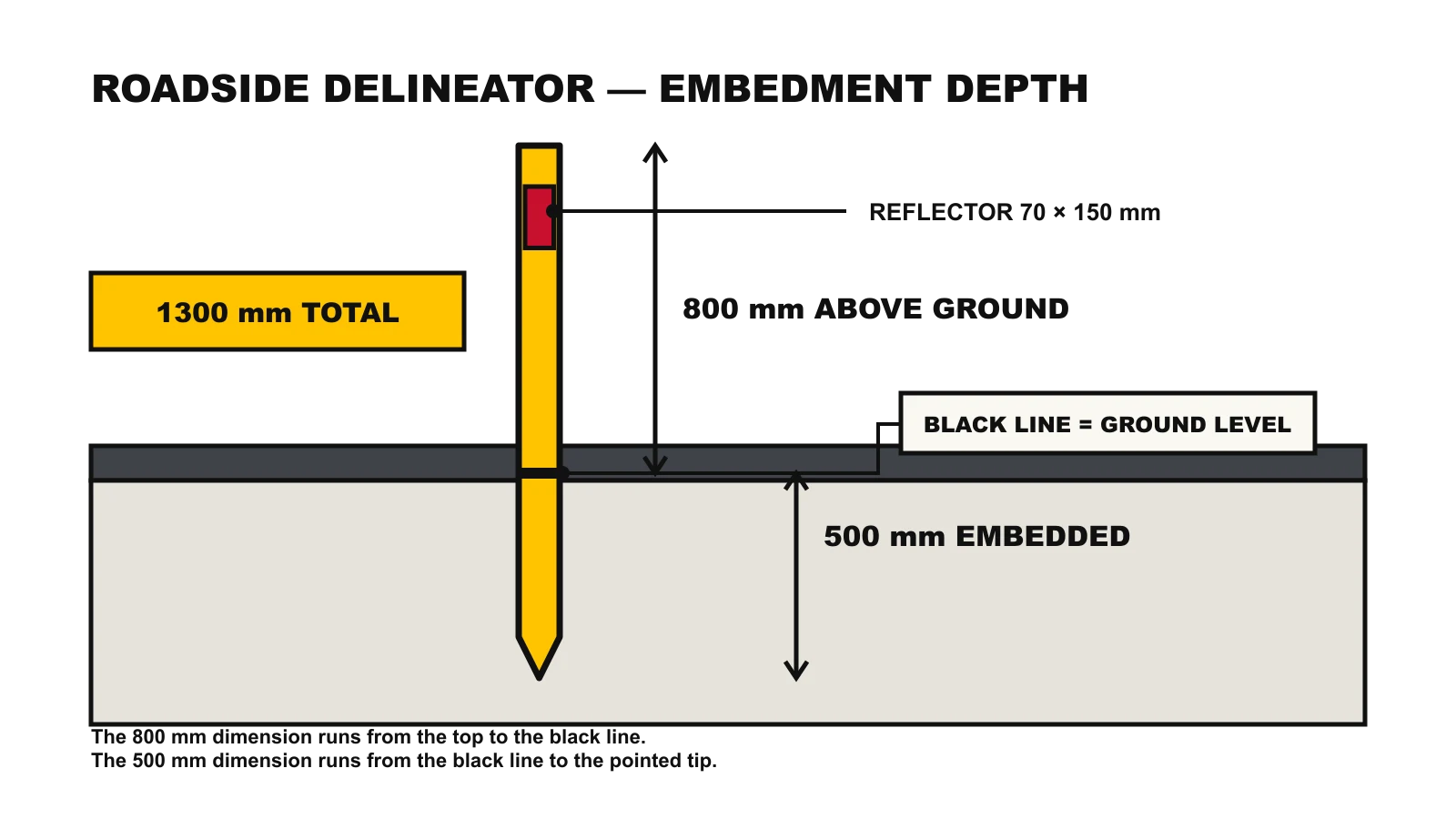
| Buried depth | By height: 450 / 500 / 550 mm (total minus above-ground); the horizontal black line on the body marks ground level for that variant |
| Width × wall thickness | 100 × 3 mm |
| Curvature (section camber) | 10 mm |
| Reflector size | 150 × 70 mm — reflectors on both faces: red on the concave front face, white on the convex face |
| Tolerances | Width and height ±2% · curvature max +3 mm · thickness ±5% |
| Material | Glass reinforced polyester — virgin material only |
|---|---|
| Production method | Pultrusion; both faces smooth, opaque white |
| Flexural tensile strength | min. 500 MPa |
| Bending temperature under load | min. 95 °C |
| Water absorption | ≤ 0.40% by weight |
| Flame resistance | Non-flammable or self-extinguishing type |
| Operating temperature | −30 … +80 °C |
| Body colours | White, yellow |
|---|---|
| Yellowness index | ≤ 12 (ASTM E313) |
| Daylight reflectance | ≥ 70 at 45°/0° (ASTM E97) |
| Reflective performance life | 60 months — the period the raw material supplier commits to in its own documentation, shared at quotation stage; this is the floor specifications ask for |
|---|---|
| Body durability life | 20 years under normal weather — covers the body material, not the reflective face |
| Marking | Authority emblem on the front face; manufacturer name and production date on the back, characters at least 10 mm high |
| GRP ground post | The technical table on this page belongs to this product; it is driven into the ground, heights and burial are in the table above |
|---|---|
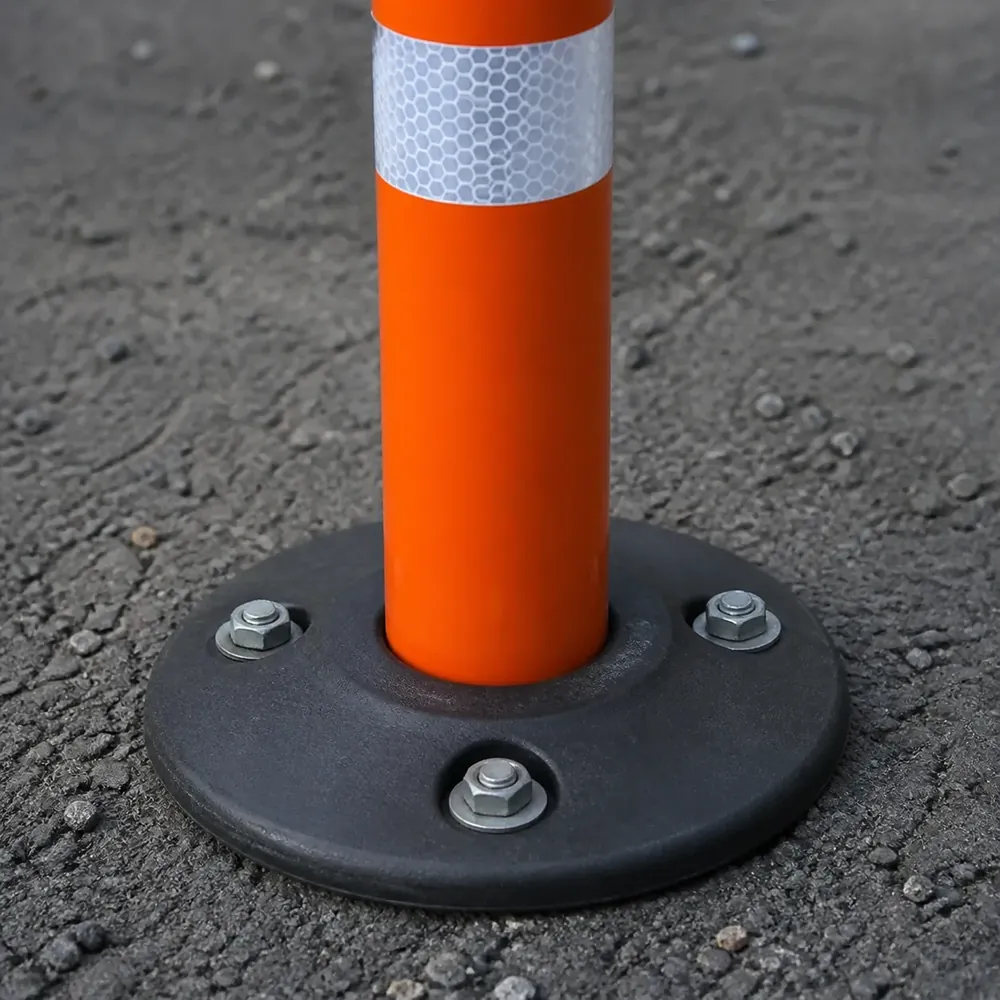
| TPU/TPE flexible post | An elastomer body made to be driven over; model, dimensions and material document are supplied per order — values in the GRP table do not transfer to this variant |
| Guardrail-top post | Ordered as a separate short body with its bracket/adaptor; not obtained by cutting down the ground post |
| Utility marker post | Marks a pipeline or cable route; plate wording and colour follow the line owner’s requirement — quoted within this group |
We send samples: one post and a reflector sample, carriage at our cost. Have it in hand before you write the specification.
| Türkiye | Spoken through the KGM Highway Technical Specification (2013) and TS EN references; the document named in the tender governs. |
|---|---|
| Europe — EN | Designed for the product class covered by EN 12899-3 (delineator posts and retroreflectors). |
| Russia/CIS — GOST | Its return-upright behaviour after impact is described in the language of type С3, GOST R 50970 clause 4.1. |
| USA — MUTCD | Described for the use matching the delineator definition of MUTCD Chapter 3G, in crashworthy-support language. |
Standard names on this page are references; test results and certificates are shared together with the report and the document — ask, and we will send them.
The standard 1300 mm post goes 500 mm into the ground and stands 800 mm above it (450 mm burial on the 1150 size, 550 mm on the 1500). The horizontal black line on the body sits 500 mm above the pointed tip, and that line is ground level. Every post driven to the line stands at the same height, so the result does not depend on who installs it. For snow and fog regions special lengths up to 3000 mm are made to order; their burial depth is drawn up with the quotation.
In typical grazing contact a GRP roadside delineator post flexes without breaking and returns to its position; with glass fibre running both lengthwise and crosswise, the impact energy spreads through the body. In the same contact it leaves the vehicle undamaged too — the main point of difference from a concrete post; the behaviour depends on impact speed and angle. A check still follows the impact: the body may look intact while the ground around the base has loosened and needs recompacting.
A white-bodied roadside delineator post is the standard on interurban and rural roads. A yellow body is preferred on high-altitude, foggy and snowy routes. It is markedly easier for a driver to pick out in fog. The two colours are not mixed on one route. A change of colour looks like information to the driver and that information would be false, so the choice stays constant along the route.
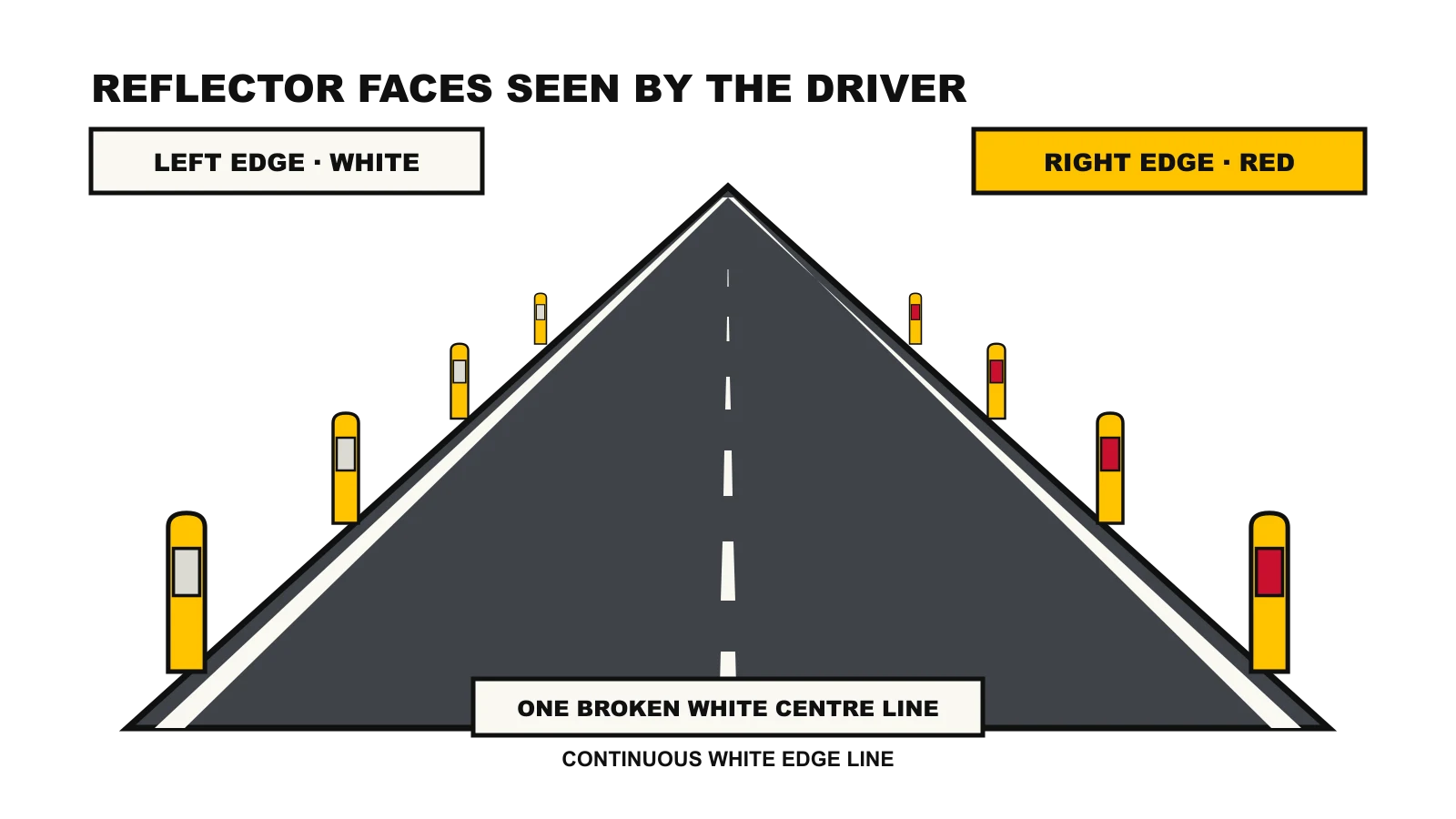
Reflectors sit on both faces: red goes on the concave front face that faces the driver, white on the convex rear face. The layout follows the direction of travel — the driver sees red in the row on their right and white in the row on their left. The same post shows the white of its rear face to a driver coming the other way, so the rule holds in both directions: red on the right, white on the left. Where the authority scheme calls for a different layout, it is confirmed before ordering.
Yes. A roadside delineator post rivets or bolts to a steel barrier through drilled holes. Bolted, it can be removed and reused on another route. On a barrier-top mounting the height is recalculated. The barrier adds its own height and the reflector must still arrive at driver eye level. The ordering interface has three items: a separate short body (a guardrail-top post is not cut down from the ground post; the market makes dedicated short lengths), the bracket or adaptor type, and the hole pattern. All three are confirmed against your barrier type with a drawing before the order.
EN 12899-3 names the post-impact behaviour of the post with D classes and the reflector technology with R classes. A class is not derived from the material name: saying "GRP" does not by itself grant a D or R class. If your specification names a class, copy it into the enquiry as written; at quotation stage we show with documents which product matches which class report.
Lane guidance & delineation — all modelsStandard cross-reference table40'HQ container calculationIf you do not know the product name
Quantity, destination country and your specification if you have one. A technical answer on Roadside delineator posts comes back the same day; pricing is prepared by a person, never auto-generated.